THE CLASSIC COLLECTION✦Karl GrierCLASSIC FREE BOOKS
Karl Grier
Louis Tracy
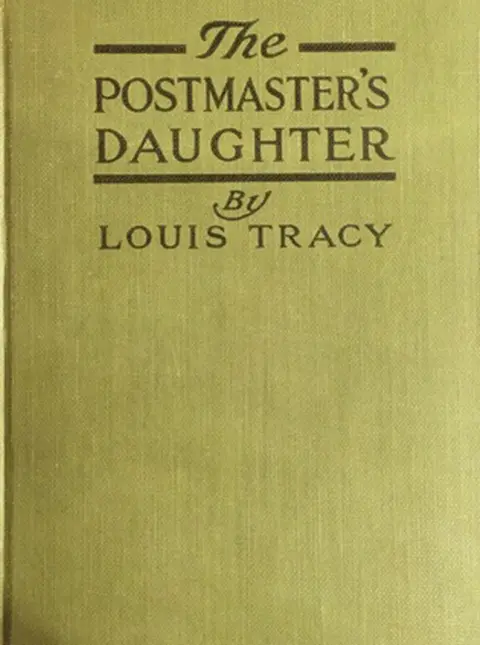
THE CLASSIC COLLECTION · 1916
"The Postmaster's Daughter" by Louis Tracy is a mystery novel written in the early 20th century. The story begins with the discovery of a drowned woman, Adelaide Melhuish, whose body is found in the river bordering the estate of John Menzies Grant, a writer and former army officer. The opening establishes a tense atmosphere, hinting at complex relationships, as secrets from the past intertwine with the present, suggesting themes of love, betrayal, and murder. The opening of the book introduces John Menzies Grant as he enjoys a serene morning in his garden, oblivious to the troubling events that will soon unfold. After discovering the body of the drowned woman, he is drawn into a web of suspicion when the police arrive. The narrative hints at his previous connection with the deceased, raising questions about his past relationship with Adelaide and the circumstances leading to her tragic death. Additionally, the presence of Doris Martin, the postmaster's daughter, adds another layer of tension and potential scandal as her involvement with Grant may complicate matters further. The chapter sets the stage for a complex investigation that intertwines personal histories with the broader implications of a crime that disrupts the peace of a small village.
Introduction adapted from the source catalogue; source summaries may be automatically generated.
Free to read · English · 66,859 words · No account needed
MAKE TIME FOR A GOOD BOOK
On by default. Untick to stop anonymous reading totals. Each page counts after 10 seconds in view. How this works.
Anonymous counting is on unless you have switched it off.
Yes, Mr. Tomlin had a veritable spring chicken in the larder at that
moment.
“And do you think your cook could provide a tourne-dos?”
“A what-a, sir?” wheezed Tomlin.
The visitor explained. He liked variety, he said. Half the chicken might be deviled for breakfast. The two dishes, with plain boiled potatoes and French beans, would suit him admirably. He was sorry he dared not try Tomlin’s excellent claret, but a dominating doctor had put him on the water-cart. In effect, Mr. Franklin impressed the landlord as a man of taste and ample means.
Peters had gobbled his chop before Franklin entered the dining-room, but they met later in the snug, where Elkin was being chaffed by Hobbs anent his carryin’s on in Knoleworth the previous night.
Siddle came in, but the chatter was not so free as when the habitués had the place to themselves.
Now, Peters had marked the gathering as one that suited his purpose exactly, so he gave the conversation the right twist.
“I suppose you local gentlemen have been greatly disturbed by this sensational murder?” he said.
Hobbs took refuge in a glass of beer. Siddle gazed contemplatively at his neat boots. Tomlin meant to say something; Elkin, eying the stranger, and summing him up as a detective, answered brusquely:
“The murder is bad enough, but the fat-headed police are worse. Three days gone, and nothing done!”
“What murder are you discussing, may I ask?” put in Franklin.
Peters turned on him with astonishment in every line of a peculiarly
mobile face.
“Do you mean to say, sir, that you haven’t heard of the Steynholme
murder?” he gasped.
“I seldom, if ever, read such things in the newspapers, and, as I landed in England only a week ago from France, my ignorance, though abyssmal, is pardonable. Moreover, I can say truly that I am far more interested in pedigree horses than in vulgar criminals.”
Peters explained fluently. This was no ordinary crime. A beautiful and popular actress had been done to death in a brutal way, and the country was already deeply stirred by the story.
Elkin waited impatiently till the journalist drew breath. Then he broke
in.
“Pedigree horses you mentioned, sir,” he said, his rancor against Grant being momentarily conquered by the pertinent allusion to his own business. “What sort? Racing, coaching, roadsters, or hacks?”
“All sorts. The Argentine, where I have connections, offers an ever-open door to good horseflesh.”
“Are you having a look round?”
“Yes. There are several decent studs within driving distance of Steynholme. Isn’t that so, landlord?”
Your reading position is saved on this browser. Take it to another device with a library code. Reading pages adapt to text, rather than matching a printed edition.
Louis Tracy
Louis Tracy
Louis Tracy
Louis Tracy
BEHIND THE BOOK
This eBook is for the use of anyone anywhere in the United States and most other parts of the world at no cost and with almost no restrictions whatsoever. You may copy it, give it away or re-use it under the terms of the Project Gutenberg License included with this eBook or online at www.gutenberg.org. If you are not located in the United States, you will have to check the laws of the country where you are located before using this eBook. Read the source licence.
The original source file, including credits and licence, is retained by this library. Request an original-format copy at no charge. Please include the book title and Project Gutenberg identifier #10110.
KEEP YOUR CURIOSITY GOING
Coulson Kernahan

Maurice Baring
Frances Wright
Cécile Tormay

Frederic Jesup Stimson

W. H. P. (William Henry Pope) Jarvis