THE CLASSIC COLLECTION✦Karl GrierCLASSIC FREE BOOKS
Karl Grier
Louis Tracy
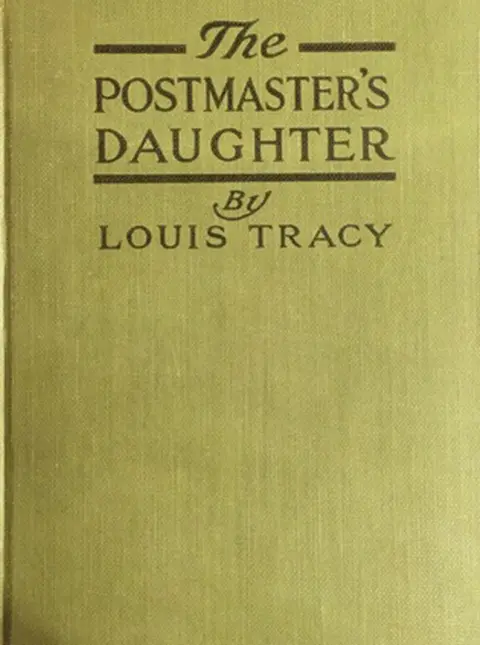
THE CLASSIC COLLECTION · 1916
"The Postmaster's Daughter" by Louis Tracy is a mystery novel written in the early 20th century. The story begins with the discovery of a drowned woman, Adelaide Melhuish, whose body is found in the river bordering the estate of John Menzies Grant, a writer and former army officer. The opening establishes a tense atmosphere, hinting at complex relationships, as secrets from the past intertwine with the present, suggesting themes of love, betrayal, and murder. The opening of the book introduces John Menzies Grant as he enjoys a serene morning in his garden, oblivious to the troubling events that will soon unfold. After discovering the body of the drowned woman, he is drawn into a web of suspicion when the police arrive. The narrative hints at his previous connection with the deceased, raising questions about his past relationship with Adelaide and the circumstances leading to her tragic death. Additionally, the presence of Doris Martin, the postmaster's daughter, adds another layer of tension and potential scandal as her involvement with Grant may complicate matters further. The chapter sets the stage for a complex investigation that intertwines personal histories with the broader implications of a crime that disrupts the peace of a small village.
Introduction adapted from the source catalogue; source summaries may be automatically generated.
Free to read · English · 66,859 words · No account needed
MAKE TIME FOR A GOOD BOOK
On by default. Untick to stop anonymous reading totals. Each page counts after 10 seconds in view. How this works.
Anonymous counting is on unless you have switched it off.
No word bearing on the main topic in these men’s minds was said during dinner. Grant was attentive to his guests, but markedly silent, almost distrait. Two such talkers as Hart and Peters, however, covered any gaps in this respect. Cigars and pipes were in evidence, and, horrible though it may sound in the ears of a gourmet, the port was circulating, when Winter turned and gazed at the small window.
“Is that where the ghost appears!” he inquired.
“Yes,” said Grant. “You know the whole story, of course?”
“Furneaux misses nothing, I assure you.”
“He missed a daylight apparition this afternoon, at any rate. I have no secrets from my friends, so I may as well tell you—”
“That Siddle called, and implored you to consider Doris Martin’s future by avoiding her at present,” put in the Chief Inspector.
Such shocks were losing some of their effect, on the principle that a man hears the burst of the thousandth high-explosive shell with a good deal less trepidation than attended the efforts of the first dozen. Still, Grant gazed at the speaker in profound astonishment.
“You Scotland Yard men seem to know everything,” he said.
“A mere pretense. Try him on sheep-raising in the Argentine, Jack,”
murmured Hart.
“Wally, this business is developing a very serious side,” protested Grant. Hart stretched a long arm for the port decanter.
“Come, friend!” he addressed it gravely. “Let us commune! You and I together shall mingle joyous memories of
“A draught of the Warm South,
The true, the blushful Hippocrene.”
“We read Siddle’s visit aright, it would appear,” said Winter quietly.
“Yes. That was his mission, put in a nutshell.”
“And what did you say?”
“I told him that, after Wednesday, I would ask Doris Martin to marry me, which is the best answer I can give him and all the world.”
“Why ‘after Wednesday’?”
“Because I shall know then the full extent of the annoyance which
Ingerman can inflict.”
“Did you give Siddle that reason?”
“Yes.”
Winter frowned.
“You literary gentlemen are all alike,” he said vexedly. “You become such adepts in analyzing human duplicity in your books that you never dream of trying to be wise as a serpent in your own affairs. The author who will split legal hairs by way of brightening his work will sign a contract with a publisher that draws tears from his lawyer when a dispute arises. Why be so candid with a rank outsider, like Siddle?”
“I distrust the man. Doris distrusts him, too.”
“So you take him into your confidence.”
“No. I merely give him chapter and verse to prove that his interference
is useless.”
Your reading position is saved on this browser. Take it to another device with a library code. Reading pages adapt to text, rather than matching a printed edition.
Louis Tracy
Louis Tracy
Louis Tracy
Louis Tracy
BEHIND THE BOOK
This eBook is for the use of anyone anywhere in the United States and most other parts of the world at no cost and with almost no restrictions whatsoever. You may copy it, give it away or re-use it under the terms of the Project Gutenberg License included with this eBook or online at www.gutenberg.org. If you are not located in the United States, you will have to check the laws of the country where you are located before using this eBook. Read the source licence.
The original source file, including credits and licence, is retained by this library. Request an original-format copy at no charge. Please include the book title and Project Gutenberg identifier #10110.
KEEP YOUR CURIOSITY GOING
Coulson Kernahan

Maurice Baring
Frances Wright
Cécile Tormay

Frederic Jesup Stimson

W. H. P. (William Henry Pope) Jarvis