THE CLASSIC COLLECTION✦Karl GrierCLASSIC FREE BOOKS
Karl Grier
Louis Tracy
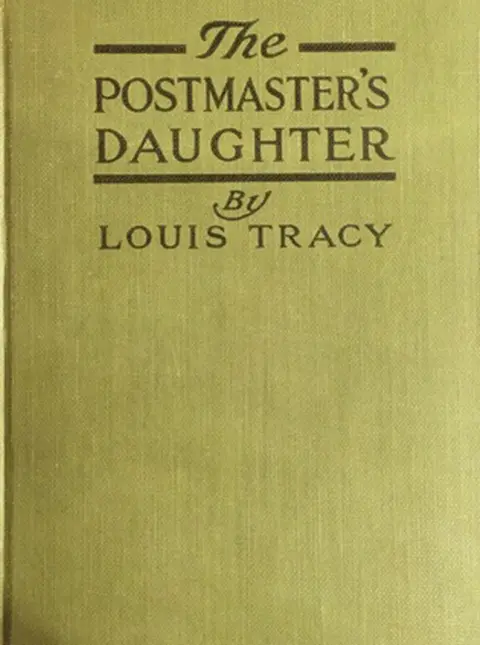
THE CLASSIC COLLECTION · 1916
"The Postmaster's Daughter" by Louis Tracy is a mystery novel written in the early 20th century. The story begins with the discovery of a drowned woman, Adelaide Melhuish, whose body is found in the river bordering the estate of John Menzies Grant, a writer and former army officer. The opening establishes a tense atmosphere, hinting at complex relationships, as secrets from the past intertwine with the present, suggesting themes of love, betrayal, and murder. The opening of the book introduces John Menzies Grant as he enjoys a serene morning in his garden, oblivious to the troubling events that will soon unfold. After discovering the body of the drowned woman, he is drawn into a web of suspicion when the police arrive. The narrative hints at his previous connection with the deceased, raising questions about his past relationship with Adelaide and the circumstances leading to her tragic death. Additionally, the presence of Doris Martin, the postmaster's daughter, adds another layer of tension and potential scandal as her involvement with Grant may complicate matters further. The chapter sets the stage for a complex investigation that intertwines personal histories with the broader implications of a crime that disrupts the peace of a small village.
Introduction adapted from the source catalogue; source summaries may be automatically generated.
Free to read · English · 66,859 words · No account needed
MAKE TIME FOR A GOOD BOOK
On by default. Untick to stop anonymous reading totals. Each page counts after 10 seconds in view. How this works.
Anonymous counting is on unless you have switched it off.
The inquest was surprisingly tame after the stirring events which had led up to it. Indeed, save for two incidents, the proceedings were almost dull.
The coroner, a Knoleworth solicitor named Belcher, prided himself on conducting this cause célèbre with as little ostentation as he would have displayed over an ordinary inquiry. Messrs. Siddle, Elkin, Tomlin and Hobbs, with eight other local tradesmen and farmers, formed the jurors, and the chemist was promptly elected foreman; no witnesses were ordered out of court; the formalities of “swearing in” the jury and “viewing” the body were carried through rapidly. Almost before Grant had time to assimilate these details Superintendent Fowler, who marshalled the evidence, called his name. The coroner’s officer tendered him a well-thumbed Bible, while the coroner himself administered the oath.
Grant eyed the somewhat soiled volume, and opened it before putting it to his lips. The action probably did not please the jury. Elkin nudged Tomlin, and sniggered at the rest of his colleagues, as much as to say: “What did I tell you? The cheek of him!”
Elkin, by the way, looked ill. When his interest flagged for an instant his haggard aspect became more noticeable.
Ingerman was there, of course. Furneaux sat beside Mr. Fowler. A stranger, whom Grant did not recognize, proved to be the County Chief Constable. There was a strong muster of police, and the representatives of the press completely monopolized the scanty accommodation for the public. To Grant’s relief, Doris Martin was not in attendance.
He told the simple facts of the finding of Adelaide Melhuish’s corpse. A harmless question by the coroner evoked the first “scene” which set the reporters’ pencils busy.
“Did you recognize the body!” inquired Mr. Belcher.
“I did.”
“Then you can give the jury her name?”
Before Grant could answer, Ingerman sprang up, his sallow face livid
with passion.
“I protest, sir, against this man being permitted to identify my wife,”
he said.
He was either deeply moved, or proved himself an excellent actor. His flute-like voice vibrated with an intense emotion. Thus might Mark Antony have spoken when vowing that Brutus was an honorable man.
“Who are you?” demanded the coroner sharply.
“Isidor George Ingerman, husband of the deceased lady,” came the
clear-toned reply.
“Well, sit down, sir, and do not interrupt the court again,” said the
coroner.
“I demand, sir, that you note my protest.”
“Sit down! Were you any other person I would have you removed. As it is, I am prepared to regard your feelings to the extent of explaining that the witness is not identifying the body but relating a fact within his own knowledge.”
Your reading position is saved on this browser. Take it to another device with a library code. Reading pages adapt to text, rather than matching a printed edition.
Louis Tracy
Louis Tracy
Louis Tracy
Louis Tracy
BEHIND THE BOOK
This eBook is for the use of anyone anywhere in the United States and most other parts of the world at no cost and with almost no restrictions whatsoever. You may copy it, give it away or re-use it under the terms of the Project Gutenberg License included with this eBook or online at www.gutenberg.org. If you are not located in the United States, you will have to check the laws of the country where you are located before using this eBook. Read the source licence.
The original source file, including credits and licence, is retained by this library. Request an original-format copy at no charge. Please include the book title and Project Gutenberg identifier #10110.
KEEP YOUR CURIOSITY GOING
Coulson Kernahan

Maurice Baring
Frances Wright
Cécile Tormay

Frederic Jesup Stimson

W. H. P. (William Henry Pope) Jarvis