THE CLASSIC COLLECTION✦Karl GrierCLASSIC FREE BOOKS
Karl Grier
Louis Tracy
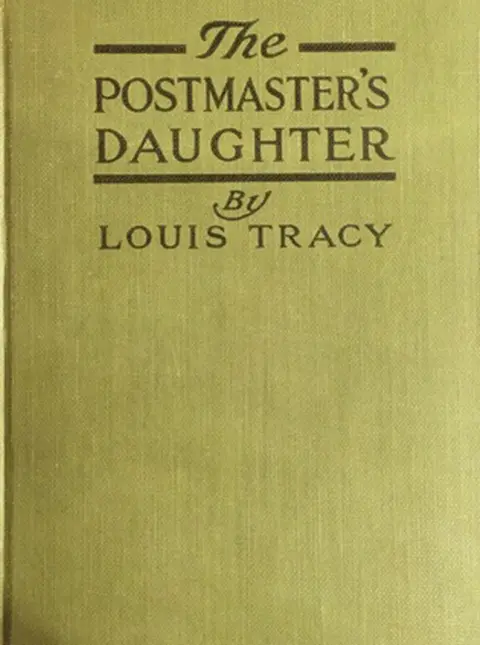
THE CLASSIC COLLECTION · 1916
"The Postmaster's Daughter" by Louis Tracy is a mystery novel written in the early 20th century. The story begins with the discovery of a drowned woman, Adelaide Melhuish, whose body is found in the river bordering the estate of John Menzies Grant, a writer and former army officer. The opening establishes a tense atmosphere, hinting at complex relationships, as secrets from the past intertwine with the present, suggesting themes of love, betrayal, and murder. The opening of the book introduces John Menzies Grant as he enjoys a serene morning in his garden, oblivious to the troubling events that will soon unfold. After discovering the body of the drowned woman, he is drawn into a web of suspicion when the police arrive. The narrative hints at his previous connection with the deceased, raising questions about his past relationship with Adelaide and the circumstances leading to her tragic death. Additionally, the presence of Doris Martin, the postmaster's daughter, adds another layer of tension and potential scandal as her involvement with Grant may complicate matters further. The chapter sets the stage for a complex investigation that intertwines personal histories with the broader implications of a crime that disrupts the peace of a small village.
Introduction adapted from the source catalogue; source summaries may be automatically generated.
Free to read · English · 66,859 words · No account needed
MAKE TIME FOR A GOOD BOOK
On by default. Untick to stop anonymous reading totals. Each page counts after 10 seconds in view. How this works.
Anonymous counting is on unless you have switched it off.
Shortly before noon on Monday occurred two events destined to assume a paramount importance in the affair which was wringing the withers of Steynholme. As in the histories of both men and nations, these first steps in great developments began quietly enough. For one thing, Furneaux returned to the village. For another, the London telegraphist, who expected the day to prove practically a blank, was reading a newspaper when the telegraph instrument clicked the local call.
Doris was checking and distributing the stock of stamps which had arrived that morning; her father was counting mail-bags in a small annex to the main room, the Knoleworth office having acquired a habit of making up shortages by docking the country branches. No member of the public happened to be present. The girl could have heard what the Morse code was tapping forth had she chosen, but she had trained herself to disregard the telegraph when occupied on other work.
Suddenly, however, the telegraphist’s pencil paused.
“Hello!” he said. “Theodore Siddle! That’s the chemist opposite, isn’t
it!”
“Yes,” said Doris, suspending her calculations at mention of the name.
“Well, his mother’s dead.”
“Dead?” she echoed vacantly. Somehow, it had never hitherto dawned on her that the chemist might possess relatives in some part of the country.
“That’s what it says,” went on the other.
“‘Regret inform you your mother died this morning. Superintendent,
Horton Asylum.’”
“In an asylum, too,” said the girl, speaking at random.
“Yes. Horton is the place for epileptic lunatics, near Epsom, you
know.”
“I didn’t know. Does it mean that—that she was an epileptic lunatic?”
“So I should imagine, from the wording. If a nurse, or a matron, they’d surely describe her as such.”
“I suppose we ought not to discuss Mr. Siddle’s telegram,” said Doris,
after a pause.
“Well, no. But where’s the harm? I wouldn’t have yelled out the news if we three weren’t alone. Where’s that boy?”
“Gone to his dinner. Father will take it. By the way, say nothing to him as to the contents. Would you mind calling him?”
Doris hurried swiftly to the sitting-room, and thence upstairs. The telegraphist explained the absence of a messenger, so Mr. Martin delivered the telegram in person.
Crossing the street, he detected a dead bee. He picked it up, horrified at the thought that the Isle of Wight disease might have reached Sussex. So it was an absent-minded postmaster who handed the telegram over Siddle’s counter, inquiring laconically:
“Is there any answer?”
Siddle opened the buff envelope, and read. He glanced sharply at
Martin.
“No,” he said. “What’s wrong with that bee?”
Your reading position is saved on this browser. Take it to another device with a library code. Reading pages adapt to text, rather than matching a printed edition.
Louis Tracy
Louis Tracy
Louis Tracy
Louis Tracy
BEHIND THE BOOK
This eBook is for the use of anyone anywhere in the United States and most other parts of the world at no cost and with almost no restrictions whatsoever. You may copy it, give it away or re-use it under the terms of the Project Gutenberg License included with this eBook or online at www.gutenberg.org. If you are not located in the United States, you will have to check the laws of the country where you are located before using this eBook. Read the source licence.
The original source file, including credits and licence, is retained by this library. Request an original-format copy at no charge. Please include the book title and Project Gutenberg identifier #10110.
KEEP YOUR CURIOSITY GOING
Coulson Kernahan

Maurice Baring
Frances Wright
Cécile Tormay

Frederic Jesup Stimson

W. H. P. (William Henry Pope) Jarvis