THE CLASSIC COLLECTION✦Karl GrierCLASSIC FREE BOOKS
Karl Grier
Louis Tracy
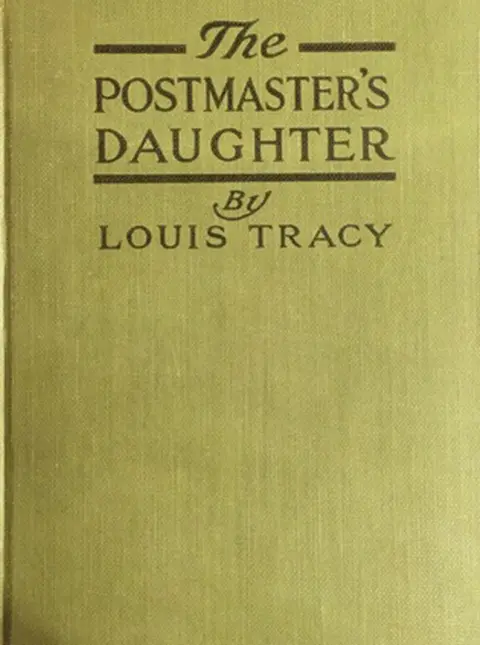
THE CLASSIC COLLECTION · 1916
"The Postmaster's Daughter" by Louis Tracy is a mystery novel written in the early 20th century. The story begins with the discovery of a drowned woman, Adelaide Melhuish, whose body is found in the river bordering the estate of John Menzies Grant, a writer and former army officer. The opening establishes a tense atmosphere, hinting at complex relationships, as secrets from the past intertwine with the present, suggesting themes of love, betrayal, and murder. The opening of the book introduces John Menzies Grant as he enjoys a serene morning in his garden, oblivious to the troubling events that will soon unfold. After discovering the body of the drowned woman, he is drawn into a web of suspicion when the police arrive. The narrative hints at his previous connection with the deceased, raising questions about his past relationship with Adelaide and the circumstances leading to her tragic death. Additionally, the presence of Doris Martin, the postmaster's daughter, adds another layer of tension and potential scandal as her involvement with Grant may complicate matters further. The chapter sets the stage for a complex investigation that intertwines personal histories with the broader implications of a crime that disrupts the peace of a small village.
Introduction adapted from the source catalogue; source summaries may be automatically generated.
Free to read · English · 66,859 words · No account needed
MAKE TIME FOR A GOOD BOOK
On by default. Untick to stop anonymous reading totals. Each page counts after 10 seconds in view. How this works.
Anonymous counting is on unless you have switched it off.
Luckily, Minnie caught her mother and broke her fall, because the housekeeper was large and solid, and might have been seriously injured otherwise. Hart was distressed by this development, but, being eminently a ready person in an emergency, he rose to the occasion by extracting the empty case from the revolver, and holding it to the poor woman’s nostrils, while supporting her with an arm and a knee.
“This is far more effective than burnt brown paper, Minnie,” he said. “Now, don’t get excited, but mix some brandy and water, and we’ll have your mother telling us who Owd Ben is, or was, before Hawk-eye comes back to disturb us. Judging by the noises I hear, he’s busy outside.”
“That’s father!” shrieked Minnie hysterically.
“Good Lord! Has your father—”
For an instant, Hart was nearly alarmed, but Grant’s voice came
authoritatively:
“It’s all right, Bates. Let go, I tell you!”
“Phew!” said Hart. “I was on the point of confusing your respected dad with Owd Ben ... That’s it, ma! Sniff hard! As a cook you’re worth your weight in gold, which is some cook.”
Meanwhile, Furneaux, seeing that no dead body was stretched on the strip of grass beneath the window, dashed into the shrubbery to the right, and was clutched in a mighty embrace by an older but much more powerful man in Bates, who had hurried from the front of the house on hearing the pistol-shot. Most fortunately, the gardener, deeming his vigil a needless one, had not armed himself with a stick, or the consequences might have been grave. As it was, no one except Hart had been vouchsafed sight or sound of the latest specter, which, however, had left a very convincing souvenir of its visit in the shape of a soft felt hat with two bullet holes through the crown.
Furneaux, quivering with silent wrath, soon abandoned the search when this pièce de conviction was found at the root of the Dorothy Perkins rose-tree. Seeing the lamp relighted, he peremptorily bade Grant and Bates come in with him. He closed the window, adjusted the blind again, and poured generous measures of port wine into two glasses. Handing one to Bates, he took the other himself.
“Friend,” he said, “some men have fame thrust upon them, but you have achieved it. To-night you pierced the heel of Achilles. Here’s to you!”
“I dunno wot ’ee’s saying mister, but ‘good health’,” said Bates, swigging the wine with gusto.
“Now, for your master’s sake, not a word to a soul about this hubbub.”
Your reading position is saved on this browser. Take it to another device with a library code. Reading pages adapt to text, rather than matching a printed edition.
Louis Tracy
Louis Tracy
Louis Tracy
Louis Tracy
BEHIND THE BOOK
This eBook is for the use of anyone anywhere in the United States and most other parts of the world at no cost and with almost no restrictions whatsoever. You may copy it, give it away or re-use it under the terms of the Project Gutenberg License included with this eBook or online at www.gutenberg.org. If you are not located in the United States, you will have to check the laws of the country where you are located before using this eBook. Read the source licence.
The original source file, including credits and licence, is retained by this library. Request an original-format copy at no charge. Please include the book title and Project Gutenberg identifier #10110.
KEEP YOUR CURIOSITY GOING
Coulson Kernahan

Maurice Baring
Frances Wright
Cécile Tormay

Frederic Jesup Stimson

W. H. P. (William Henry Pope) Jarvis