THE CLASSIC COLLECTION✦Karl GrierCLASSIC FREE BOOKS
Karl Grier
Louis Tracy
THE CLASSIC COLLECTION · 1916
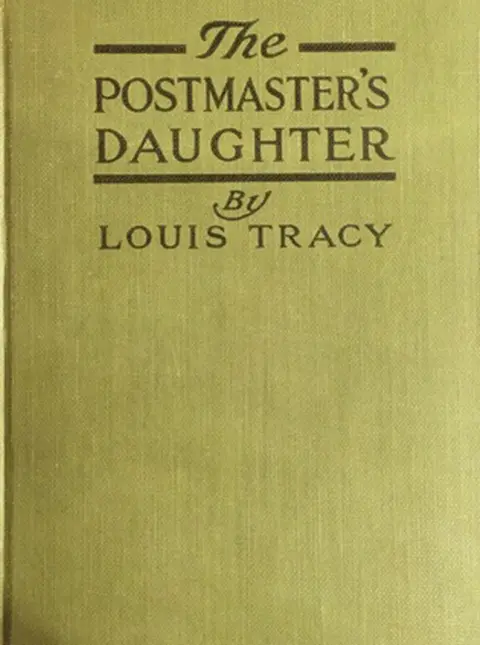
"The Postmaster's Daughter" by Louis Tracy is a mystery novel written in the early 20th century. The story begins with the discovery of a drowned woman, Adelaide Melhuish, whose body is found in the river bordering the estate of John Menzies Grant, a writer and former army officer. The opening establishes a tense atmosphere, hinting at complex relationships, as secrets from the past intertwine with the present, suggesting themes of love, betrayal, and murder. The opening of the book introduces John Menzies Grant as he enjoys a serene morning in his garden, oblivious to the troubling events that will soon unfold. After discovering the body of the drowned woman, he is drawn into a web of suspicion when the police arrive. The narrative hints at his previous connection with the deceased, raising questions about his past relationship with Adelaide and the circumstances leading to her tragic death. Additionally, the presence of Doris Martin, the postmaster's daughter, adds another layer of tension and potential scandal as her involvement with Grant may complicate matters further. The chapter sets the stage for a complex investigation that intertwines personal histories with the broader implications of a crime that disrupts the peace of a small village.
Introduction adapted from the source catalogue; source summaries may be automatically generated.
Free to read · English · 66,859 words · No account needed
MAKE TIME FOR A GOOD BOOK
On by default. Untick to stop anonymous reading totals. Each page counts after 10 seconds in view. How this works.
Anonymous counting is on unless you have switched it off.
“Well, pull up the blind, light your candle, and find the book. Act the whole incident, in fact.”
Grant obeyed. He held the candlestick until he had picked out the particular volume; then he placed it in the recess of the window, and searched through the pages of the book.
Furneaux bent forward so as to watch the rehearsal and catch the effect of the light externally. The hour was not so late as when Adelaide Melhuish, or her ghost, gazed in through one of those narrow panes, but the night was dark enough to lend the necessary vraisemblance. Hart, deeply interested, looked on with rapt, eager eyes. For a full minute the tableau remained thus. Then, with a rapidity born of many a close ’scape in wild lands, Hart drew a revolver from a hip pocket, and fired at the window.
He alone was in a position to see through all parts of it. Grant was still thumbing a small brown volume in the manner of one who knew that a certain passage would be found therein but was ignorant of its exact place in the text. Furneaux, intent on his every movement, had only a side-long view of the window, which, it will be remembered, formed a tiny rectangle in a thick wall.
The revolver was a heavy-caliber weapon, and the explosion blew out the lamp. The flame of the candle flickered, owing either to the passage of the bullet or the disturbance of the air. But it burnt steadily again within the fifth part of a second, and they all saw a starred hole in the center pane of glass of the second tier from the bottom.
“What fool’s game are you playing?” shrilled Furneaux, nevertheless active as a wildcat in his spring to the French window, there to snatch at the blind and turn the knob which controlled a lever bolt.
“Laying another ghost—one with whiskers,” said Hart coolly. “I got him,
too, I think.”
“You must be mad, mad!” shrieked the detective, tearing open the
window, and vanishing.
“For Heaven’s sake, Wally, no more shooting!” cried Grant, running
after Furneaux.
Minnie and her mother appeared at the dining-room door. Finding the
place in semi-obscurity, and reeking with gunpowder, they screamed
loudly.
“You Steynholme folk are all on the jump,” said Hart. “Cheer up, fair dames! Thunder relieves the atmosphere, you know, and one live cartridge is often more effective than an ocean of talk.”
“Bub-bub-but who’s shot, sir?” gasped Minnie.
“A ghost, a most scoundrelly apparition, with fearsome eyes, offensive whiskers, and a hat which is a base copy of mine.”
“Owd Ben!” sighed Mrs. Bates, collapsing straightway in a faint.
Your reading position is saved on this browser. Take it to another device with a library code. Reading pages adapt to text, rather than matching a printed edition.
Louis Tracy
Louis Tracy
Louis Tracy
Louis Tracy
BEHIND THE BOOK
This eBook is for the use of anyone anywhere in the United States and most other parts of the world at no cost and with almost no restrictions whatsoever. You may copy it, give it away or re-use it under the terms of the Project Gutenberg License included with this eBook or online at www.gutenberg.org. If you are not located in the United States, you will have to check the laws of the country where you are located before using this eBook. Read the source licence.
The original source file, including credits and licence, is retained by this library. Request an original-format copy at no charge. Please include the book title and Project Gutenberg identifier #10110.
KEEP YOUR CURIOSITY GOING
Coulson Kernahan

Maurice Baring
Frances Wright
Cécile Tormay

Frederic Jesup Stimson

W. H. P. (William Henry Pope) Jarvis