THE CLASSIC COLLECTION✦Karl GrierCLASSIC FREE BOOKS
Karl Grier
Louis Tracy
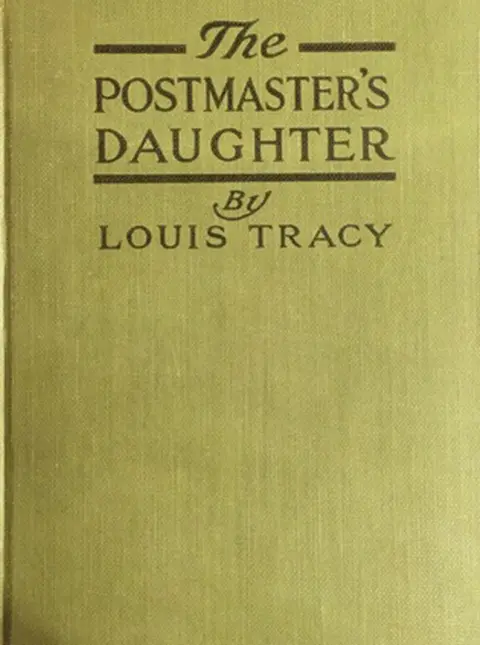
THE CLASSIC COLLECTION · 1916
"The Postmaster's Daughter" by Louis Tracy is a mystery novel written in the early 20th century. The story begins with the discovery of a drowned woman, Adelaide Melhuish, whose body is found in the river bordering the estate of John Menzies Grant, a writer and former army officer. The opening establishes a tense atmosphere, hinting at complex relationships, as secrets from the past intertwine with the present, suggesting themes of love, betrayal, and murder. The opening of the book introduces John Menzies Grant as he enjoys a serene morning in his garden, oblivious to the troubling events that will soon unfold. After discovering the body of the drowned woman, he is drawn into a web of suspicion when the police arrive. The narrative hints at his previous connection with the deceased, raising questions about his past relationship with Adelaide and the circumstances leading to her tragic death. Additionally, the presence of Doris Martin, the postmaster's daughter, adds another layer of tension and potential scandal as her involvement with Grant may complicate matters further. The chapter sets the stage for a complex investigation that intertwines personal histories with the broader implications of a crime that disrupts the peace of a small village.
Introduction adapted from the source catalogue; source summaries may be automatically generated.
Free to read · English · 66,859 words · No account needed
MAKE TIME FOR A GOOD BOOK
On by default. Untick to stop anonymous reading totals. Each page counts after 10 seconds in view. How this works.
Anonymous counting is on unless you have switched it off.
“Don’t need to, now,” cackled Furneaux. “It’s the profile of a wall, gate, and outhouse along which one could reach the window of the club-room. Would you mind stopping grinning like a Cheshire cat?”
“Anything else?”
“Yes. This one:
That beats you, eh?”
“Dished completely.”
“Doris Martin, as usual, supplies the answer. An old volume of the Sussex Miscellany, probably that for 1820, contains the full story of Owd Ben. I might have mentioned it to you, but focussed on current events. Siddle has it among his books, which, by the way, are made up largely of scientific and popular criminal records.”
“Is that the lot?”
“I’m afraid so. Have a look.”
“Just a minute. I want to think.”
Winter turned and gazed through the open window. Seldom had a more gracious June decked England with garlands. The hour was then high noon, and a pastoral landscape was drowned in sunshine. The Chief Inspector cut the end off a cigar dreamily but with care.
“Broadmoor—perhaps,” he muttered. “But we can’t hang him yet, Charles. A couple of knots and a theory won’t do for the Assizes. We haven’t a solitary witness. Hardly a night but he goes home at 9.30. If only he had killed Grant! But—Adelaide Melhuish!”
In sheer despair he struck a match.
“Well, let’s overhaul these duds,” said Furneaux savagely. “I’ll chance the dinner hour for the return visit. Steynholme folk eat at half past twelve to the tick, and you can hardly get up another horse show.”
There was a knock at the door.
“Let me in, quick!” came Peters’s voice, and the handle was tried
forcibly.
“Go away! I’m busy!” cried Winter.
“This is urgent, devilish urgent,” said Peters.
Furneaux snatched up the note-book, and Winter tore off his coat, throwing it over the package which reposed in an armchair. Then the Chief Inspector unlocked the door, blocking the way aggressively.
“Now, I must say—” he began.
But Peters clutched his shoulder with a nervous hand.
“Siddle has just hurried up the street and entered his shop,” he
hissed.
The journalist had not only kept his eyes open, but excelled in the art of putting two and two together, an arithmetical calculation which, as applied to the affairs of life, is not so readily arrived at as many people imagine.
“Buncoed! He’s missed his keys!” shrilled Furneaux.
“Confound the man! He might at least have attended his mother’s funeral!” stormed Winter, retrieving his coat.
Your reading position is saved on this browser. Take it to another device with a library code. Reading pages adapt to text, rather than matching a printed edition.
Louis Tracy
Louis Tracy
Louis Tracy
Louis Tracy
BEHIND THE BOOK
This eBook is for the use of anyone anywhere in the United States and most other parts of the world at no cost and with almost no restrictions whatsoever. You may copy it, give it away or re-use it under the terms of the Project Gutenberg License included with this eBook or online at www.gutenberg.org. If you are not located in the United States, you will have to check the laws of the country where you are located before using this eBook. Read the source licence.
The original source file, including credits and licence, is retained by this library. Request an original-format copy at no charge. Please include the book title and Project Gutenberg identifier #10110.
KEEP YOUR CURIOSITY GOING
Coulson Kernahan

Maurice Baring
Frances Wright
Cécile Tormay

Frederic Jesup Stimson

W. H. P. (William Henry Pope) Jarvis