THE CLASSIC COLLECTION✦Karl GrierCLASSIC FREE BOOKS
Karl Grier
Louis Tracy
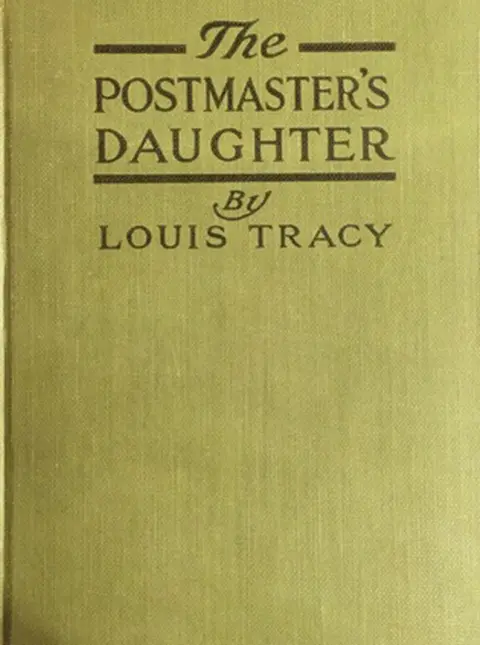
THE CLASSIC COLLECTION · 1916
"The Postmaster's Daughter" by Louis Tracy is a mystery novel written in the early 20th century. The story begins with the discovery of a drowned woman, Adelaide Melhuish, whose body is found in the river bordering the estate of John Menzies Grant, a writer and former army officer. The opening establishes a tense atmosphere, hinting at complex relationships, as secrets from the past intertwine with the present, suggesting themes of love, betrayal, and murder. The opening of the book introduces John Menzies Grant as he enjoys a serene morning in his garden, oblivious to the troubling events that will soon unfold. After discovering the body of the drowned woman, he is drawn into a web of suspicion when the police arrive. The narrative hints at his previous connection with the deceased, raising questions about his past relationship with Adelaide and the circumstances leading to her tragic death. Additionally, the presence of Doris Martin, the postmaster's daughter, adds another layer of tension and potential scandal as her involvement with Grant may complicate matters further. The chapter sets the stage for a complex investigation that intertwines personal histories with the broader implications of a crime that disrupts the peace of a small village.
Introduction adapted from the source catalogue; source summaries may be automatically generated.
Free to read · English · 66,859 words · No account needed
MAKE TIME FOR A GOOD BOOK
On by default. Untick to stop anonymous reading totals. Each page counts after 10 seconds in view. How this works.
Anonymous counting is on unless you have switched it off.
“Quite clearly a précis of Grant’s remarks when Siddle called on
Monday,” said Winter.
At any other time, Furneaux would have waxed sarcastic. Now he merely
nodded.
“Stops in a queer way,” he muttered. “Not a word about the inquest or the missing bottles.”
The preceding page held even more disjointed entries, which, nevertheless, provided a fair synopsis of Doris’s spirited words on the Sunday afternoon.
_“Malice and ignorance.”
“Patient because of years.”
“Loyal comrade. Shall remain.”
“Code.”
“No difference in friendship.”
“E. hopeless. Contempt.”
“Skipping—good.”
On the next page:
“Isidor G. Ingerman. Useful. Inquire.”
“E.’s boasts? Nonsensical, surely!”
“Why has D. gone?”_
Both men paused at that line.
“Detective?” suggested Winter.
“That’s how I take it,” agreed Furneaux.
Then came a sign: “+10%.”
“Elkin’s mixture was not ‘as before.’ It was fortified,” grinned Furneaux. “That’s the exact increase of nicotine. By the way, I have a sample. We can take care of him on that charge, without a shadow of doubt.”
Winter blew softly on the back of his friend’s head.
“You’re thorough, Charles, thorough!” he murmured. “It’s a treat to work with you when you get really busy.”
Furneaux ran his thumb across the end of several leaves.
“I can tell you now,” he said, “that there’s nothing of real value in the earlier notes. So far as I can judge, they refer either to a sort of settlement with his wife or chance phrases used by Doris Martin which might imply that she was heart whole and fancy free. There’s not a bally word dealing with the murder, or that can be twisted into the vaguest allusion to it. But here’s a plan and section which have a sort of significance. I’ve seen the place, so recognized it, or thought I did. We must check it, of course. Here you are! You know the footbridge across the river from Bush Walk?”
“Yes.”
“The eastern end is supported on a hollow pier of masonry, in which one might tog up unseen. These drawings would be useful as an Aide Memoire on a dark night. A false step, with the river in flood, might be awkward.”
“What’s that on the opposite page?”
“I give it up—at present.”
This somewhat rare display of modesty on Furneaux’s part was readily understandable. A series of straight lines and angles conveyed very little hint of their purport; but Winter smiled behind his friend’s back.
“I’ve been prowling about this wretched inn longer than you,” he said. “Look outside, to the left.”
Your reading position is saved on this browser. Take it to another device with a library code. Reading pages adapt to text, rather than matching a printed edition.
Louis Tracy
Louis Tracy
Louis Tracy
Louis Tracy
BEHIND THE BOOK
This eBook is for the use of anyone anywhere in the United States and most other parts of the world at no cost and with almost no restrictions whatsoever. You may copy it, give it away or re-use it under the terms of the Project Gutenberg License included with this eBook or online at www.gutenberg.org. If you are not located in the United States, you will have to check the laws of the country where you are located before using this eBook. Read the source licence.
The original source file, including credits and licence, is retained by this library. Request an original-format copy at no charge. Please include the book title and Project Gutenberg identifier #10110.
KEEP YOUR CURIOSITY GOING
Coulson Kernahan

Maurice Baring
Frances Wright
Cécile Tormay

Frederic Jesup Stimson

W. H. P. (William Henry Pope) Jarvis