THE CLASSIC COLLECTION✦Karl GrierCLASSIC FREE BOOKS
Karl Grier
Louis Tracy
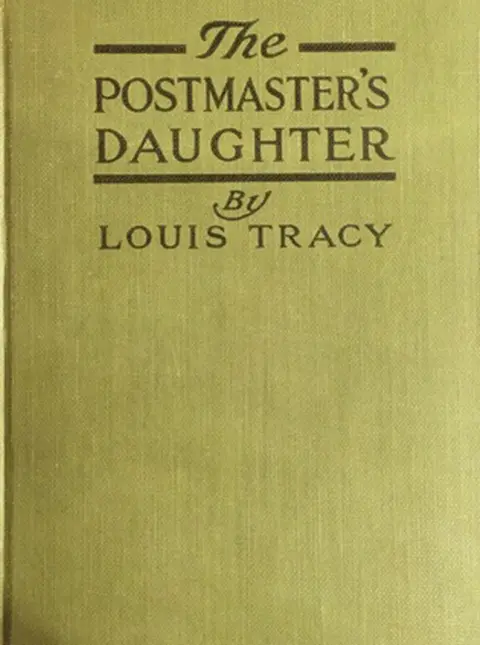
THE CLASSIC COLLECTION · 1916
"The Postmaster's Daughter" by Louis Tracy is a mystery novel written in the early 20th century. The story begins with the discovery of a drowned woman, Adelaide Melhuish, whose body is found in the river bordering the estate of John Menzies Grant, a writer and former army officer. The opening establishes a tense atmosphere, hinting at complex relationships, as secrets from the past intertwine with the present, suggesting themes of love, betrayal, and murder. The opening of the book introduces John Menzies Grant as he enjoys a serene morning in his garden, oblivious to the troubling events that will soon unfold. After discovering the body of the drowned woman, he is drawn into a web of suspicion when the police arrive. The narrative hints at his previous connection with the deceased, raising questions about his past relationship with Adelaide and the circumstances leading to her tragic death. Additionally, the presence of Doris Martin, the postmaster's daughter, adds another layer of tension and potential scandal as her involvement with Grant may complicate matters further. The chapter sets the stage for a complex investigation that intertwines personal histories with the broader implications of a crime that disrupts the peace of a small village.
Introduction adapted from the source catalogue; source summaries may be automatically generated.
Free to read · English · 66,859 words · No account needed
MAKE TIME FOR A GOOD BOOK
On by default. Untick to stop anonymous reading totals. Each page counts after 10 seconds in view. How this works.
Anonymous counting is on unless you have switched it off.
“I don’t know. I have my doubts. When I have a moment to spare I’ll put it under the microscope.”
Siddle examined the telegram again. The handwriting was that beloved of Civil Service Commissioners. Unquestionably, it was not Doris’s. No sooner had his friend gone off, still intent on the dead insect, than Siddle followed. He knew that the bee would undergo scientific scrutiny at once, so gave Martin just enough time to dive into the sitting-room before entering the post office.
“Did you receive this telegram a few minutes ago!” he inquired.
The young man became severely official.
“Which telegram?” he said stiffly.
“This one,” and Siddle gave him the written message.
“Yes,” was the answer.
“Excuse me, but—er—are its contents known to you only?”
“What do you mean, sir? It would cost me my berth if I divulged a word
of it to anyone.”
“I’m sorry. Pray don’t take offense. I—I’m anxious that my friends, Mr. and Miss Martin, should not hear of it. That is what I really have in mind.”
The telegraphist cooled down.
“You may be quite sure that neither they nor any other person in Steynholme will ever see the duplicate,” he said confidentially. “I make up a package containing duplicates each evening, and it is sent to headquarters. If it will please you, I’ll lock the copy now in my desk.”
“That is exceedingly good of you,” said Siddle gratefully. “You, as a Londoner, will understand that such a telegram from—er—Horton is not the sort of thing one would like to become known even in the most limited circle.”
“You can depend on me, sir.”
Siddle hastened back to his shop. The telegraphist looked after him.
“Queer!” he mused. “Miss Doris guessed him at once. Phi-ew, I must be careful! This village contains surprises.”
Doris, watching from an upper room, saw the visitor, and timed him. She imagined he had dispatched an answer. Being a woman, she sought enlightenment a few minutes later.
“Mr. Siddle came in,” she said tentatively.
“Yes,” said the specialist, smiling. “And I agree with you, Miss Martin. We mustn’t talk about telegrams, even among ourselves, unless it is necessary departmentally.”
Doris was silenced, but she read the riddle correctly. The chemist was particularly anxious that no Steynholme resident should be made aware of his mother’s death. She wondered why.
She was enlightened when Furneaux paid a call about tea-time. She took him into the garden. The lawn at The Hollies was empty.
“Well, you entertained an acquaintance yesterday?” he began.
“Yes. Am I to tell you what happened?”
Your reading position is saved on this browser. Take it to another device with a library code. Reading pages adapt to text, rather than matching a printed edition.
Louis Tracy
Louis Tracy
Louis Tracy
Louis Tracy
BEHIND THE BOOK
This eBook is for the use of anyone anywhere in the United States and most other parts of the world at no cost and with almost no restrictions whatsoever. You may copy it, give it away or re-use it under the terms of the Project Gutenberg License included with this eBook or online at www.gutenberg.org. If you are not located in the United States, you will have to check the laws of the country where you are located before using this eBook. Read the source licence.
The original source file, including credits and licence, is retained by this library. Request an original-format copy at no charge. Please include the book title and Project Gutenberg identifier #10110.
KEEP YOUR CURIOSITY GOING
Coulson Kernahan

Maurice Baring
Frances Wright
Cécile Tormay

Frederic Jesup Stimson

W. H. P. (William Henry Pope) Jarvis