THE CLASSIC COLLECTION✦Karl GrierCLASSIC FREE BOOKS
Karl Grier
Louis Tracy
THE CLASSIC COLLECTION · 1916
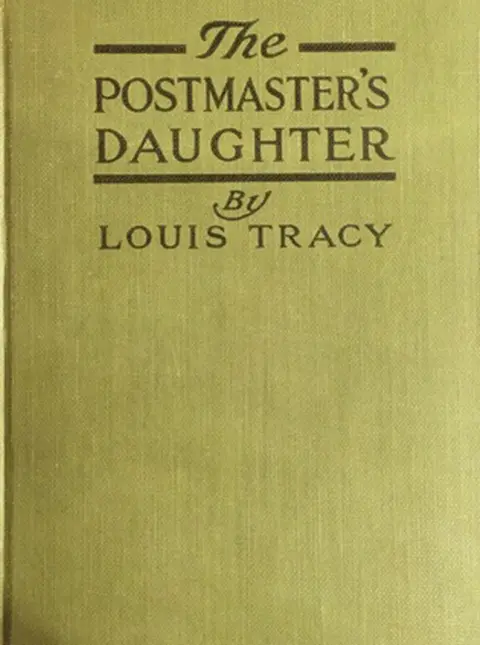
"The Postmaster's Daughter" by Louis Tracy is a mystery novel written in the early 20th century. The story begins with the discovery of a drowned woman, Adelaide Melhuish, whose body is found in the river bordering the estate of John Menzies Grant, a writer and former army officer. The opening establishes a tense atmosphere, hinting at complex relationships, as secrets from the past intertwine with the present, suggesting themes of love, betrayal, and murder. The opening of the book introduces John Menzies Grant as he enjoys a serene morning in his garden, oblivious to the troubling events that will soon unfold. After discovering the body of the drowned woman, he is drawn into a web of suspicion when the police arrive. The narrative hints at his previous connection with the deceased, raising questions about his past relationship with Adelaide and the circumstances leading to her tragic death. Additionally, the presence of Doris Martin, the postmaster's daughter, adds another layer of tension and potential scandal as her involvement with Grant may complicate matters further. The chapter sets the stage for a complex investigation that intertwines personal histories with the broader implications of a crime that disrupts the peace of a small village.
Introduction adapted from the source catalogue; source summaries may be automatically generated.
Free to read · English · 66,859 words · No account needed
MAKE TIME FOR A GOOD BOOK
On by default. Untick to stop anonymous reading totals. Each page counts after 10 seconds in view. How this works.
Anonymous counting is on unless you have switched it off.
“There you are, gentlemen!” he said, puffing after the slight exertion. “That’s the way of it. How does it strike you?”
“It’s what a sailor calls two half hitches,” commented Hart instantly. “A very serviceable knot, which will resist to the full strength of the rope.”
“We have no sailors in Steynholme, sir,” said the policeman.
“Oh, it’s used regularly by tradesmen,” put in Grant. “A draper, or grocer—any man accustomed to tying parcels securely, in fact—will fashion that knot nine times out of ten.”
“How about a—a farmer, sir?” That was as near as Robinson dared to go to “horse-dealer.”
“I think a farmer would be more likely to adopt a timber hitch, which is made in several ways. Here are samples.” And Grant busied himself with rope and sack.
Robinson watched closely.
“Yes,” he nodded. “I’ve seen those knots in a farmyard.... Well, it’s something—not much—but a trifle better than nothing.... All right, Bates. You can take ’em away.”
“Have you shown that knot to Mr. Furneaux?” inquired Grant.
“No, sir. I’ve kept that up me sleeve, as the sayin’ is.”
“But why?”
Robinson shuffled uneasily on his feet.
“These Scotland Yard men will hardly listen to a uniformed constable, sir,” he said. “I’ll tell ’em all about it at the inquest on Wednesday.”
“In effect, John P. Robinson he sez they didn’t know everythin’ down in Judee,” quoted Hart.
“You’ve got my name pat,” grinned the policeman, whose Christian names were “John Price.”
“My name is Walter, not Patrick,” retorted Hart. Robinson continued to smile, though he failed to grasp the joke until late that evening.
“Did you make up that verse straight off, sir,” he asked.
“No. It’s a borrowed plume, plucked from an American quill pen.”
Hart gave “plume” a French sound, and Robinson was puzzled to know why Grant bade his friend stop profaning a peaceful Sunday afternoon.
“You’ll have a glass of beer now?” went on the host.
“I don’t mind if I do, sir, though it’s tea-time, and I make it a rule on Sundays to have tea with the missis. A policeman’s hours are broken up, and his wife hardly ever knows when to have a meal ready.”
Minnie was summoned. It took her a couple of minutes to draw the beer from a cool cellar. So it chanced that when Doris led Mr. Siddle to the edge of the cliff about twenty-five minutes past four, the first thing they saw was the local police-constable on the lawn of The Hollies putting down a gill of “best Sussex” at a draught.
Your reading position is saved on this browser. Take it to another device with a library code. Reading pages adapt to text, rather than matching a printed edition.
Louis Tracy
Louis Tracy
Louis Tracy
Louis Tracy
BEHIND THE BOOK
This eBook is for the use of anyone anywhere in the United States and most other parts of the world at no cost and with almost no restrictions whatsoever. You may copy it, give it away or re-use it under the terms of the Project Gutenberg License included with this eBook or online at www.gutenberg.org. If you are not located in the United States, you will have to check the laws of the country where you are located before using this eBook. Read the source licence.
The original source file, including credits and licence, is retained by this library. Request an original-format copy at no charge. Please include the book title and Project Gutenberg identifier #10110.
KEEP YOUR CURIOSITY GOING
Coulson Kernahan

Maurice Baring
Frances Wright
Cécile Tormay

Frederic Jesup Stimson

W. H. P. (William Henry Pope) Jarvis