THE CLASSIC COLLECTION✦Karl GrierCLASSIC FREE BOOKS
Karl Grier
Louis Tracy
THE CLASSIC COLLECTION · 1916
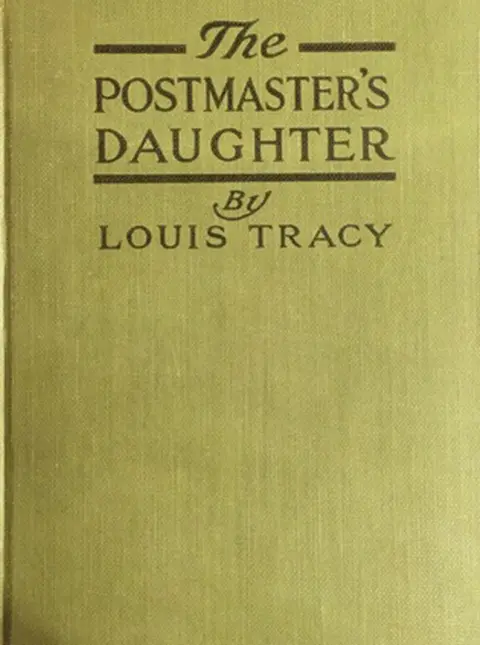
"The Postmaster's Daughter" by Louis Tracy is a mystery novel written in the early 20th century. The story begins with the discovery of a drowned woman, Adelaide Melhuish, whose body is found in the river bordering the estate of John Menzies Grant, a writer and former army officer. The opening establishes a tense atmosphere, hinting at complex relationships, as secrets from the past intertwine with the present, suggesting themes of love, betrayal, and murder. The opening of the book introduces John Menzies Grant as he enjoys a serene morning in his garden, oblivious to the troubling events that will soon unfold. After discovering the body of the drowned woman, he is drawn into a web of suspicion when the police arrive. The narrative hints at his previous connection with the deceased, raising questions about his past relationship with Adelaide and the circumstances leading to her tragic death. Additionally, the presence of Doris Martin, the postmaster's daughter, adds another layer of tension and potential scandal as her involvement with Grant may complicate matters further. The chapter sets the stage for a complex investigation that intertwines personal histories with the broader implications of a crime that disrupts the peace of a small village.
Introduction adapted from the source catalogue; source summaries may be automatically generated.
Free to read · English · 66,859 words · No account needed
MAKE TIME FOR A GOOD BOOK
On by default. Untick to stop anonymous reading totals. Each page counts after 10 seconds in view. How this works.
Anonymous counting is on unless you have switched it off.
Yes, the master was on the lawn with Mr. Hart. The policeman found the two there, seated in chairs with awnings. They had been discussing, of all things in the world, the futurist craze in painting. Hart held by it, but Grant carried bigger guns in real knowledge of the artist’s limitations as well as his privileges.
Hart was the first to notice the newcomer’s presence, and greeted him
joyously.
“Come along, Robinson, and manacle this reprobate,” he shouted. “He’s nothing but a narrow-minded pre-Rafaelite. A period in prison will dust the cobwebs out of his attic.”
“Hello, Robinson!” said, Grant. “Anything stirring?”
“Not much, sir. I just popped in to ask if you remembered exactly how
the body was roped?”
“Indeed, I do not. Some incidents of that horrible half hour have gone into a sad jumble. I recollect you calling attention to the matter, but what your point was I really cannot say now. Perhaps it may come back if you explain.”
“Well, we don’t seem to be making a great deal of progress, sir, and I was wondering whether you two gentlemen might help. I don’t want it mentioned. I’m taking a line of me own.”
Grant repressed a smile. He recalled well enough the first “line” the policeman took, and the mischief it had caused. Being an even-minded person, however, he admitted that his own behavior had not been above suspicion on the day the crime was discovered. In allotting blame, as between Robinson and himself, the proportion was six of one and half a dozen of the other.
“Propound, justiciary,” said Hart. “You’ve started well, anyhow. The connection between a line and a rope should be obvious even to a judge.... As a pipe-opener, have a drink!”
Robinson had removed his helmet, and was flourishing a red handkerchief, not without cause, the day being really very hot.
“Not for a few minutes, thank you, sir,” said the policeman. “May I ask Bates for a sack and a cord?”
He went to the kitchen. Hart was “tickled to death,” he vowed.
“We are about to witness the reconstruction of the crime, a procedure which the French delight in, and the intellect of France is a hundred years ahead of our effete civilization,” he chortled.
Grant was not so pleased. The memory of a distressing vision was beginning to blur, and this ponderous policeman must come and revive it. Yet, even he grew interested when Robinson illustrated a nebulous idea by knotting a clothesline around a sack stuffed with straw, having brought Bates to bear him out in the matter of accuracy.
Your reading position is saved on this browser. Take it to another device with a library code. Reading pages adapt to text, rather than matching a printed edition.
Louis Tracy
Louis Tracy
Louis Tracy
Louis Tracy
BEHIND THE BOOK
This eBook is for the use of anyone anywhere in the United States and most other parts of the world at no cost and with almost no restrictions whatsoever. You may copy it, give it away or re-use it under the terms of the Project Gutenberg License included with this eBook or online at www.gutenberg.org. If you are not located in the United States, you will have to check the laws of the country where you are located before using this eBook. Read the source licence.
The original source file, including credits and licence, is retained by this library. Request an original-format copy at no charge. Please include the book title and Project Gutenberg identifier #10110.
KEEP YOUR CURIOSITY GOING
Coulson Kernahan

Maurice Baring
Frances Wright
Cécile Tormay

Frederic Jesup Stimson

W. H. P. (William Henry Pope) Jarvis