THE CLASSIC COLLECTION✦Aubrey BeardsleyCLASSIC FREE BOOKS
Aubrey Beardsley
Haldane Macfall
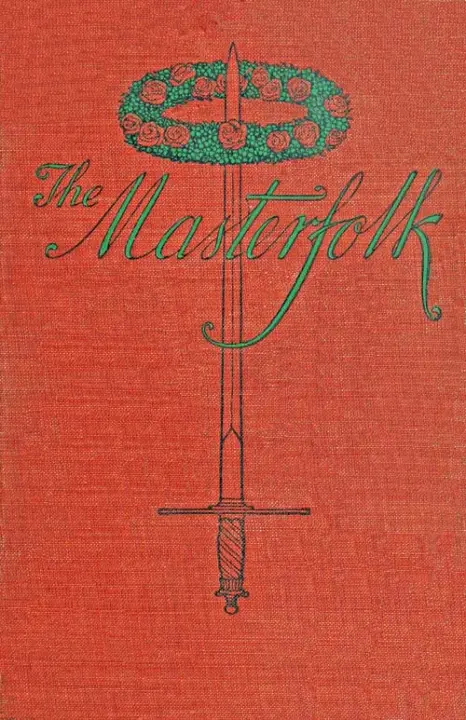
THE CLASSIC COLLECTION · 1903
"The Masterfolk" by Haldane MacFall is a novel written in the early 20th century. The story appears to center around the literary world, delving into the lives and struggles of a group of characters involved in a struggling publication. Two primary characters, Netherby Gomme, a humorist and the editor’s son Oliver Baddlesmere, navigate their way through the complexities of writing, social expectations, and personal aspirations amidst the backdrop of early 1900s British society. The opening of the novel introduces readers to the dingy editorial office where Netherby Gomme, characterized as a gaunt and serious youth, works diligently on his writing while mentoring his younger colleague, Oliver. The tone is both humorous and reflective as they discuss various humorous topics and the challenges facing them in the literary industry. The narrative offers glimpses into their personalities and their surroundings, highlighting the tension between ambition and reality, as well as the struggles of lesser-known writers striving for recognition. As the characters interact, they reveal layers of camaraderie and concern, setting the stage for deeper exploration of themes related to artistry and societal expectations throughout the story.
Introduction adapted from the source catalogue; source summaries may be automatically generated.
Free to read · English · 167,429 words · No account needed
MAKE TIME FOR A GOOD BOOK
On by default. Untick to stop anonymous reading totals. Each page counts after 10 seconds in view. How this works.
Anonymous counting is on unless you have switched it off.
There was laughing applause by the bed.
Caroline smiled sadly:
“So you have been a little lonely, eh, Paul?”
“I am finding myself more and more alone.”
There was another gust of laughter from the group about the bed.
Pangbutt looked round uneasily.
The sphinx smile came to Caroline’s lips; she saw his uneasiness.
“Paul,” she said--“there are too many ghosts in your house.”
“Ghosts?” he asked moodily. He nodded after awhile:
“Perhaps there are ghosts,” he said bitterly.
She leaned forward:
“Yes, Paul--when the twilight comes, and the day’s work is set aside, all the colours turn to drab--and the ghosts of dead friendships and dead follies come out and walk.”
He uttered a low bitter laugh:
“And yet there are they that are jealous because I am famous.”
Laughter burst into the room.
Pangbutt moved uneasily:
“How oddly those men laugh!” he said.
“You are grown suspicious, Paul--they are not even thinking of us.... Every nudge at the elbow is not Envy.”
Pangbutt sighed, and turned his eyes inwards again towards the man who
interested him most:
“I begin to think,” said he, “that I have been living in a fools’
paradise.”
Caroline’s eyes hardened:
“There are worse things than a fools’ paradise,” she said. “The man who lives for himself alone may awake one day to find himself in a mad-house--one with all the other ghosts that flit about his prison--a shadow amongst shadows, seeking shadows.”
“A shadow?”
She nodded:
“A shadow, Paul.... There is no woman in your life--no child--no care but for self. What does a childless, mateless man know of life? He has not taken up its most initial gifts. He avoids its responsibilities, its risks, its pains, its debt to God and man. Why should he expect, or even hope for, the joys of life? Who can know real delight who shirks the winning--or who shall find happiness that shrinks from sorrows?”
He shrugged his shoulders impatiently:
“Why should I become a part of the crowd?” he asked with contempt.
“You cannot turn your back on your fellows--unless you are to grow an orchard of dead-sea apples,” she said.
He sat silent for awhile.
He gazed perplexedly at his ambitions:
“I have made a career--have won its prizes. Until to-night I considered myself an object of envy.... I am an object of envy.”
“Tush!” she said. “Better be a microbe than a loveless man.”
She laughed--but at the sight of his wrecked self-esteem falling about his wretched hunched shoulders the laughter left her eyes.
She leaned forward:
Your reading position is saved on this browser. Take it to another device with a library code. Reading pages adapt to text, rather than matching a printed edition.
Haldane Macfall
Haldane Macfall
Haldane Macfall
Haldane Macfall
BEHIND THE BOOK
This eBook is for the use of anyone anywhere in the United States and most other parts of the world at no cost and with almost no restrictions whatsoever. You may copy it, give it away or re-use it under the terms of the Project Gutenberg License included with this eBook or online at www.gutenberg.org. If you are not located in the United States, you will have to check the laws of the country where you are located before using this eBook. Read the source licence.
The original source file, including credits and licence, is retained by this library. Request an original-format copy at no charge. Please include the book title and Project Gutenberg identifier #61754.
KEEP YOUR CURIOSITY GOING
Coulson Kernahan

Maurice Baring
Frances Wright
Cécile Tormay

Frederic Jesup Stimson

W. H. P. (William Henry Pope) Jarvis