THE CLASSIC COLLECTION✦Aubrey BeardsleyCLASSIC FREE BOOKS
Aubrey Beardsley
Haldane Macfall
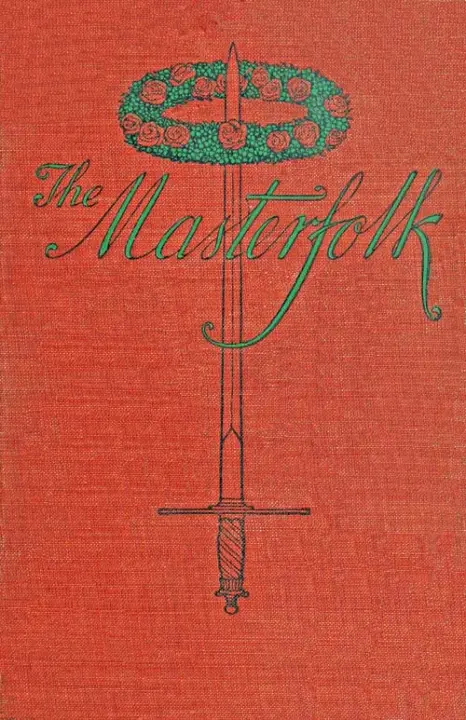
THE CLASSIC COLLECTION · 1903
"The Masterfolk" by Haldane MacFall is a novel written in the early 20th century. The story appears to center around the literary world, delving into the lives and struggles of a group of characters involved in a struggling publication. Two primary characters, Netherby Gomme, a humorist and the editor’s son Oliver Baddlesmere, navigate their way through the complexities of writing, social expectations, and personal aspirations amidst the backdrop of early 1900s British society. The opening of the novel introduces readers to the dingy editorial office where Netherby Gomme, characterized as a gaunt and serious youth, works diligently on his writing while mentoring his younger colleague, Oliver. The tone is both humorous and reflective as they discuss various humorous topics and the challenges facing them in the literary industry. The narrative offers glimpses into their personalities and their surroundings, highlighting the tension between ambition and reality, as well as the struggles of lesser-known writers striving for recognition. As the characters interact, they reveal layers of camaraderie and concern, setting the stage for deeper exploration of themes related to artistry and societal expectations throughout the story.
Introduction adapted from the source catalogue; source summaries may be automatically generated.
Free to read · English · 167,429 words · No account needed
MAKE TIME FOR A GOOD BOOK
On by default. Untick to stop anonymous reading totals. Each page counts after 10 seconds in view. How this works.
Anonymous counting is on unless you have switched it off.
Which Essays the High Epic Note
The day on which Mr. Quilliam O’Flaherty Macloughlin Myre got his freedom in the divorce-courts of France, he received a challenge from a hot young blood called Solignac, first cousin to Gabrielle.
Gaston Latour entered the room, grimly solemn in the conventional frock-coat and trim dress of the man of fashion, and holding a shining silk hat in his hand. He was very careful of the silk hat--he had borrowed it. It had the flattest brim he could find in Paris.
He was followed by another solemn youth. They marched in, clicked their heels together, bowed, and presented the letter that held the invitation to face death at daybreak. It was all done with a charm of manner devoid of all offence, and a desire to be referred to two of Mr. Myre’s “friends.”
Mr. Myre read the letter; and, as he read, his face became more like the hue of badly-made paste.
He was a long time reading it, Gaston Latour’s sleepy eyes never
leaving him.
He burst into a harsh laugh, and flung the letter into the air:
“A challenge, eh? ... ha-ha! ho-ho-ho!... Tell your cousin, Monsieur Latour, that the duel is relegated to the limbo of opera-bouffe. Ho-ho-ho! We do not do these things in England.”
He prepared himself for a flight of oratory.
Gaston Latour nudged the other youth--they bowed solemnly and withdrew.
“Ho-ho! ha-ha-ha!” laughed Quogge Myre.
The following morning Mr. Quilliam O’Flaherty Macloughlin Myre’s name was posted in every club in Paris, and struck from the list of those to which he had belonged; so it came about that he had to live his day at cafés.
And it was as he stood at a table, giving authoritative utterance with loud yawing voice to a group of youths that sat about him, vowing that he had determined to shake the dust of Paris from off his splay feet and to start a great renaissance of the English drama, when a handsome young woman, sister to Gaston Latour, entered the place, walked straight up to Mr. Myre, and struck him a sounding buffet on the ear that sent his hat flying from his head.
Quilliam O’Flaherty stooping down in confusion to search for the hat, she kicked him violently behind.
There was a roar of laughter from the students seated round about, and they tapped the handles of their knives upon the tables, singing:
“Opera-bouffe, bouffe, bouffe! Opera-bouffe, bouffe, bouffe! Hey-hey-hey! bouffe-bouffe-bouffe!”
Then the girl flogged Quilliam with a horse-whip, thrice:
Once for France.
Once for womanhood.
And once because she liked it.
The whip whistled.
Your reading position is saved on this browser. Take it to another device with a library code. Reading pages adapt to text, rather than matching a printed edition.
Haldane Macfall
Haldane Macfall
Haldane Macfall
Haldane Macfall
BEHIND THE BOOK
This eBook is for the use of anyone anywhere in the United States and most other parts of the world at no cost and with almost no restrictions whatsoever. You may copy it, give it away or re-use it under the terms of the Project Gutenberg License included with this eBook or online at www.gutenberg.org. If you are not located in the United States, you will have to check the laws of the country where you are located before using this eBook. Read the source licence.
The original source file, including credits and licence, is retained by this library. Request an original-format copy at no charge. Please include the book title and Project Gutenberg identifier #61754.
KEEP YOUR CURIOSITY GOING
Coulson Kernahan

Maurice Baring
Frances Wright
Cécile Tormay

Frederic Jesup Stimson

W. H. P. (William Henry Pope) Jarvis