THE CLASSIC COLLECTION✦Aubrey BeardsleyCLASSIC FREE BOOKS
Aubrey Beardsley
Haldane Macfall
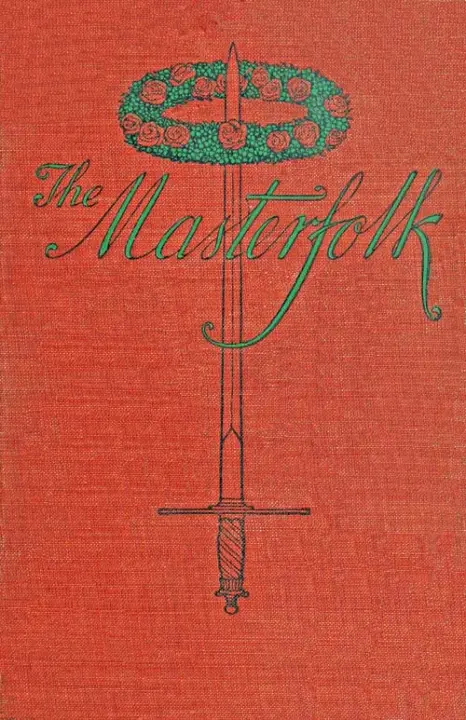
THE CLASSIC COLLECTION · 1903
"The Masterfolk" by Haldane MacFall is a novel written in the early 20th century. The story appears to center around the literary world, delving into the lives and struggles of a group of characters involved in a struggling publication. Two primary characters, Netherby Gomme, a humorist and the editor’s son Oliver Baddlesmere, navigate their way through the complexities of writing, social expectations, and personal aspirations amidst the backdrop of early 1900s British society. The opening of the novel introduces readers to the dingy editorial office where Netherby Gomme, characterized as a gaunt and serious youth, works diligently on his writing while mentoring his younger colleague, Oliver. The tone is both humorous and reflective as they discuss various humorous topics and the challenges facing them in the literary industry. The narrative offers glimpses into their personalities and their surroundings, highlighting the tension between ambition and reality, as well as the struggles of lesser-known writers striving for recognition. As the characters interact, they reveal layers of camaraderie and concern, setting the stage for deeper exploration of themes related to artistry and societal expectations throughout the story.
Introduction adapted from the source catalogue; source summaries may be automatically generated.
Free to read · English · 167,429 words · No account needed
MAKE TIME FOR A GOOD BOOK
On by default. Untick to stop anonymous reading totals. Each page counts after 10 seconds in view. How this works.
Anonymous counting is on unless you have switched it off.
“Dear Noll,” writes Horace Malahide about this time, “I have a son. He speaks English as yet with a strong foreign accent--but lack of experience may have more than something to do with it. If you come, I’ll let you play with him.
I live in a whirl of tangled emotions in these days.
T’other evening I went home, to my father’s marble halls, to seek the old gentleman on an affair of hot urgency. It was in the long hours. I lost some temper--the butler being a sphinx of ducal know-nothingness--so I rang up the housekeeper. Yes, she knew where a telegram would find Sir Pompey if I would leave it with her.
Leave it!
Gods! said I, am I utterly disinherit?
Forthwith the heir of this branch of the Malahides demanded the address.
It lay at St. John’s Wood!
I nodded ‘That will do’ to the twain, and dismissed them; and, they being dismissed, I whistled long.
Naughty old gentleman!...
The next morning Pa did not return. Mid-day passed. Evening stole on.... The dusk saw me descend at the doors of the address in St. John’s Wood from mine hansom cab.
I must preach the decencies; thus I, strengthening the intention as I
rang.
‘Sir Pompey Malahide is here,’ said I sternly to the smart maid that
opened the door.
‘Yes, sir,’ said she.
‘I desire to see my father,’ said I, and marched boldly towards the furious racket that filled the room near at hand--the paternal roar distinctly discernible, bassoonlike as though he cried small coal.
I flung open the door--burst upon the riot----
On the floor lay the Byronic Bartholomew Doome with three children rolling over him--three, no less!--another in his arms--Sir Pompey Malahide, my father, on all fours, pretending to be a she-bear, his coat-tails over his head, shaking a footstool in his teeth, and growling like an ass in pain--and seated on the immaculate waistcoat of the dark mysterious Bartholomew the most beautiful young woman I have ever seen. The din infernal--and Pa the worst part of the din.
‘What does this mean, Pa?’ cried I.
They gathered themselves up, shamelessly--laughed--ye gods, twittingly, at me! Wholly unabashed, Pa, shaking himself into comfort in his clothes, slapped me upon the back:
‘Horace, my son----’
‘Don’t be familiar, Sir Pompey,’ said I. ‘You are speaking to the heir to a baronetcy.’
The baronet laughed vulgarly:
‘Mrs. Bartholomew Doome,’ he said--‘allow me to introduce to you Horace, my son--at least, my reputed son.’
Bows, chassées, and greetings.
‘Horace--the Misses Doome, Master Horace Doome, and Master Oliver
Doome----’
Your reading position is saved on this browser. Take it to another device with a library code. Reading pages adapt to text, rather than matching a printed edition.
Haldane Macfall
Haldane Macfall
Haldane Macfall
Haldane Macfall
BEHIND THE BOOK
This eBook is for the use of anyone anywhere in the United States and most other parts of the world at no cost and with almost no restrictions whatsoever. You may copy it, give it away or re-use it under the terms of the Project Gutenberg License included with this eBook or online at www.gutenberg.org. If you are not located in the United States, you will have to check the laws of the country where you are located before using this eBook. Read the source licence.
The original source file, including credits and licence, is retained by this library. Request an original-format copy at no charge. Please include the book title and Project Gutenberg identifier #61754.
KEEP YOUR CURIOSITY GOING
Coulson Kernahan

Maurice Baring
Frances Wright
Cécile Tormay

Frederic Jesup Stimson

W. H. P. (William Henry Pope) Jarvis