THE CLASSIC COLLECTION✦Aubrey BeardsleyCLASSIC FREE BOOKS
Aubrey Beardsley
Haldane Macfall
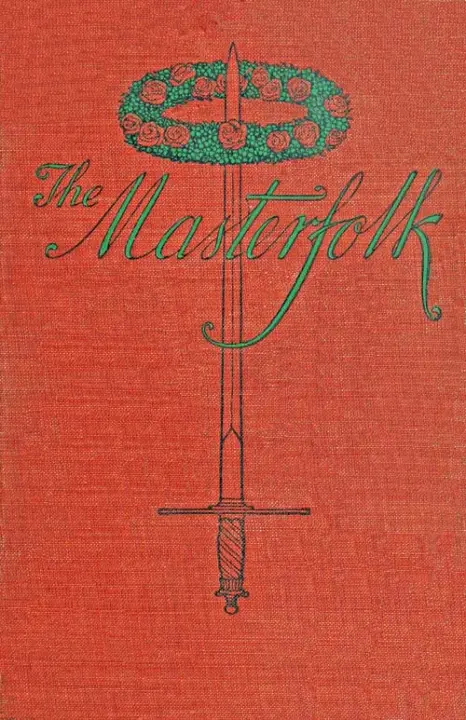
THE CLASSIC COLLECTION · 1903
"The Masterfolk" by Haldane MacFall is a novel written in the early 20th century. The story appears to center around the literary world, delving into the lives and struggles of a group of characters involved in a struggling publication. Two primary characters, Netherby Gomme, a humorist and the editor’s son Oliver Baddlesmere, navigate their way through the complexities of writing, social expectations, and personal aspirations amidst the backdrop of early 1900s British society. The opening of the novel introduces readers to the dingy editorial office where Netherby Gomme, characterized as a gaunt and serious youth, works diligently on his writing while mentoring his younger colleague, Oliver. The tone is both humorous and reflective as they discuss various humorous topics and the challenges facing them in the literary industry. The narrative offers glimpses into their personalities and their surroundings, highlighting the tension between ambition and reality, as well as the struggles of lesser-known writers striving for recognition. As the characters interact, they reveal layers of camaraderie and concern, setting the stage for deeper exploration of themes related to artistry and societal expectations throughout the story.
Introduction adapted from the source catalogue; source summaries may be automatically generated.
Free to read · English · 167,429 words · No account needed
MAKE TIME FOR A GOOD BOOK
On by default. Untick to stop anonymous reading totals. Each page counts after 10 seconds in view. How this works.
Anonymous counting is on unless you have switched it off.
“Will no one come with me to see the almonds bloom?” said he; and fell through the doorway with a clatter, his feet inside.
Pangbutt hurried after him:
“A moment,” said he, as he passed Lovegood. “I’ll see him out. My guests do not require a host.”
Lovegood smiled grimly:
“No,” said he--“they are a host in themselves.”
The door closed on Pangbutt.
A titter went round the room.
Emma Hartroff sat up suddenly on the sofa:
“I say, boys,” said she, “Anthony Baddlesmere’s a bit down at heels, ain’t he? Eh?... Met him an hour ago--looked as if he’d pawned his shirt. I should have thought Caroline Baddlesmere’s book----”
Aubrey opened a sleepy eye where he lay on the sofa:
“Who says Caroline Baddlesmere?” he asked drowsily.
Emma turned on him:
“I say Caroline Baddlesmere,” she said. “I say she has written a book--which is more than your worst enemy could say of you, Aubrey.”
Aubrey yawned:
“Ah! Book is rather a large word, most blunt Emma. Every school-girl prints her literary effusions nowadays. But print and binding do not make a book.”
He yawned again.
Rippley raised his eyebrows:
“Aubrey’s quite inspired to-night,” he said.
The fussy little minor critic, Fosse, jumped into the opportunity for
an opinion:
“One cannot but admire the personality of Caroline Baddlesmere,” he
began.
Rippley winked to the others:
“Shorthand writer, please,” he called. “The lips of James Fosse are about to drop pearls.”
Fosse flushed impatiently, but held doggedly to his opportunity:
“But her work was bound to die. It lacked the dainty quality of style”--he twiddled fingers in the air, seeking the expression of subtleties too exquisite for translation by the tongue--“that illuminating light that only comes to the virile-minded; the epigram--finesse--the er--er----”
“Quite so,” growled Lovegood gloomily--“quite so, Mr. Fosse. Unlike your genius, the thrills of cachinnation never followed at her heels.”
Fosse’s fussy eyes looked perplexed:
“N-no, no. Perhaps not. Still--that was not exactly what----”
“Sit down, Fosse!” cried Rippley impatiently. “Let the other ass speak.”
Fosse sat down.
Aubrey drowsily took up the cue:
“Woman,” said he languidly--“woman is adorably illogical--deliciously ridiculous--exquisitely attractive; but woman has no sense of humour----”
Emma Hartroff laughed shrilly:
“Good old Aubrey!” cried she. “I always said that our minor poet was lineally descended from his mother.”
“Silence!” Lovegood’s bass boomed through the room. “Silence! I will have no one insinuate that our poet’s mother was an ass.”
Tumblers on tables, and feet on floor, thundered applause.
Aubrey, lying back on the sofa, his arms folded, and his head drooped forward, drowsily opened his eyes:
Your reading position is saved on this browser. Take it to another device with a library code. Reading pages adapt to text, rather than matching a printed edition.
Haldane Macfall
Haldane Macfall
Haldane Macfall
Haldane Macfall
BEHIND THE BOOK
This eBook is for the use of anyone anywhere in the United States and most other parts of the world at no cost and with almost no restrictions whatsoever. You may copy it, give it away or re-use it under the terms of the Project Gutenberg License included with this eBook or online at www.gutenberg.org. If you are not located in the United States, you will have to check the laws of the country where you are located before using this eBook. Read the source licence.
The original source file, including credits and licence, is retained by this library. Request an original-format copy at no charge. Please include the book title and Project Gutenberg identifier #61754.
KEEP YOUR CURIOSITY GOING
Coulson Kernahan

Maurice Baring
Frances Wright
Cécile Tormay

Frederic Jesup Stimson

W. H. P. (William Henry Pope) Jarvis