THE CLASSIC COLLECTION✦Aubrey BeardsleyCLASSIC FREE BOOKS
Aubrey Beardsley
Haldane Macfall
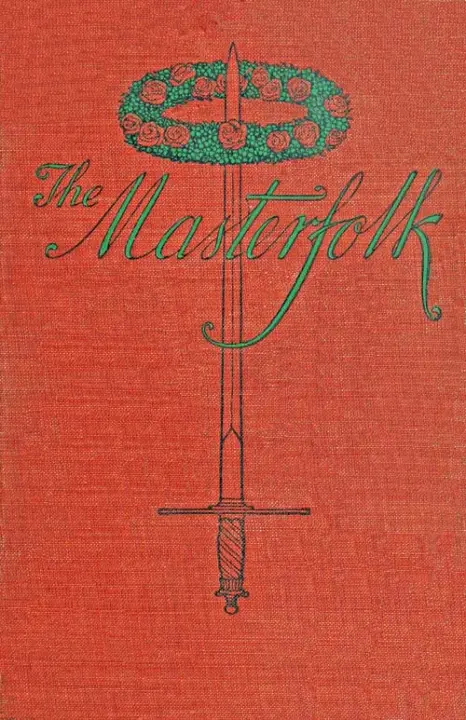
THE CLASSIC COLLECTION · 1903
"The Masterfolk" by Haldane MacFall is a novel written in the early 20th century. The story appears to center around the literary world, delving into the lives and struggles of a group of characters involved in a struggling publication. Two primary characters, Netherby Gomme, a humorist and the editor’s son Oliver Baddlesmere, navigate their way through the complexities of writing, social expectations, and personal aspirations amidst the backdrop of early 1900s British society. The opening of the novel introduces readers to the dingy editorial office where Netherby Gomme, characterized as a gaunt and serious youth, works diligently on his writing while mentoring his younger colleague, Oliver. The tone is both humorous and reflective as they discuss various humorous topics and the challenges facing them in the literary industry. The narrative offers glimpses into their personalities and their surroundings, highlighting the tension between ambition and reality, as well as the struggles of lesser-known writers striving for recognition. As the characters interact, they reveal layers of camaraderie and concern, setting the stage for deeper exploration of themes related to artistry and societal expectations throughout the story.
Introduction adapted from the source catalogue; source summaries may be automatically generated.
Free to read · English · 167,429 words · No account needed
MAKE TIME FOR A GOOD BOOK
On by default. Untick to stop anonymous reading totals. Each page counts after 10 seconds in view. How this works.
Anonymous counting is on unless you have switched it off.
“Doesn’t it, indeed! But I confess I have always been fascinated by the stage. There’s somethin’ so very romantic about livin’ in green-rooms and paintin’ your face, and--pretendin’ to be someone else.”
The other whispered in her ear.
The lorgnettes were flicked open again, and glittered upon Sir Gilders
Persimmon.
“Indeed! But he is so very old--and she--but there is such a difference of social rank between a baronet’s wife and a mere painter--surely! Still, he is very old. Almost permissible sin, Gerty.”
They both tittered.
“My dear,” said the other, “you are really quite naughty.”
Sir Gilders pounced upon Fosse, whom he had followed round the room, put up a hand to aid his dull hearing, and said:
“You were speaking of dotage----”
Fosse winced uneasily:
“No, sir,” he shrieked--“I was not talking of dotage. I say that the man who does not play whist lays up a sad old age for himself.” And, turning on his heel impatiently, “The devil take the man!” said he, and walked away.
Ffolliott espying the two newly-arrived ladies across the room, made
his way to them:
“Do you know, Miss Foljambe Pfinch,” he said--“I feel such an ass; they told me it was a--fancy--dress--affair.”
The lorgnettes were turned upon him:
“It’s that ridiculous Mr. Ffolliott,” said she; and laughed
immoderately.
Ffolliott sighed, and turned away:
“Everybody seems to think I am an ass to-night,” he said wearily. “Oh, there’s Fosse. I don’t like Fosse--but I’ll talk to him. No--he’s talking to another man. I think I’ll go home. No, I won’t, I’ll sit down.”
He sat down.
“Every fellow does something idiotic in his life,” he said.
He watched Fosse button-hole Gomme; and he saw Gomme’s lips smile amusedly as he gazed at the floor, listening to him.
He bent all his attention to hear what passed between the two.
“Now, you know, Mr. Gomme,” said the fussy little man--“in confidence, all these fellows take themselves too seriously to-day. Look at Rippley! he’s utterly uncultured--he hasn’t an aitch in his composition.”
Gomme nodded:
“But there isn’t an aitch in composition,” he said demurely.
“N-no.” Fosse stammered, becoming nervous. “But he can’t even pronounce the names of the ancients whose gods he models!”
Gomme smiled:
“No--but he can model ’em.”
Fosse was puzzled for an answer:
“N’yes, that’s true perhaps. But there’s Aubrey--look at his legs, his knees, his hair, his airs, his ties! He is for ever publishing volumes of poems which no one reads.”
“Yes,” said Gomme. “But the publishers must have their luxuries.”
Your reading position is saved on this browser. Take it to another device with a library code. Reading pages adapt to text, rather than matching a printed edition.
Haldane Macfall
Haldane Macfall
Haldane Macfall
Haldane Macfall
BEHIND THE BOOK
This eBook is for the use of anyone anywhere in the United States and most other parts of the world at no cost and with almost no restrictions whatsoever. You may copy it, give it away or re-use it under the terms of the Project Gutenberg License included with this eBook or online at www.gutenberg.org. If you are not located in the United States, you will have to check the laws of the country where you are located before using this eBook. Read the source licence.
The original source file, including credits and licence, is retained by this library. Request an original-format copy at no charge. Please include the book title and Project Gutenberg identifier #61754.
KEEP YOUR CURIOSITY GOING
Coulson Kernahan

Maurice Baring
Frances Wright
Cécile Tormay

Frederic Jesup Stimson

W. H. P. (William Henry Pope) Jarvis