THE CLASSIC COLLECTION✦Aubrey BeardsleyCLASSIC FREE BOOKS
Aubrey Beardsley
Haldane Macfall
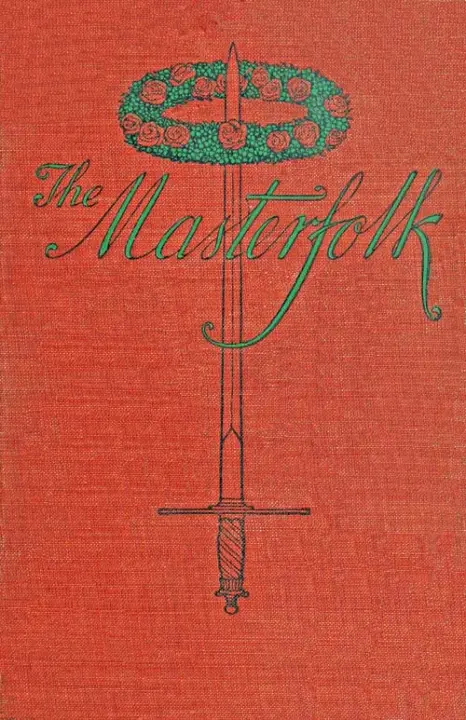
THE CLASSIC COLLECTION · 1903
"The Masterfolk" by Haldane MacFall is a novel written in the early 20th century. The story appears to center around the literary world, delving into the lives and struggles of a group of characters involved in a struggling publication. Two primary characters, Netherby Gomme, a humorist and the editor’s son Oliver Baddlesmere, navigate their way through the complexities of writing, social expectations, and personal aspirations amidst the backdrop of early 1900s British society. The opening of the novel introduces readers to the dingy editorial office where Netherby Gomme, characterized as a gaunt and serious youth, works diligently on his writing while mentoring his younger colleague, Oliver. The tone is both humorous and reflective as they discuss various humorous topics and the challenges facing them in the literary industry. The narrative offers glimpses into their personalities and their surroundings, highlighting the tension between ambition and reality, as well as the struggles of lesser-known writers striving for recognition. As the characters interact, they reveal layers of camaraderie and concern, setting the stage for deeper exploration of themes related to artistry and societal expectations throughout the story.
Introduction adapted from the source catalogue; source summaries may be automatically generated.
Free to read · English · 167,429 words · No account needed
MAKE TIME FOR A GOOD BOOK
On by default. Untick to stop anonymous reading totals. Each page counts after 10 seconds in view. How this works.
Anonymous counting is on unless you have switched it off.
“That is what they used to say to Rodolph Salis,” said he hoarsely--“that is what they used to say to Rodolph Salis.... Ah, that was a man. He knew how to live....” He got up, his hands twitching, and paced the room again: “It was Rodolph Salis that brought the wits to Montmartre. It was Rodolph Salis who saw that Genius would condescend to roar at the tavern, not to snore at the academy--it was Rodolph Salis who saw that as artist he could only be one of many, but as tavern-keeper he might be immortal--so it came that Rodolph created the most renowned tavern of France--so it came that Rodolph Salis opened the tavern of The Black Cat; and to its artistic rooms, in the atmosphere of masterpieces hung on the walls round about amongst its old dark panelling, under the dim lights of its wrought-iron lamps, the wits fore-gathered to godlike entertainment. On those walls the pencil of Steinlen had traced a masterpiece, and Willette’s dainty fingers drawn the nervous laughing line; there, seated before his glass of absinthe, I have seen Paul Verlaine write the exquisite lyrics of France; there, among the splendid riot, have sat Daudet, and Zola, and Richepin, Meissonier and Puvis de Chavannes and the rest.... Hoho! Salis put his waiters into the livery of the Forty Immortals, green coats and green leaves and breeches and silk stockings and all--put his flunkies into the habit of them that drowse at the Academy down yonder across the river, each snoring in his seat, the fortieth part of Immortality, sleeping away the honour of France, between bouts of cudgelling their dullard wits to produce the printed book. Tshah! where are the Immortals, the gods? Outside. Outside and aloof they stand--Molière and Rabelais and Balzac, Diderot and Rousseau, Victor Hugo and Georges Sand, Montaigne and De Musset, Zola and Verlaine, Daudet and Flaubert and Baudelaire and Théophile Gautier.... And whilst the Fortieth parts of Immortality each slept, smugly overfilling his breeches’ girth, loading the Academy with dull breathing, Rodolph Salis called the wits together: and at his call the immortals flung the immortal phrase round about the board, tossed to and fro the splendid jest in his tavern of The Black Cat. Day and night, spontaneous, full-blooded, polished, they lived their scintillating life.... I can see Rodolph, orange-haired, orange-bearded, pale, green-eyed, his wondrous white hands restless with the leaping pulse and quick nerve, as he was wont to sit at dinner with the wits. There was the real Academy of France. Ay, his waiters most fitly wore the leafed green coats and breeches of the Fortieth part of Immortality!... Ah, how the wine glowed!... With the dessert, Rodolph, sipping his coffee, listened with furrowed brow to the latest news, weighing it, testing it--the most brilliant journalists of France at his elbow. The quips, the jests, the biting comment! It was the centre of the world!... I can hear their literary criticism destroy a life’s work in a mot, fling immortal honour in a phrase, tossed in epigram across the table, and back again another as keen-edged--the last gossip of the stage--the loud hilarious scandal.... I can see Rodolph, the brows wrinkled in mighty furrows of keen attention as the poets read their lines--can hear his bravas that made men rich and set their blood tingling--can pluck out of the dead years the condemning thunders of his dispraise, can catch his deft wit polishing a blundering line.... But for Rodolph Salis many a poet, singer, artist had been this day in his garret, unknown--trudging, down at heels, the Undiscovered Country. But the artist in him! never forgetting his magnificence that he kept the tavern of France.... Hoho! I can hear the jovial laugh: ‘My lords,’ he’d cry, ‘the time has come for the nobility and self-respecting gentlemen to demand a fresh tankard of ale.’ Hoho! that was a king of tavern lords! Then the golden ale went round--the cloudy absinthe.... And when the room began to fill and the time for shadow-shows to begin, Salis was in full stride. Affable to his guests, always the good host, well-bred, polished, good-humoured, giving the stranger rank of nobility, he would show ‘monseigneur’ with pride of possession the cats that were limned upon the walls, the sketches, the glories of his ancient place; and lead the way to the shadow-show upstairs, sketches of France’s genius on the stair’s walls, hanging everywhere--and he so proud of it all! I can see him stride up and down the passage of the shadow theatre up there, as the witty pictures fell in black silhouette across the white sheet of the theatre’s round proscenium, his gay laugh, his running whimsical comment on affairs, his fierce biting denunciations, the flashing green eyes, the nervous white hand--God! what a fire burned there!... Ah, what songs, what poesie, what rhapsodies, what quaintly spoken words have sounded within those walls!... At midnight when the crowd was gone, as we sit here to-night, he was alone with the wits again--and the wine glowed, and the cloudy absinthe went round--and there was supper that the gods had envied to the tune of the wild badinage that was tossed about the board. And he, Rodolph Salis, the brightest star!... How the ghosts of the Great Dead have arisen at our summons, and walked there!... Tshah! there was the Academy of the world.... But--he--one day--found his nerves were gone--he took to his bed.... Even amidst the rousing chorus in the wind that passed, his quick ears had heard the Old Reaper’s whetstone upon the sickle--he heard the whisper of Doom--and the nimble wit of Rodolph Salis had never missed the intention of the most subtle hint. He tossed his jibe to Death. And who with more weighty right to the insolence? He had known life----”
Your reading position is saved on this browser. Take it to another device with a library code. Reading pages adapt to text, rather than matching a printed edition.
Haldane Macfall
Haldane Macfall
Haldane Macfall
Haldane Macfall
BEHIND THE BOOK
This eBook is for the use of anyone anywhere in the United States and most other parts of the world at no cost and with almost no restrictions whatsoever. You may copy it, give it away or re-use it under the terms of the Project Gutenberg License included with this eBook or online at www.gutenberg.org. If you are not located in the United States, you will have to check the laws of the country where you are located before using this eBook. Read the source licence.
The original source file, including credits and licence, is retained by this library. Request an original-format copy at no charge. Please include the book title and Project Gutenberg identifier #61754.
KEEP YOUR CURIOSITY GOING
Coulson Kernahan

Maurice Baring
Frances Wright
Cécile Tormay

Frederic Jesup Stimson

W. H. P. (William Henry Pope) Jarvis