THE CLASSIC COLLECTION✦Aubrey BeardsleyCLASSIC FREE BOOKS
Aubrey Beardsley
Haldane Macfall
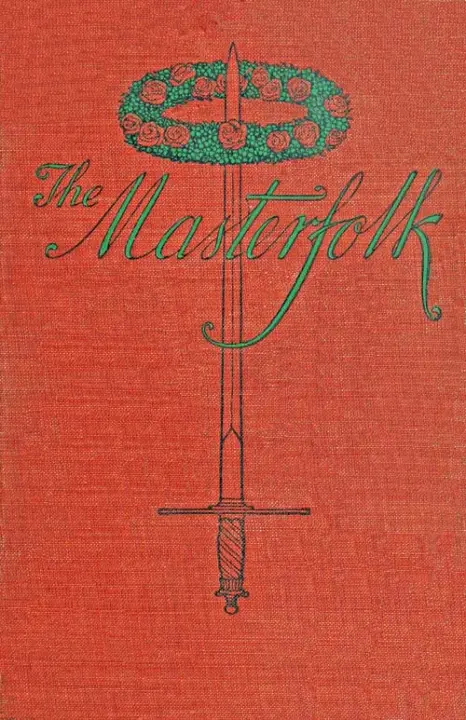
THE CLASSIC COLLECTION · 1903
"The Masterfolk" by Haldane MacFall is a novel written in the early 20th century. The story appears to center around the literary world, delving into the lives and struggles of a group of characters involved in a struggling publication. Two primary characters, Netherby Gomme, a humorist and the editor’s son Oliver Baddlesmere, navigate their way through the complexities of writing, social expectations, and personal aspirations amidst the backdrop of early 1900s British society. The opening of the novel introduces readers to the dingy editorial office where Netherby Gomme, characterized as a gaunt and serious youth, works diligently on his writing while mentoring his younger colleague, Oliver. The tone is both humorous and reflective as they discuss various humorous topics and the challenges facing them in the literary industry. The narrative offers glimpses into their personalities and their surroundings, highlighting the tension between ambition and reality, as well as the struggles of lesser-known writers striving for recognition. As the characters interact, they reveal layers of camaraderie and concern, setting the stage for deeper exploration of themes related to artistry and societal expectations throughout the story.
Introduction adapted from the source catalogue; source summaries may be automatically generated.
Free to read · English · 167,429 words · No account needed
MAKE TIME FOR A GOOD BOOK
On by default. Untick to stop anonymous reading totals. Each page counts after 10 seconds in view. How this works.
Anonymous counting is on unless you have switched it off.
“Nor have I been wholly alone.”
She sighed; and, with a smile, she died.
Betty, her eyes filled with tears, put out her dainty milk-white hand, with rosy fingers, to the dead eyelids and drew down the blinds that curtained the windows of the departed soul.
In the deepening dusk, Betty went out to find Eustace Lovegood.... She mounted the bare creaking stairs to his lodgings, and reaching his high attic, was glad to hear his deep-voiced growl to enter at her knocking.
The big man, in a threadbare dressing-gown, arose, with his wonted grand manner, to welcome her; and when he saw who was his visitor his heavy face was lighted with a smile:
“Mistress Betty!” said he--“by all that’s charming!”
He came to her and, the greetings over, with courtly etiquette led her to his chair--it was the only one in all the bare room.
“You look serious,” he said--“sit down and tell me.”
Betty hesitated:
“There is something on fire--a smell of paper burning,” she said.
Lovegood laughed his big laugh:
“I am making coffee,” he said.
She saw that the kettle in the narrow fireplace was being heated by burning balls of crumpled manuscript.
“But why do you heat the kettle with paper?” she asked.
He smiled drily:
“Ah, Betty--you push me to the extremity of truth. Well, it is because I have nothing else to burn.... Only my rejected poems. And I am badly in need of the coffee. The weather is very severe.”
Betty’s eyes filled with tears:
“I am sorry,” she said.
“Tut, tut! you mustn’t damp the spirits of the kettle, Betty--it begins to boil.... Wonderfully heating thing--poetry!”
He went to the kettle.
“You shall have first brew,” he added--“that you may never again despise coffee warmed by the passionate glow of verse.... There is a dearth of cups--and my landlady has a gouty leg--and the journeyings of the little maid-of-all-work make my heart ache--but I usurp the news.”
As the big man busied himself with his hospitalities, Betty told him of her errand--begged him to come back with her and give his counsel and aid.
He was for going straight away; but she insisted on sitting there until
he had drunk his coffee.
At the threshold, across the steps of the house, in the twilight of the silent street, lay the dead body of the Man of Pallid Ideals--a nosegay of pale flowers near his gloved hand, his white face turned upwards to the still skies, lit by the pale light of the mystic moon.
Your reading position is saved on this browser. Take it to another device with a library code. Reading pages adapt to text, rather than matching a printed edition.
Haldane Macfall
Haldane Macfall
Haldane Macfall
Haldane Macfall
BEHIND THE BOOK
This eBook is for the use of anyone anywhere in the United States and most other parts of the world at no cost and with almost no restrictions whatsoever. You may copy it, give it away or re-use it under the terms of the Project Gutenberg License included with this eBook or online at www.gutenberg.org. If you are not located in the United States, you will have to check the laws of the country where you are located before using this eBook. Read the source licence.
The original source file, including credits and licence, is retained by this library. Request an original-format copy at no charge. Please include the book title and Project Gutenberg identifier #61754.
KEEP YOUR CURIOSITY GOING
Coulson Kernahan

Maurice Baring
Frances Wright
Cécile Tormay

Frederic Jesup Stimson

W. H. P. (William Henry Pope) Jarvis