THE CLASSIC COLLECTION✦Aubrey BeardsleyCLASSIC FREE BOOKS
Aubrey Beardsley
Haldane Macfall
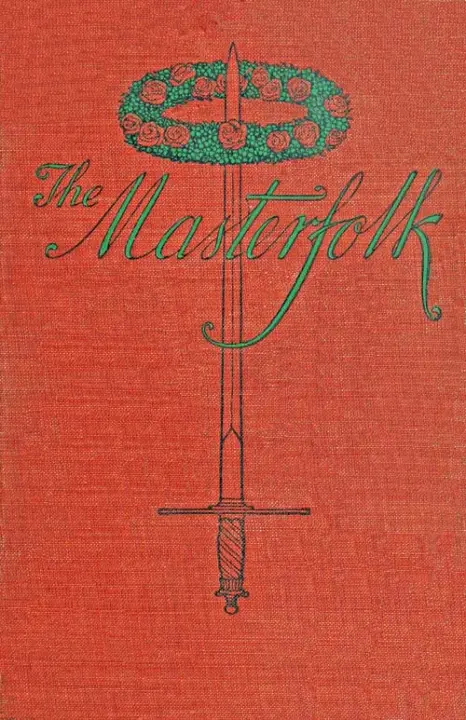
THE CLASSIC COLLECTION · 1903
"The Masterfolk" by Haldane MacFall is a novel written in the early 20th century. The story appears to center around the literary world, delving into the lives and struggles of a group of characters involved in a struggling publication. Two primary characters, Netherby Gomme, a humorist and the editor’s son Oliver Baddlesmere, navigate their way through the complexities of writing, social expectations, and personal aspirations amidst the backdrop of early 1900s British society. The opening of the novel introduces readers to the dingy editorial office where Netherby Gomme, characterized as a gaunt and serious youth, works diligently on his writing while mentoring his younger colleague, Oliver. The tone is both humorous and reflective as they discuss various humorous topics and the challenges facing them in the literary industry. The narrative offers glimpses into their personalities and their surroundings, highlighting the tension between ambition and reality, as well as the struggles of lesser-known writers striving for recognition. As the characters interact, they reveal layers of camaraderie and concern, setting the stage for deeper exploration of themes related to artistry and societal expectations throughout the story.
Introduction adapted from the source catalogue; source summaries may be automatically generated.
Free to read · English · 167,429 words · No account needed
MAKE TIME FOR A GOOD BOOK
On by default. Untick to stop anonymous reading totals. Each page counts after 10 seconds in view. How this works.
Anonymous counting is on unless you have switched it off.
“Oh--it’s no use your pretending to be so colossally gay, you know. I always notice that when a fellow makes a delirious fool of himself (hiccup) about a woman (hiccup) he becomes austere--morally austere.”
“Hiccup!” said Rippley; and there was loud applause at the tables.
Doome laughed:
“You were always a comic ass, Ffolliott,” said he--“but when did you degenerate into a philosopher?”
“Oh, yes--get me off the rails, of course! But I always notice that when a fellow makes a delirious fool of himself about a woman (hiccup)--fool enough, I mean, to become engaged--he becomes mollar’ly (hic)--mollarly austere.”
“Oh, damn!” said Doome.
Ffolliott raised drunken eyelids:
“But saying damn can go with great moral austerity.” He paused and uttered a giggle. “That’s an epigram, I think,” he said.
“What on earth are you jabbering about, Ffolliott?”
Ffolliott stuck to his theme with drunken persistence.
“A fellow who is engaged doesn’t seem to laugh at the same places in the comedy of life that he laughs at before he is engaged.”
“Get on, Ffolliott--get on. You talk like Euclid trying to invent a
comic song.”
Ffolliott blinked:
“I’ve always noticed,” said he--“that a fellow does not become really austere until he is engaged....” He sighed heavily. “I know such a good chap, who’s become engaged. He used to read the Pink Un; but now he reads The Descent of Man.”
“Shush!” said Doome impatiently.
Ffolliott giggled:
“D’you know,” said he--“I started to tell him such a comic story to-day--by George, I’ll tell it to you,” he tittered. “You know how ridiculous a woman with a pronounced nose looks in a bathing-dress! Well. But--perhaps I’d better not tell you--I’m sure you’re engaged----”
Doome slapped the narrow shoulders again with jovial hand, and sent more liquor flying down Ffolliott’s trousers:
“By Hermes, you are a clever fellow, Ffolliott,” said he.
“Oh, no--not always,” bleated the affected voice of Ffolliott--“I’m rather deliriously clever at times--in a flukey sort of way. I don’t mean to be. It’s hereditary. My mother’s uncle was a rural dean, you know, and----”
“But why do you wear an eyeglass?”
Ffolliott simpered:
“Foljambe of Baliol was the most pronounced man at the ’varsity; he is the most pronounced man at the bar--and Foljambe wears an eyeglass.”
“Does he?”
“Rather,” bleated Ffolliott. “And though, between you and me (hiccup), Foljambe’s a conceited ass, he is rather a remarkable ass; and I don’t know whether you have noticed it (hiccup), but in these days it takes rather a clever fellow to be a remarkable ass.”
Your reading position is saved on this browser. Take it to another device with a library code. Reading pages adapt to text, rather than matching a printed edition.
Haldane Macfall
Haldane Macfall
Haldane Macfall
Haldane Macfall
BEHIND THE BOOK
This eBook is for the use of anyone anywhere in the United States and most other parts of the world at no cost and with almost no restrictions whatsoever. You may copy it, give it away or re-use it under the terms of the Project Gutenberg License included with this eBook or online at www.gutenberg.org. If you are not located in the United States, you will have to check the laws of the country where you are located before using this eBook. Read the source licence.
The original source file, including credits and licence, is retained by this library. Request an original-format copy at no charge. Please include the book title and Project Gutenberg identifier #61754.
KEEP YOUR CURIOSITY GOING
Coulson Kernahan

Maurice Baring
Frances Wright
Cécile Tormay

Frederic Jesup Stimson

W. H. P. (William Henry Pope) Jarvis