THE CLASSIC COLLECTION✦Aubrey BeardsleyCLASSIC FREE BOOKS
Aubrey Beardsley
Haldane Macfall
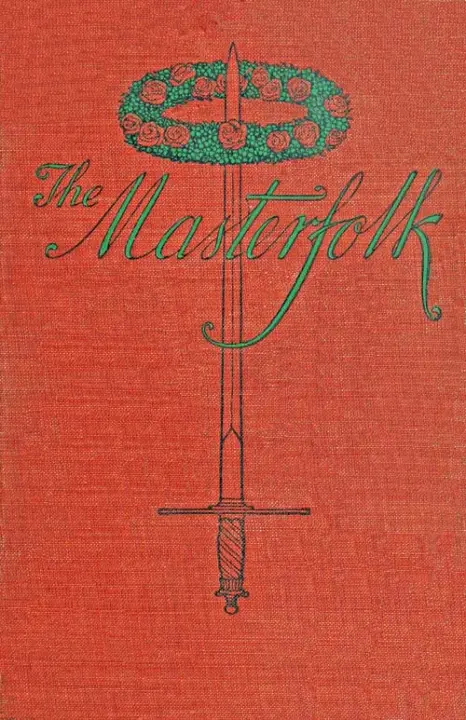
THE CLASSIC COLLECTION · 1903
"The Masterfolk" by Haldane MacFall is a novel written in the early 20th century. The story appears to center around the literary world, delving into the lives and struggles of a group of characters involved in a struggling publication. Two primary characters, Netherby Gomme, a humorist and the editor’s son Oliver Baddlesmere, navigate their way through the complexities of writing, social expectations, and personal aspirations amidst the backdrop of early 1900s British society. The opening of the novel introduces readers to the dingy editorial office where Netherby Gomme, characterized as a gaunt and serious youth, works diligently on his writing while mentoring his younger colleague, Oliver. The tone is both humorous and reflective as they discuss various humorous topics and the challenges facing them in the literary industry. The narrative offers glimpses into their personalities and their surroundings, highlighting the tension between ambition and reality, as well as the struggles of lesser-known writers striving for recognition. As the characters interact, they reveal layers of camaraderie and concern, setting the stage for deeper exploration of themes related to artistry and societal expectations throughout the story.
Introduction adapted from the source catalogue; source summaries may be automatically generated.
Free to read · English · 167,429 words · No account needed
MAKE TIME FOR A GOOD BOOK
On by default. Untick to stop anonymous reading totals. Each page counts after 10 seconds in view. How this works.
Anonymous counting is on unless you have switched it off.
Sitting down at last, he began rapidly, with swift telling strokes of colour, to sketch in an impression of the dejected figure before him where he sat in the deep shadows of the ill-lit place.
“By the way, Sick-horse,” said he--“I suppose I must put you down in the census-paper--you are going to stay the night, of course.”
“Ye--yes, sir,” said the man.
“So am I--Mr. Doome has lent me his studio, so let us begin. We’ve got your name and your calling. Are you of unsound mind?”
The man laughed huskily:
“You needn’t put it at that, sir,” said he.
“You’ve got a fizzing fine suicidal look on you, when you don’t smile, Sick-horse,” said Fluffy, painting away. “I’ve been pining for a good Judas Iscariot for years.... Don’t shift more than you can help.... Oh, about the census. Are you married?”
The pale-faced man nodded gloomily--he was.
“Tut, tut! How dreadful!” said Fluffy. “No wonder you’re ashamed of yourself. What’s become of the wife?”
“She’s alive,” he said gloomily.
Fluffy Reubens coughed:
“No luck,” said he. “Any children?”
“Fourteen.”
“Good God!” said Fluffy Reubens.
“I don’t always think so, guv’nor,” said the melancholy figure from the
shadows.
Reubens painted in silence for a long time. At last he got up and
looked keenly at the man:
“Empty?” he asked.
The bailiff nodded--yes, he was very empty--he was always empty--he was
used to it.
“Look here, Sick-horse, you look so damn dramatic I must not put anything into you for half an hour yet--I haven’t quite finished. But after that we’ll have breakfast, eh?”
The man smiled.
Fluffy Reubens jumped up, upsetting his canvas:
“For God’s sake, don’t do that!” cried he anxiously; “or we’re lost.... Quick! think of something else--think the coffee’s burnt--think the eggs are addled----”
He flung down his brush:
“Damnation! Judas Iscariot is dead,” he said.
He went to the hall-door, bawled for the woman who looked after the house, and ordered breakfast from an eating-house close by:
“For two,” he called.
He gathered up the painting things sadly, to carry them into the great
studio.
The gloomy man on the oak chest coughed:
“I’m real sorry, guv’nor; I’ll try the God-forsaken lay again,” said the wretched man huskily; “but I wish to God you hadn’t mentioned them sausages.”
“No,” said Fluffy Reubens--“it would never be the same thing--and I haven’t the heart to kick you--even if it brought back Judas Iscariot.”
Later in the morning, Fluffy Reubens wrote a telegram to Bartholomew
Doome:
Your reading position is saved on this browser. Take it to another device with a library code. Reading pages adapt to text, rather than matching a printed edition.
Haldane Macfall
Haldane Macfall
Haldane Macfall
Haldane Macfall
BEHIND THE BOOK
This eBook is for the use of anyone anywhere in the United States and most other parts of the world at no cost and with almost no restrictions whatsoever. You may copy it, give it away or re-use it under the terms of the Project Gutenberg License included with this eBook or online at www.gutenberg.org. If you are not located in the United States, you will have to check the laws of the country where you are located before using this eBook. Read the source licence.
The original source file, including credits and licence, is retained by this library. Request an original-format copy at no charge. Please include the book title and Project Gutenberg identifier #61754.
KEEP YOUR CURIOSITY GOING
Coulson Kernahan

Maurice Baring
Frances Wright
Cécile Tormay

Frederic Jesup Stimson

W. H. P. (William Henry Pope) Jarvis