Stolen Idols
E. Phillips (Edward Phillips) Oppenheim
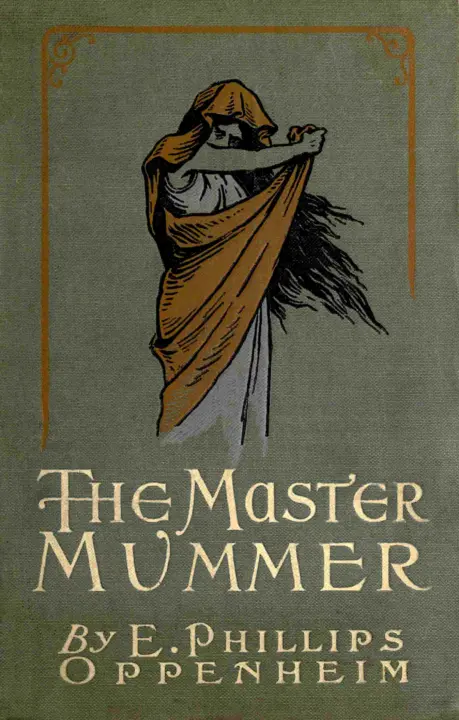
THE CLASSIC COLLECTION · 1904
"The Master Mummer" by E. Phillips Oppenheim is a novel written in the early 20th century. The story revolves around Arnold Greatson, a struggling writer who yearns for a more profound creative experience beyond the superficial lighthearted tales he has been penning. His desire for authenticity drives him to seek out real stories, eventually leading him to a fateful encounter at a train station and a subsequent dramatic incident involving a terrified young girl named Isobel de Sorrens and the mysterious man who claims to be her guardian. The opening portion of the novel introduces us to Arnold in his creative struggles, balancing light-hearted fiction with a deeper yearning for authenticity in his writing. His conversations with his friend Mabane reveal his frustration with the industry and his aspirations to depict genuine human experiences. After some insightful exchanges about the nature of art and inspiration, Arnold takes a decisive step to explore life more fully by venturing into the bustling world outside, where he soon encounters Isobel and witnesses a tragic and profound series of events that will alter his life fundamentally. The narrative weaves elements of mystery and drama, setting the stage for Arnold's transformation from a passive observer into an active participant in the lives of those around him.
Introduction adapted from the source catalogue; source summaries may be automatically generated.
Free to read · English · 75,621 words · No account needed
MAKE TIME FOR A GOOD BOOK
On by default. Untick to stop anonymous reading totals. Each page counts after 10 seconds in view. How this works.
Anonymous counting is on unless you have switched it off.
I examined the tickets carefully and placed them in my pocket-book. Then I paused to light a cigarette on my way out of the office, and almost immediately felt a hand upon my arm. I looked at first at the hand. It was feminine and delicately gloved. Then I looked upwards into the blue eyes of Lady Delahaye.
"Abominable!" she murmured. "You are not glad to see me!"
I raised my hat.
"The Boulevard des Italiennes," I said, "has never seemed to me to be a place peculiarly suitable for the display of emotion."
"Come and try the Rue Strelitz," she answered, smiling.
I glanced down at her. She was gowned even more perfectly than usual--Parisienne to the finger-tips. She had too all the delightful confidence of a woman who knows that she is looking her best.
I smiled back at her. It was impossible to take her seriously.
"Your invitation," I said, "sounds most attractive. But I am curious to know what would happen to me in the Rue Strelitz. Should I be offered poison in a jewelled cup, or disposed of in a cruder fashion? Let me make my will first, and I will come. I am really curious!"
"Arnold," she said, looking up at me with very bright eyes, "you are
brutal."
"Not quite that, I hope," I protested.
"Let me tell you something," she continued.
We were in rather a conspicuous position. Lady Delahaye seemed suddenly
to realize it.
"May I beg for your escort a little way?" she said. "I am not comfortable upon the Boulevard alone."
"You could scarcely fail," I remarked, throwing away my cigarette, "to be an object of attention from the Frenchman, who is above all things a judge of your sex. I will accompany you a little way with pleasure. Shall we take a fiacre?"
"I would rather walk," she answered. "Do you mind coming this way? I
will not take you far."
"I have two whole unoccupied hours," I assured her, "which are very much
at your service."
"Where, then," she asked, "is Isobel?"
"Shopping with Tobain," I answered.
"Are you not afraid," she asked with a smile, "to send her out alone
with Tobain?"
"Not in the least," I answered. "Monsieur Feurgéres' only friend in Paris was the chief commissioner of police, and he has been good enough to take great interest in us. Isobel is well watched."
"I wonder," she said, after a moment's pause, "whether you have still
any faith in me!"
"My dear lady!"
"I wish I could make you believe me. The--her Highness--she prefers us here to call her Madame--has relinquished altogether her designs against you. She desires an alliance."
Your reading position is saved on this browser. Take it to another device with a library code. Reading pages adapt to text, rather than matching a printed edition.
E. Phillips (Edward Phillips) Oppenheim
E. Phillips (Edward Phillips) Oppenheim
E. Phillips (Edward Phillips) Oppenheim
E. Phillips (Edward Phillips) Oppenheim
BEHIND THE BOOK
This eBook is for the use of anyone anywhere in the United States and most other parts of the world at no cost and with almost no restrictions whatsoever. You may copy it, give it away or re-use it under the terms of the Project Gutenberg License included with this eBook or online at www.gutenberg.org. If you are not located in the United States, you will have to check the laws of the country where you are located before using this eBook. Read the source licence.
The original source file, including credits and licence, is retained by this library. Request an original-format copy at no charge. Please include the book title and Project Gutenberg identifier #28161.
KEEP YOUR CURIOSITY GOING
Coulson Kernahan

Maurice Baring
Frances Wright
Cécile Tormay

Frederic Jesup Stimson

W. H. P. (William Henry Pope) Jarvis