Stolen Idols
E. Phillips (Edward Phillips) Oppenheim
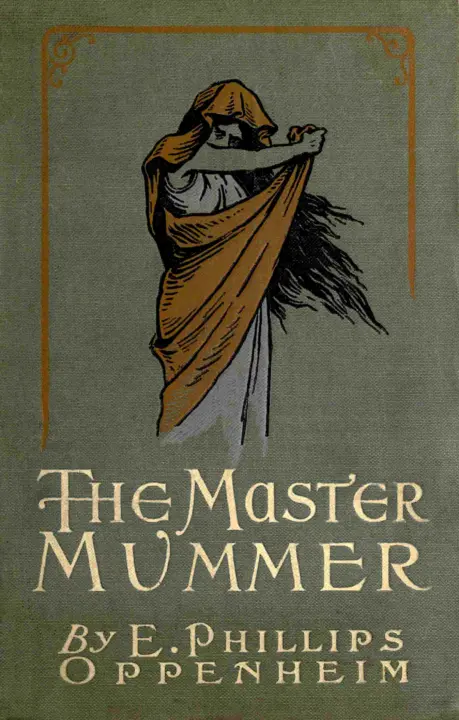
THE CLASSIC COLLECTION · 1904
"The Master Mummer" by E. Phillips Oppenheim is a novel written in the early 20th century. The story revolves around Arnold Greatson, a struggling writer who yearns for a more profound creative experience beyond the superficial lighthearted tales he has been penning. His desire for authenticity drives him to seek out real stories, eventually leading him to a fateful encounter at a train station and a subsequent dramatic incident involving a terrified young girl named Isobel de Sorrens and the mysterious man who claims to be her guardian. The opening portion of the novel introduces us to Arnold in his creative struggles, balancing light-hearted fiction with a deeper yearning for authenticity in his writing. His conversations with his friend Mabane reveal his frustration with the industry and his aspirations to depict genuine human experiences. After some insightful exchanges about the nature of art and inspiration, Arnold takes a decisive step to explore life more fully by venturing into the bustling world outside, where he soon encounters Isobel and witnesses a tragic and profound series of events that will alter his life fundamentally. The narrative weaves elements of mystery and drama, setting the stage for Arnold's transformation from a passive observer into an active participant in the lives of those around him.
Introduction adapted from the source catalogue; source summaries may be automatically generated.
Free to read · English · 75,621 words · No account needed
MAKE TIME FOR A GOOD BOOK
On by default. Untick to stop anonymous reading totals. Each page counts after 10 seconds in view. How this works.
Anonymous counting is on unless you have switched it off.
"Arnold!"
I waved my left hand.
"Don't disturb me for a few minutes, Allan, there's a good chap," I
begged. "I'm hard at it."
"Found your plot, then, eh?"
"I've got a start, anyhow! Give me half an hour. I only want to set the
thing going."
Mabane grunted, and took up his brush. For once I was thankful that we were alone. At last I saw my way. After weeks of ineffective scribbling a glimpse of the real thing had come to me.
The stiffness had gone from my brain and fingers. My pen flew over the paper. The joy of creation sang once more in my heart, tingled in all my pulses. We worked together and in silence for an hour or more. Then, with a little sigh of satisfaction, I leaned back in my chair.
"The story goes, then?" Mabane remarked.
"Yes, it goes," I assented, my eyes fixed absently upon the loose sheets of manuscript strewn all over my desk. Already I was finding it hard to tear my thoughts away from it.
There was a short silence. Then Mabane, who had been filling his pipe,
came over to my side.
"You heard from the convent this morning, Arnold?"
"Yes! The letter is here. Read it!"
Mabane shook his head.
"I can't read French," he said.
"They want her back again," I told him, thoughtfully. "The woman appears to be honest enough. She admits that they have no absolute claim--they do not even know her parentage. They have been paid, she says, regularly and well for the child's education, and if she is now without a home they would like her to go back to them. She thinks it possible that Major Delahaye's relatives, or the people for whom he acted, might continue the payments, but they are willing to take their risk of that. The long and short of it is, that they want her back again."
"As a pupil still?" Mabane asked.
"They would train her for a teacher. In that case she would have to serve a sort of novitiate. She would practically become a nun."
Mabane withdrew his pipe from his mouth, and looked thoughtfully into
the bowl of it.
"I never had a sister," he said, "and I really know nothing whatever about children. But does it occur to you, Arnold, that this--young lady seems particularly adapted for a convent?"
"I believe," I said firmly, "that it would be misery for her."
Mabane walked over to his canvas and came back again.
"What about Delahaye?" he asked.
"He is still unconscious at the hospital," I answered.
Mabane hesitated.
Your reading position is saved on this browser. Take it to another device with a library code. Reading pages adapt to text, rather than matching a printed edition.
E. Phillips (Edward Phillips) Oppenheim
E. Phillips (Edward Phillips) Oppenheim
E. Phillips (Edward Phillips) Oppenheim
E. Phillips (Edward Phillips) Oppenheim
BEHIND THE BOOK
This eBook is for the use of anyone anywhere in the United States and most other parts of the world at no cost and with almost no restrictions whatsoever. You may copy it, give it away or re-use it under the terms of the Project Gutenberg License included with this eBook or online at www.gutenberg.org. If you are not located in the United States, you will have to check the laws of the country where you are located before using this eBook. Read the source licence.
The original source file, including credits and licence, is retained by this library. Request an original-format copy at no charge. Please include the book title and Project Gutenberg identifier #28161.
KEEP YOUR CURIOSITY GOING
Coulson Kernahan

Maurice Baring
Frances Wright
Cécile Tormay

Frederic Jesup Stimson

W. H. P. (William Henry Pope) Jarvis