Stolen Idols
E. Phillips (Edward Phillips) Oppenheim
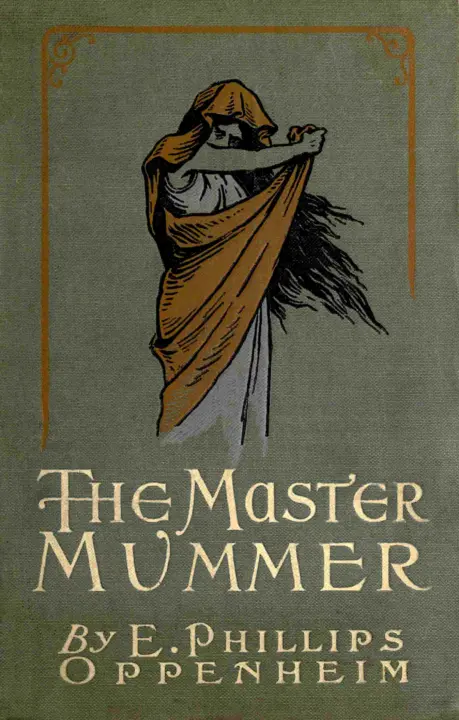
THE CLASSIC COLLECTION · 1904
"The Master Mummer" by E. Phillips Oppenheim is a novel written in the early 20th century. The story revolves around Arnold Greatson, a struggling writer who yearns for a more profound creative experience beyond the superficial lighthearted tales he has been penning. His desire for authenticity drives him to seek out real stories, eventually leading him to a fateful encounter at a train station and a subsequent dramatic incident involving a terrified young girl named Isobel de Sorrens and the mysterious man who claims to be her guardian. The opening portion of the novel introduces us to Arnold in his creative struggles, balancing light-hearted fiction with a deeper yearning for authenticity in his writing. His conversations with his friend Mabane reveal his frustration with the industry and his aspirations to depict genuine human experiences. After some insightful exchanges about the nature of art and inspiration, Arnold takes a decisive step to explore life more fully by venturing into the bustling world outside, where he soon encounters Isobel and witnesses a tragic and profound series of events that will alter his life fundamentally. The narrative weaves elements of mystery and drama, setting the stage for Arnold's transformation from a passive observer into an active participant in the lives of those around him.
Introduction adapted from the source catalogue; source summaries may be automatically generated.
Free to read · English · 75,621 words · No account needed
MAKE TIME FOR A GOOD BOOK
On by default. Untick to stop anonymous reading totals. Each page counts after 10 seconds in view. How this works.
Anonymous counting is on unless you have switched it off.
"Is this," I asked, "an invitation to me to join in the spoils? Am I to become murderer, or poisoner, or abductor, or what?"
Lady Delahaye bit her lip.
"You are altogether too severe," she said. "Madame simply realizes that she has been mistaken. She is willing for Isobel to be restored to her grandfather. It will mean a million or so less dowry for Adelaide, but that must be faced. Madame desires to make peace with you."
"I am charmed," I answered. "May I ask exactly what this means?"
Lady Delahaye smiled up at me.
"The Archduchess will explain to you herself," she said. "I am taking
you to her."
I slackened my pace.
"I think not," I said. "To tell you the truth, the Archduchess terrifies me. I see myself inveigled into a room with a trap-door, or knocked on the head by hired bullies, and all manner of disagreeable things. No, Lady Delahaye, I think that I will not run the risk."
She laughed softly.
"I know that you will come," she said softly.
"And why?" I asked.
"Because you are a man, and you do not know fear!"
I raised my hat and proceeded.
"My head is turned," I said. "Nothing flatters a coward so much as the imputation of bravery. I think that I shall go with you anywhere."
"Even--to the Rue Strelitz?"
"My courage may fail me at the last moment," I answered. "At present it feels equal even to the Rue Strelitz."
Again she laughed.
"You are a fraud, Arnold," she declared. "As if we did not know--I and Madame and all of us, that in Paris, even throughout France, you could walk safely into any den of thieves you choose. Your courage isn't worth a snap of the fingers. Any man can be brave who has the archangels of Dotant at his elbows."
"What an easily pricked reputation," I answered regretfully. "Well, it is true. Dotant was Feurgéres' greatest friend, and even Isobel might walk the streets of Paris alone and in safety. Hence, I presume, the amiable desire of the Archduchess for an alliance."
Lady Delahaye shrugged her lace-clad shoulders.
"My dear Arnold," she said, "for myself I adore candour, and why should I try and deceive you? Madame has played a losing game, and knows it. She has the courage to admit defeat. She can still offer enough to make an alliance desirable. For instance, those tickets in your pocket for Illghera will take you there, it is true, but they will not take you into the presence of the King."
"The King," I remarked pensively, "leads a retired life."
Your reading position is saved on this browser. Take it to another device with a library code. Reading pages adapt to text, rather than matching a printed edition.
E. Phillips (Edward Phillips) Oppenheim
E. Phillips (Edward Phillips) Oppenheim
E. Phillips (Edward Phillips) Oppenheim
E. Phillips (Edward Phillips) Oppenheim
BEHIND THE BOOK
This eBook is for the use of anyone anywhere in the United States and most other parts of the world at no cost and with almost no restrictions whatsoever. You may copy it, give it away or re-use it under the terms of the Project Gutenberg License included with this eBook or online at www.gutenberg.org. If you are not located in the United States, you will have to check the laws of the country where you are located before using this eBook. Read the source licence.
The original source file, including credits and licence, is retained by this library. Request an original-format copy at no charge. Please include the book title and Project Gutenberg identifier #28161.
KEEP YOUR CURIOSITY GOING
Coulson Kernahan

Maurice Baring
Frances Wright
Cécile Tormay

Frederic Jesup Stimson

W. H. P. (William Henry Pope) Jarvis