THE CLASSIC COLLECTION✦An Introduction to MythologyCLASSIC FREE BOOKS
An Introduction to Mythology
Lewis Spence
THE CLASSIC COLLECTION · 1923
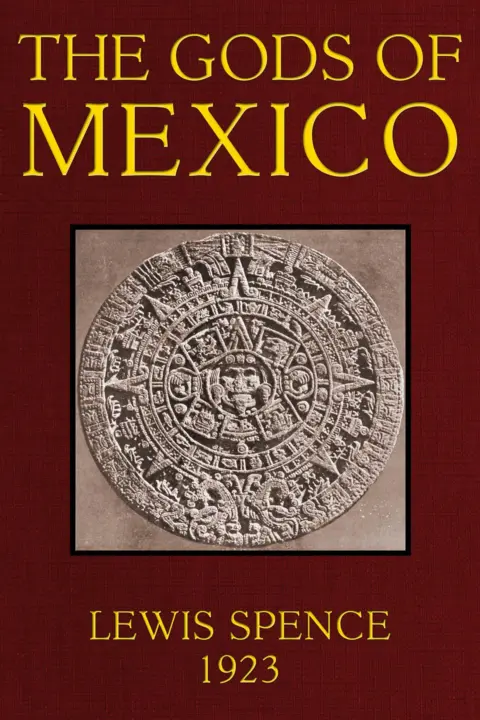
"The Gods of Mexico" by Lewis Spence is a scholarly work focused on the religion of ancient Mexico, written in the early 20th century. This book delves into the mythology and deities associated with the Nahua peoples, particularly the Aztec and Chichimec cultures, while distinguishing these beliefs from those of the Maya civilization further south. The text explores the origins, characteristics, and evolution of these gods, as well as their rituals and cultural significance. The opening of the book sets the stage for a detailed examination of Mexican religious beliefs, establishing the intention to separate the nuances of Nahua religion from broader Central American practices. Spence emphasizes the complexity and development of Mexican gods, introducing significant themes such as the agricultural rain-cult and the necessity of human sacrifice intertwined with divine favor. He mentions various deities while hinting at the deep historical and archaeological context necessary for understanding these ancient beliefs. Through an academic lens, Spence seeks to unpack the intricate tapestry of ceremonial practices and mythological narratives that shaped the spiritual life of pre-Columbian Mexico.
Introduction adapted from the source catalogue; source summaries may be automatically generated.
Free to read · English · 130,713 words · No account needed
MAKE TIME FOR A GOOD BOOK
On by default. Untick to stop anonymous reading totals. Each page counts after 10 seconds in view. How this works.
Anonymous counting is on unless you have switched it off.
[286] Bk. i, c. xiii.
[287] Bk. vi, c. xvii.
[288] Bk. ix, c. iii.
[289] Bk. vi, c. iv.
[290] Bk. vi, c. ix.
[291] Bk. ii, c. xxix.
[292] Bk. ii, c. xxxvii.
[293] Bk. ii, c. xix.
[294] Bk. ii, Appendix.
[295] See Sahagun, bk. ii, Appendix.
[296] Seler, Commentary on Tonalamatl of the Aubin Goupil Collection,
p. 73.
[297] Commentary on the Tonalamatl of the Aubin Collection, p. 71.
[298] See also T. L. Preuss, Die Feuergötter als Ausgangspunkt zum Verständnis der Mexikanischen Religion (“Mittheilungen der Anthropologische Gesellschaft in Wien,” vol. xxxiii, Vienna, 1903, pp. 129–233).
[299] Bk. ix, c. xvii.
[300] “Wizard-prince,” evidently a patron of sorcerers and cunning
workmanship.
[301] “Five House.”
[302] Bk. ii, Appendix.
[303] Sahagun states that the dog is the symbol of fire (bk. iv, c.
xxii).
[304] Bk. ii, Appendix.
[305] The locus classicus for representations of the octli-gods is the Codex Magliabecchiano, which presents a most valuable series of them, pp. 49–59.
[306] Bk. i, c. xxii.
[307] “Mirror covered with Straw.”
[308] See Seler, “Temple-pyramid of Tepoxtlan,” Bulletin 28, U.S. Bureau of Ethnology, p. 349.
[309] Teatro Mexicana, tom. i.
[310] Hist. de los Indios, tom. ii, p. 240.
[311] Bk. i, c. xiii.
[312] Manuel de los Ministros, p. 35.
[313] Bk. i, Appendix.
[314] In The Ascent of Olympus.
[315] See Sahagun, bk. vii, cs. x–xiii, for a much more detailed
description.
[316] See Sahagun, bk. iii, Appendix, c. iv.
[317] Historia de los Indios de la Nueva España, Preface, in Izcazbalceta, vol. i, 1858, pp. 7, 10.
[318] Izcazbalceta, vol. iii, 1891, p. 237.
[319] Appendix to bk. i, c. xiv.
[320] Brinton, Myths of the New World, p. 190.
[321] Commentary on Codex Vaticanus B, p. 287.
[322] Bulletin 28 of U.S. Bureau of Ethnology, pp. 355 ff.
[323] See Commentary on the Codex Vaticanus B, p. 90. It seems to me that, as Tezozomoc says, these were gods of the “signs and planets,” i.e. of the tonalamatl in its augural or astrological sense. If so, the definitely astrological nature of the tonalamatl might be argued therefrom.
[324] See L. Spence, The Popol Vuh. London, 1908.
[325] Commentary on Codex Fejérváry-Mayer, p. 43.
[326] See Section on Tezcatlipocâ.
[327] Las Casas, Apologetica, c. cxcix; Herrera, 4, 10, c. xiii.
[328] Seler (Commentary on Codex Vaticanus B, p. 102) sees in a passage in Sahagun (bk. v, c. 1) an association between the omen of a jaguar roaring in the mountains by night and the echo thereof and Tepeyollotl.
[329] Bk. i, c. xix; bk. ix, passim.
[330] Nat. Rac. Pac. States, vol. iii, p. 417, note.
[331] Bradford, American Antiquities, p. 333; Schoolcraft, Indian Tribes, vol. i, p. 271; Von Tschudi, Beiträge, p. 29.
[332] See Seler, Bull. 28, American Bureau of Ethnology, p. 94.
[333] Bk. i, c. xvi.
[334] See also Sahagun, bk. i, c. xv.
[335] Bk. i, c. xv.
[336] The most convincing modern writers on the tonalamatl are Morley, Bowditch, De Jonghe, and Seler. A bibliography of works on the subject will be found at the end of this appendix.
Your reading position is saved on this browser. Take it to another device with a library code. Reading pages adapt to text, rather than matching a printed edition.
BEHIND THE BOOK
This eBook is for the use of anyone anywhere in the United States and most other parts of the world at no cost and with almost no restrictions whatsoever. You may copy it, give it away or re-use it under the terms of the Project Gutenberg License included with this eBook or online at www.gutenberg.org. If you are not located in the United States, you will have to check the laws of the country where you are located before using this eBook. Read the source licence.
The original source file, including credits and licence, is retained by this library. Request an original-format copy at no charge. Please include the book title and Project Gutenberg identifier #71503.
KEEP YOUR CURIOSITY GOING

David Patterson (Spirit) Hatch

David Patterson (Spirit) Hatch

David Patterson (Spirit) Hatch
Cécile Tormay

Moritz Busch
John L. Ransom