THE CLASSIC COLLECTION✦An Introduction to MythologyCLASSIC FREE BOOKS
An Introduction to Mythology
Lewis Spence
THE CLASSIC COLLECTION · 1923
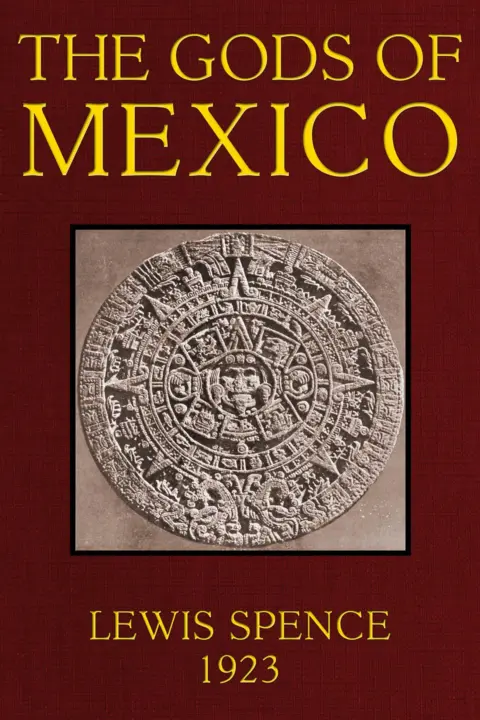
"The Gods of Mexico" by Lewis Spence is a scholarly work focused on the religion of ancient Mexico, written in the early 20th century. This book delves into the mythology and deities associated with the Nahua peoples, particularly the Aztec and Chichimec cultures, while distinguishing these beliefs from those of the Maya civilization further south. The text explores the origins, characteristics, and evolution of these gods, as well as their rituals and cultural significance. The opening of the book sets the stage for a detailed examination of Mexican religious beliefs, establishing the intention to separate the nuances of Nahua religion from broader Central American practices. Spence emphasizes the complexity and development of Mexican gods, introducing significant themes such as the agricultural rain-cult and the necessity of human sacrifice intertwined with divine favor. He mentions various deities while hinting at the deep historical and archaeological context necessary for understanding these ancient beliefs. Through an academic lens, Spence seeks to unpack the intricate tapestry of ceremonial practices and mythological narratives that shaped the spiritual life of pre-Columbian Mexico.
Introduction adapted from the source catalogue; source summaries may be automatically generated.
Free to read · English · 130,713 words · No account needed
MAKE TIME FOR A GOOD BOOK
On by default. Untick to stop anonymous reading totals. Each page counts after 10 seconds in view. How this works.
Anonymous counting is on unless you have switched it off.
[248] It occurred to the writer that the expression tititl may have had reference to the act of sexual impregnation, as in the case of Tlazolteotl (q.v.), who “widens herself, stretches herself out” at the foot of the teocalli of Uitzilopochtli, when she is impregnated by that deity. This consideration scarcely seems to apply to the present instance, however, and that indicated above appears preferable.
[249] See remarks upon the Tlaloc cult in the Introduction.
[250] See my remarks upon Quetzalcoatl in the section which deals with him, and where he is identified with the trade-wind which brings the rain.
[251] Bk. i, c. xxi.
[252] See Appendix, the Tonalamatl and the Solar Calendar.
[253] See digest of the passage in chapter on Cosmogony, p. 49.
[254] See Spence, The Popol Vuh. London, 1908.
[255] Sahagun (bk. x, c. xxviii, § 10) states that Tlalocan was in the Olmec or Mixtec country; but Camargo (Hist. de Tlaxcallan, Nouvelles annales des Voyages, 1843, tom. 99, pp. 135–137) is a better authority on this particular subject.
[256] Wood-mountain.
[257] Place of Might.
[258] Flower-feather.
[259] Place of Darkness.
[260] Beside the stalle (or banner).
[261] Pearl-serpent.
[262] Rows of pearls.
[263] Servant.
[264] Covered with mugwort.
[265] Bk. ii, c. xx.
[266] Bk. ii, c. iii.
[267] The Pantitlan = “Near the Stake.”
[268] Bk. ii, c. vi.
[269] All of the deities known by these names were octli-gods.
[270] Temple precinct.
[271] Bk. i, c. xiii.
[272] Bk. ii, c. xxxv.
[273] Ixtlilxochitl, Relaciones, p. 41, states that girls were sacrificed by the Toltecs to Tlaloc and buried.
[274] Hist. de Tlaxcallan, in Ternaux-Compan’s Nouvelles annales de Voyages, 1843, tom. 99, pp. 133, 135–7.
[275] Vol. i, bk. vi, p. 251 (English translation). See also Torquemada, bk. vi, c. xxiii; Veytia, vol. i, p. 27; Velasquez de Leon, Nevadade Toluca, Bd. Inst. Nac. Geog. Estad. Mex., 1850.
[276] Bk. vi, c. vii.
[277] Historia de los Mexicanos por sus Pinturas, c. ii.
[278] Förstemann, Die Maya-Handschrift-zu Dresden, Leipzig, 1880.
Second edition, 1892.
[279] Codex Borgia, sheet 14, and Codex Fejérváry-Mayer, sheets 1 and
3.
[280] Unless the costume be spotted like that of her spouse Tlaloc, with ulli rubber-gum, to represent rain.
[281] This picture of Tlaloc and Chalchihuitlicue is reminiscent of the Japanese myth of Susa-no-o and his sister Ama-terasu, the Sun-goddess, who, desirous of progeny, stood one on either side of a “river” (the Milky Way), dipped jewels into the “river,” crushed them into dust and “blew them away”; gods were born from the dust so breathed upon. See Kojiki, translated by Basil Hill Chamberlain, in supplement to vol. x of Transactions of the Asiatic Society of Japan, 1882, pp. 47–49. The Mexican picture has probably a similar generative significance.
[282] Hist. Antig. de Mej., tom. i, c. xxviii.
[283] “Chief Eagle.”
[284] Commentary on the Aubin Tonalamatl, p. 56.
[285] The resemblance of this festival to the uei teciulhuitl, the feast of Xilonen, is obvious. (For a fuller description, see Sahagun, bk. ii, c. xxvii.)
Your reading position is saved on this browser. Take it to another device with a library code. Reading pages adapt to text, rather than matching a printed edition.
BEHIND THE BOOK
This eBook is for the use of anyone anywhere in the United States and most other parts of the world at no cost and with almost no restrictions whatsoever. You may copy it, give it away or re-use it under the terms of the Project Gutenberg License included with this eBook or online at www.gutenberg.org. If you are not located in the United States, you will have to check the laws of the country where you are located before using this eBook. Read the source licence.
The original source file, including credits and licence, is retained by this library. Request an original-format copy at no charge. Please include the book title and Project Gutenberg identifier #71503.
KEEP YOUR CURIOSITY GOING

David Patterson (Spirit) Hatch

David Patterson (Spirit) Hatch

David Patterson (Spirit) Hatch
Cécile Tormay

Moritz Busch
John L. Ransom