THE CLASSIC COLLECTION✦Peeps at HeraldryCLASSIC FREE BOOKS
Peeps at Heraldry
Phoebe Allen
THE CLASSIC COLLECTION · 1901
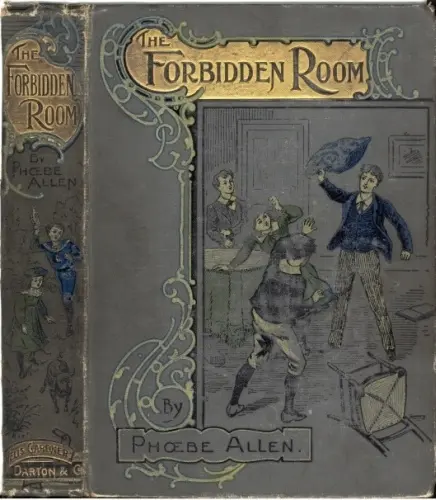
"The Forbidden Room; Or, 'Mine Answer was My Deed'" by Phoebe Allen is a novel written in the early 20th century. The story unfolds in a rural setting centered around Gaybrook Farm, where a group of children, including the timid Gaston Delzant and the lively cousins, come together for a summer visit. Through their adventures and interactions, themes of childhood innocence, friendship, and the quest for acceptance come to the forefront. The opening of the novel introduces the lively preparations at Gaybrook Farm for the arrival of guests, particularly focusing on the excitement and nerves of the children, especially Gaston, who fears being teased. As the guests arrive, a diverse cast of characters is established, each with their distinctive personalities and quirks. The children's initial interactions set the stage for playful dynamics and conflicts, particularly highlighting Andrew's bravado and the gentle, more timid nature of Gaston. This portion of the book effectively sets the tone for a light-hearted yet poignant exploration of childhood experiences in a close-knit farm community.
Introduction adapted from the source catalogue; source summaries may be automatically generated.
Free to read · English · 50,678 words · No account needed
MAKE TIME FOR A GOOD BOOK
On by default. Untick to stop anonymous reading totals. Each page counts after 10 seconds in view. How this works.
Anonymous counting is on unless you have switched it off.
“Oh, Mrs. Busson,” Andrew had begun, “I’m very much interested in spider’s webs, so I want to examine those which are over that sort of door, near the linen-press.”
“Oh, you can’t go fussing there,” had been the unusually sharp reply; “besides, it’s too dark.”
“Oh, of course, I shall take a candle,” said Andrew, coolly.
“Then, of course, you won’t,” said Mrs. Busson, very decidedly.
“But I mean to,” persisted Andrew.
“And I mean you shan’t,” was the retort. “I’m not going to have the place set on fire, I can tell you.”
“But I shall go with Andrew, and hold the candle,” Di had volunteered. Only she and Andrew were present, for they had taken care to wait for this interview till the others were out of hearing.
“You’ll do nothing of the sort,” said Mrs. Busson, firmly. “If you want spiders’ webs, you can find plenty of them down in the cider cellar.”
“I don’t choose to go down there,” said Andrew; whilst Di added, with a thoughtfulness that was very foreign to her general behaviour: “It is much too damp for Andrew to go underground.”
“Then stay above ground, and don’t worry,” said Mrs. Busson.
There was something so uncompromising, both in her tone, and the gesture which she made, as though to sweep them from her presence, that both the children felt that further remonstrance would be vain. So, with a very ill grace, they retreated.
“Hullo, Gaston!” shouted Jack, catching sight of Gaston, running across the top of the field, “come here, old chap.”
Gaston came immediately; the schoolboys always commanded his attention.
“Look here, are you coming with us to see the Fair to-day?”
“I--I don’t know,” said Gaston, falteringly.
“Oh, yes, come along,” said Phoena, encouragingly, “it’ll be great fun.”
“Is Andrew going?” asked Gaston, very gravely.
“No, Andrew’s not going,” said the latter, mimicking Gaston’s tone.
“Then I come, then I come,” cried Gaston, capering into the air, and beating both heels together, a gymnastic peculiar to himself.
“Flattering for you, Andrew,” remarked Di.
“What do I care,” retorted Andrew. “As long as he speaks to me with proper respect, I’m glad enough to leave him to himself. Of course, if he ever attempted”--this with an aggravating look at Gaston--“if he ever attempted to touch me--”
“Touch you,” echoed Gaston, with a whole world of loathing in his tone, “ugh! I would as soon touch a creeping, crawling serpent. Ah, no, I do mean rather a maggot; you are not grand enough to be a serpent, make no doubt about that.”
Your reading position is saved on this browser. Take it to another device with a library code. Reading pages adapt to text, rather than matching a printed edition.
BEHIND THE BOOK
This eBook is for the use of anyone anywhere in the United States and most other parts of the world at no cost and with almost no restrictions whatsoever. You may copy it, give it away or re-use it under the terms of the Project Gutenberg License included with this eBook or online at www.gutenberg.org. If you are not located in the United States, you will have to check the laws of the country where you are located before using this eBook. Read the source licence.
The original source file, including credits and licence, is retained by this library. Request an original-format copy at no charge. Please include the book title and Project Gutenberg identifier #49389.
KEEP YOUR CURIOSITY GOING
Coulson Kernahan

Maurice Baring
Frances Wright
Cécile Tormay

Frederic Jesup Stimson

W. H. P. (William Henry Pope) Jarvis