THE CLASSIC COLLECTION✦Peeps at HeraldryCLASSIC FREE BOOKS
Peeps at Heraldry
Phoebe Allen
THE CLASSIC COLLECTION · 1901
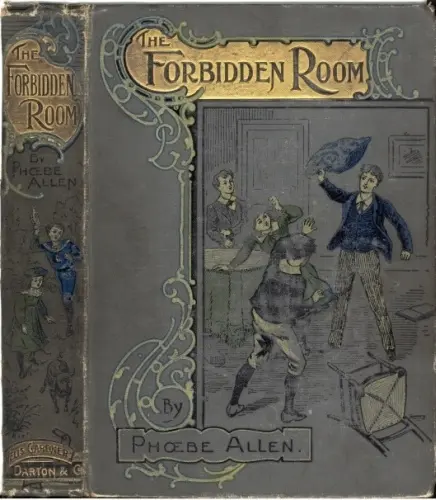
"The Forbidden Room; Or, 'Mine Answer was My Deed'" by Phoebe Allen is a novel written in the early 20th century. The story unfolds in a rural setting centered around Gaybrook Farm, where a group of children, including the timid Gaston Delzant and the lively cousins, come together for a summer visit. Through their adventures and interactions, themes of childhood innocence, friendship, and the quest for acceptance come to the forefront. The opening of the novel introduces the lively preparations at Gaybrook Farm for the arrival of guests, particularly focusing on the excitement and nerves of the children, especially Gaston, who fears being teased. As the guests arrive, a diverse cast of characters is established, each with their distinctive personalities and quirks. The children's initial interactions set the stage for playful dynamics and conflicts, particularly highlighting Andrew's bravado and the gentle, more timid nature of Gaston. This portion of the book effectively sets the tone for a light-hearted yet poignant exploration of childhood experiences in a close-knit farm community.
Introduction adapted from the source catalogue; source summaries may be automatically generated.
Free to read · English · 50,678 words · No account needed
MAKE TIME FOR A GOOD BOOK
On by default. Untick to stop anonymous reading totals. Each page counts after 10 seconds in view. How this works.
Anonymous counting is on unless you have switched it off.
“We must convene a Chapter and degrade him.”
They had scarcely reached the outskirts of Playden, when Jack made this thrilling announcement. He was perched on the upper bar of a style in the middle of the field leading to Gaybrook, and his tone was as decided and as impressive as the occasion demanded.
“Of course we must,” agreed Phil, tweaking Hubert, significantly.
“Of course we must,” said Andrew’s valet, in response to the tweak.
Andrew, meanwhile, the person to be degraded, was walking ahead in
solitary sulkiness.
“He ought never to have been made a knight, he’s not got anything knightly in him,” said Phil, “if he’s kept in the Order at all, he ought to be made to rank below Gaston.”
“But the fact is,” said Jack, “he oughtn’t to be kept in at all. It’s the second time that he’s behaved like a sneak, and made fools of us.”
“But, boys,” began Faith, “you must remember that Andrew has never been
to school.”
“No fear of our forgetting that, Grannie Faith,” retorted Phil; whilst Di added: “But you know if you turn him out the Order will be a very small one.”
“Yes,” said Phoena, “but we want quality, not quantity.”
But though the boys applauded this remark, they nevertheless felt that there was something, too, to be said for Di’s argument.
“Go on, you girls,” said Jack, “we must discuss this by ourselves.”
“I do wonder how they’ll settle it,” said Fay, who was sorely divided in her mind as to which course would prove best to produce peace and concord. She would have been far more troubled had she guessed the resolution regarding the punishment to be inflicted on Andrew which had been decided upon.
“The execution of the sentence must take place after dinner,” Jack had ruled, “and in the meanwhile none of us must cast so much as a single glance at the renegade knight, commonly known as Andrew Durand.”
And so rigorously did they all obey this command, that when after dinner all the boys disappeared, leaving Andrew alone, he was so tired of being sent to Coventry, that he quite hailed Hubert’s return as the bearer of a formal citation. This was to summon him to appear before his co-knights to answer certain charges against him.
“What do you mean, you little donkey?” cried Andrew, impatiently, as Hubert was conscientiously but laboriously delivering himself of his errand, “I was just going out butterfly hunting, and I can’t stop here for ever listening to your rotten message.”
Your reading position is saved on this browser. Take it to another device with a library code. Reading pages adapt to text, rather than matching a printed edition.
BEHIND THE BOOK
This eBook is for the use of anyone anywhere in the United States and most other parts of the world at no cost and with almost no restrictions whatsoever. You may copy it, give it away or re-use it under the terms of the Project Gutenberg License included with this eBook or online at www.gutenberg.org. If you are not located in the United States, you will have to check the laws of the country where you are located before using this eBook. Read the source licence.
The original source file, including credits and licence, is retained by this library. Request an original-format copy at no charge. Please include the book title and Project Gutenberg identifier #49389.
KEEP YOUR CURIOSITY GOING
Coulson Kernahan

Maurice Baring
Frances Wright
Cécile Tormay

Frederic Jesup Stimson

W. H. P. (William Henry Pope) Jarvis