THE CLASSIC COLLECTION✦Peeps at HeraldryCLASSIC FREE BOOKS
Peeps at Heraldry
Phoebe Allen
THE CLASSIC COLLECTION · 1901
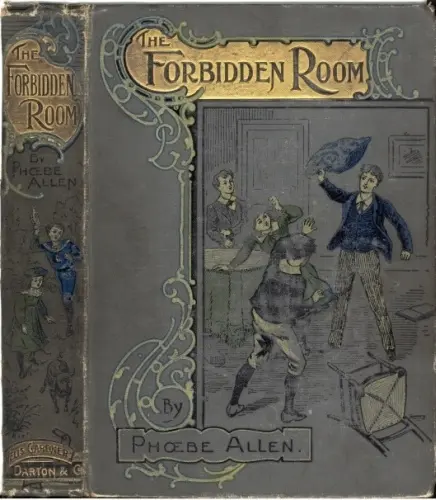
"The Forbidden Room; Or, 'Mine Answer was My Deed'" by Phoebe Allen is a novel written in the early 20th century. The story unfolds in a rural setting centered around Gaybrook Farm, where a group of children, including the timid Gaston Delzant and the lively cousins, come together for a summer visit. Through their adventures and interactions, themes of childhood innocence, friendship, and the quest for acceptance come to the forefront. The opening of the novel introduces the lively preparations at Gaybrook Farm for the arrival of guests, particularly focusing on the excitement and nerves of the children, especially Gaston, who fears being teased. As the guests arrive, a diverse cast of characters is established, each with their distinctive personalities and quirks. The children's initial interactions set the stage for playful dynamics and conflicts, particularly highlighting Andrew's bravado and the gentle, more timid nature of Gaston. This portion of the book effectively sets the tone for a light-hearted yet poignant exploration of childhood experiences in a close-knit farm community.
Introduction adapted from the source catalogue; source summaries may be automatically generated.
Free to read · English · 50,678 words · No account needed
MAKE TIME FOR A GOOD BOOK
On by default. Untick to stop anonymous reading totals. Each page counts after 10 seconds in view. How this works.
Anonymous counting is on unless you have switched it off.
“Dear, dear Miss Faith, whatever has been happening?” enquired Ruth, anxiously. She had come to meet the little party as they returned in answer to the tea-bell’s summons.
Once within sight of shelter, Gaston had lifted up his voice in piteous weeping. Shaking and sobbing, he displayed the marks of ill-treatment that he had received at the hands of his so-called play-fellows that afternoon.
The sight of Andrew’s swollen nose and bleeding fingers, and the disturbed air pervading the whole company put the finishing stroke to Ruth’s alarm.
“You’ve never been quarrelling, I do hope,” she added, as fervently as if the bare possibility were not to be contemplated for a single instant by any sane person.
“Oh! haven’t we!” responded Jack, cheerfully; “and it’s done us all a jolly lot of good.”
“And made us awfully hungry,” added Phil.
And, to judge from the promptness with which they fell upon the good things provided for them, that afternoon’s misdoings had certainly not blunted the mis-doers’ appetites.
The girls, however, did not follow suit. Marygold was tired, and really very sad for Gaston, who was nowhere to be seen. Even Di was unusually subdued, whilst Fay and Phoena were thoroughly ashamed of the results of the first afternoon of taking care of themselves. Indeed, the latter’s sorrowful face, and yet more, her untasted tea, attracted Phil’s attention from his own plate.
“Hullo, Phoena,” he laughed, “whose funeral are you arranging for now? Why, your face is as long as all King Cole’s fiddlers put together.”
Phoena started. She had been very far away in thought-land just then.
“I was thinking,” she began.
“A good thing then,” said Di, “that you didn’t upset your tea this
time.”
But Phoena went on: “I was thinking what a pity it seems that this time yesterday we all had such a lot of good intentions, and this afternoon we all managed to forget them so quickly.”
“Yes, indeed,” said Faith, with a sigh.
“A pity we couldn’t bottle them,” said Di, flippantly, “and label them to be used when wanted.”
“Or pickle them,” sneered Andrew.
“No, but do listen,” besought Phoena. Somehow when her eager face was all aglow with enthusiasm and her large eyes shining like lamps no one could resist listening to Phoena. “I’ve been thinking how in the old days, when they must have been just as fond of fighting as you boys are now, they had a very good plan for helping people not to forget their good intentions.”
“Really,” jeered Andrew, “pray how did they manage that, Mrs. Solomon?”
Your reading position is saved on this browser. Take it to another device with a library code. Reading pages adapt to text, rather than matching a printed edition.
BEHIND THE BOOK
This eBook is for the use of anyone anywhere in the United States and most other parts of the world at no cost and with almost no restrictions whatsoever. You may copy it, give it away or re-use it under the terms of the Project Gutenberg License included with this eBook or online at www.gutenberg.org. If you are not located in the United States, you will have to check the laws of the country where you are located before using this eBook. Read the source licence.
The original source file, including credits and licence, is retained by this library. Request an original-format copy at no charge. Please include the book title and Project Gutenberg identifier #49389.
KEEP YOUR CURIOSITY GOING
Coulson Kernahan

Maurice Baring
Frances Wright
Cécile Tormay

Frederic Jesup Stimson

W. H. P. (William Henry Pope) Jarvis