THE CLASSIC COLLECTION✦Peeps at HeraldryCLASSIC FREE BOOKS
Peeps at Heraldry
Phoebe Allen
THE CLASSIC COLLECTION · 1901
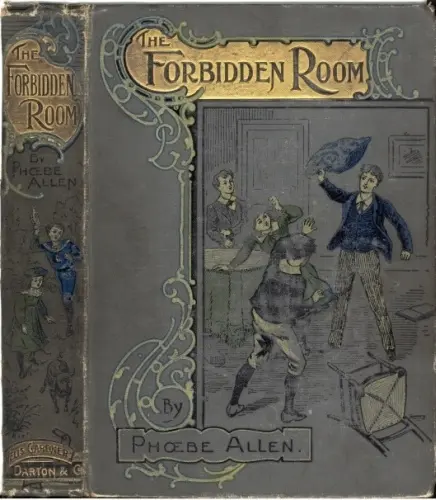
"The Forbidden Room; Or, 'Mine Answer was My Deed'" by Phoebe Allen is a novel written in the early 20th century. The story unfolds in a rural setting centered around Gaybrook Farm, where a group of children, including the timid Gaston Delzant and the lively cousins, come together for a summer visit. Through their adventures and interactions, themes of childhood innocence, friendship, and the quest for acceptance come to the forefront. The opening of the novel introduces the lively preparations at Gaybrook Farm for the arrival of guests, particularly focusing on the excitement and nerves of the children, especially Gaston, who fears being teased. As the guests arrive, a diverse cast of characters is established, each with their distinctive personalities and quirks. The children's initial interactions set the stage for playful dynamics and conflicts, particularly highlighting Andrew's bravado and the gentle, more timid nature of Gaston. This portion of the book effectively sets the tone for a light-hearted yet poignant exploration of childhood experiences in a close-knit farm community.
Introduction adapted from the source catalogue; source summaries may be automatically generated.
Free to read · English · 50,678 words · No account needed
MAKE TIME FOR A GOOD BOOK
On by default. Untick to stop anonymous reading totals. Each page counts after 10 seconds in view. How this works.
Anonymous counting is on unless you have switched it off.
The contents of the first fly did not seem so alarming, at least not as to numbers, for it only contained three occupants, human occupants that is.
On the front seat was a rather demure-looking girl of fourteen, whose general air of youthful anxiety suggested that she was more or less in charge of the party. Beside her was a dark-haired boy about a year younger.
“‘Fat, flabby and fractious,’ that’s what you ought to be labelled,” one of his boy cousins had declared at starting, and, though it was an ungracious remark, and not likely to improve Andrew Durand’s temper, yet even in the excitement of arrival, he still did not look, well--quite the reverse of his cousin’s description.
Not only had he taken the lion’s share of the front seat of the fly, but he had almost monopolised the back one too; first, with his feet, which he had comfortably disposed in a line with his indolent overgrown person, and secondly, with his innumerable possessions.
Amongst these was a canary in a cage, a guinea-pig in a box, a huge butterfly net--its extra long handle making it an undesirable addition to luggage--sundry tin cases, with unpleasantly sharp corners, a geological hammer and various tools of a kindred nature, a violin, along with divers other items, which contributed to form the pile of non-squeezable luggage, beside which poor little Marion, the third passenger, had to accommodate herself as best she might.
“Nonsense, she has heaps of room for her size,” Andrew had ruled at starting from the station, when the others had remonstrated with him; “How much more can an infant like that want?”
Marion, commonly known as Marygold, perched herself very contentedly on the edge of the seat, and, always ready to make the best of a situation, announced cheerily:
“I ’spect I’ll manage somehow, for all my hair can sit on the air,” and certainly the cloud of golden hair that surrounded the sweet-tempered little face did seem the most important part of her very small person.
Fly No. 2 was more closely packed. It contained Jack and Phil Kenyon, schoolboy brothers of eleven and ten; their cousin, Diana Durand, who was ten years old yesterday; Tryphoena Kenyon, always called Phoena, who was just a year younger than Di; and last of all, six-year old Hubert, the youngest of the Kenyons.
He was so small that, when the cheering began he jumped up on the seat, for he felt that otherwise he might be overlooked, and he flung his hat so frantically into the air that the latter fell into the road and he himself toppled into Di’s arms.
Your reading position is saved on this browser. Take it to another device with a library code. Reading pages adapt to text, rather than matching a printed edition.
BEHIND THE BOOK
This eBook is for the use of anyone anywhere in the United States and most other parts of the world at no cost and with almost no restrictions whatsoever. You may copy it, give it away or re-use it under the terms of the Project Gutenberg License included with this eBook or online at www.gutenberg.org. If you are not located in the United States, you will have to check the laws of the country where you are located before using this eBook. Read the source licence.
The original source file, including credits and licence, is retained by this library. Request an original-format copy at no charge. Please include the book title and Project Gutenberg identifier #49389.
KEEP YOUR CURIOSITY GOING
Coulson Kernahan

Maurice Baring
Frances Wright
Cécile Tormay

Frederic Jesup Stimson

W. H. P. (William Henry Pope) Jarvis