THE CLASSIC COLLECTION✦Peeps at HeraldryCLASSIC FREE BOOKS
Peeps at Heraldry
Phoebe Allen
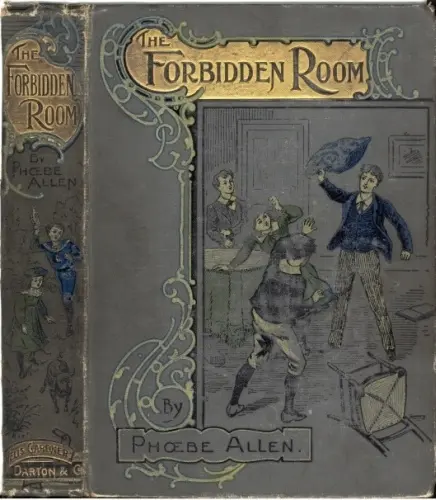
THE CLASSIC COLLECTION · 1901
"The Forbidden Room; Or, 'Mine Answer was My Deed'" by Phoebe Allen is a novel written in the early 20th century. The story unfolds in a rural setting centered around Gaybrook Farm, where a group of children, including the timid Gaston Delzant and the lively cousins, come together for a summer visit. Through their adventures and interactions, themes of childhood innocence, friendship, and the quest for acceptance come to the forefront. The opening of the novel introduces the lively preparations at Gaybrook Farm for the arrival of guests, particularly focusing on the excitement and nerves of the children, especially Gaston, who fears being teased. As the guests arrive, a diverse cast of characters is established, each with their distinctive personalities and quirks. The children's initial interactions set the stage for playful dynamics and conflicts, particularly highlighting Andrew's bravado and the gentle, more timid nature of Gaston. This portion of the book effectively sets the tone for a light-hearted yet poignant exploration of childhood experiences in a close-knit farm community.
Introduction adapted from the source catalogue; source summaries may be automatically generated.
Free to read · English · 50,678 words · No account needed
MAKE TIME FOR A GOOD BOOK
On by default. Untick to stop anonymous reading totals. Each page counts after 10 seconds in view. How this works.
Anonymous counting is on unless you have switched it off.
“Now, you’ve both had a jolly good mill,” he said, using his own handkerchief on his little brother’s face with rough tenderness, “and you’ll be both a deal the better for it. Shut up, Andrew, will you?” as the latter tried to egg the combatants on afresh. “My word, old chap, you’ll have a glorious black eye, and no mistake, but I’ll be bound you’ve deserved it. It’s been our fault, though, for not licking you more. Now, Gaston, old man, come and shake hands with your vanquished foe.”
“Yes, and hold up your pecker,” said Phil, patting Gaston on the back, “for you’re a jolly good fellow, who has learnt at last how to use his fists.”
“Yes, yes,” chimed in Jack, “he’s a jolly good fellow.”
Surely no single moment in Gaston’s short life had ever been a prouder
one.
For once, he was an acknowledged victor on English soil, and no one remembered to call him “French froggy.”
But alack! alack! they did not forget for long.
Flushed though he was by his victory, Gaston was genuinely grieved at Hubert’s pitiable plight, for he was crying bitterly now, not from his hurts--he was not so babyish--it was the mortification of having been beaten by
Gaston that brought the tears down his swollen cheeks. So that Gaston, moved to pity, and forgetting that he was not amongst his own French comrades, instead of shaking hands with Hubert in due form, ran forward, impulsively, like a thorough French boy, and, throwing his arms round the vanquished’s neck, kissed him warmly on each cheek.
This action, so natural to Gaston, was greeted with a general howl of disgust from the on-lookers.
“Oh, I say, shut up, Mamselle Gaston!”
“Oh, you awful French frog!”
“Oh, drop your beastly slobbering, do!”
These, and various other exclamations, couched in more direct, and less poetical terms, were hissed and hurled at poor Gaston for full three minutes, before he realised the nature of his offence.
“Now, I say, you fellows,” sneered Andrew, “I think he’ll be ‘Mamselle Gaston’ for the rest of his natural life; fancy any decent fellow behaving in such a way.”
“Yes, really you French boys must be awful muffs,” said Phil.
“Of course they are,” said Andrew, spitefully, “and Gaston is the king of muffs, eh, mamselle?”
For a moment Gaston stood quite still, looking down without uttering a word. He was abased, but not ashamed, and, strange as it may seem, the feeling that he was abased in Andrew’s sight acted as a stimulus to his self-love.
Your reading position is saved on this browser. Take it to another device with a library code. Reading pages adapt to text, rather than matching a printed edition.
BEHIND THE BOOK
This eBook is for the use of anyone anywhere in the United States and most other parts of the world at no cost and with almost no restrictions whatsoever. You may copy it, give it away or re-use it under the terms of the Project Gutenberg License included with this eBook or online at www.gutenberg.org. If you are not located in the United States, you will have to check the laws of the country where you are located before using this eBook. Read the source licence.
The original source file, including credits and licence, is retained by this library. Request an original-format copy at no charge. Please include the book title and Project Gutenberg identifier #49389.
KEEP YOUR CURIOSITY GOING
Coulson Kernahan

Maurice Baring
Frances Wright
Cécile Tormay

Frederic Jesup Stimson

W. H. P. (William Henry Pope) Jarvis