THE CLASSIC COLLECTION✦Peeps at HeraldryCLASSIC FREE BOOKS
Peeps at Heraldry
Phoebe Allen
THE CLASSIC COLLECTION · 1901
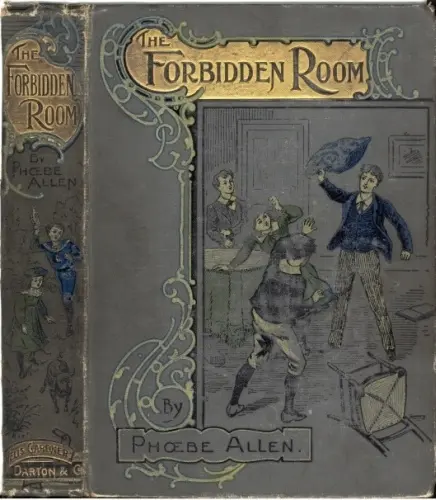
"The Forbidden Room; Or, 'Mine Answer was My Deed'" by Phoebe Allen is a novel written in the early 20th century. The story unfolds in a rural setting centered around Gaybrook Farm, where a group of children, including the timid Gaston Delzant and the lively cousins, come together for a summer visit. Through their adventures and interactions, themes of childhood innocence, friendship, and the quest for acceptance come to the forefront. The opening of the novel introduces the lively preparations at Gaybrook Farm for the arrival of guests, particularly focusing on the excitement and nerves of the children, especially Gaston, who fears being teased. As the guests arrive, a diverse cast of characters is established, each with their distinctive personalities and quirks. The children's initial interactions set the stage for playful dynamics and conflicts, particularly highlighting Andrew's bravado and the gentle, more timid nature of Gaston. This portion of the book effectively sets the tone for a light-hearted yet poignant exploration of childhood experiences in a close-knit farm community.
Introduction adapted from the source catalogue; source summaries may be automatically generated.
Free to read · English · 50,678 words · No account needed
MAKE TIME FOR A GOOD BOOK
On by default. Untick to stop anonymous reading totals. Each page counts after 10 seconds in view. How this works.
Anonymous counting is on unless you have switched it off.
“Oh! you good old Ruth, don’t begin preaching so early in the day,” said Di; “of course, I’m dreadfully sorry for Andrew and I mean to be ever so careful not to disturb him.”
And certainly she kept her word, declaring, as she went down stairs, that she should beg the boys to be very kind to Andrew.
But there was no need for her to exhort them on that point.
Jack and Phil were full of compassion for their cousin, a compassion which as Di guessed, was greatly leavened with compunction.
For though no one, not even Hubert, had divulged a word of the ducking, the schoolboys’ own conscience accused them pretty clearly as to the cause of Andrew’s sharp attack of illness.
And though they might have been heard muttering more than once, “Well, it only served him right!” their tone signified unmistakably, “I wish to goodness that we’d never done it.”
Moreover Andrew’s patience and real pluck in bearing his suffering had appealed to them strongly.
“Poor old beggar,” said Jack, “to see him panting like a steam engine and as white as a turnip, and trying all the time to grin over it, made one feel jolly bad all over.”
“Yes, it’s awful hard luck on the wretched chap,” said Phil, “I wish one could do something for the poor specimen.”
“I expect,” began Hubert, with some practical shrewdness, “if we never called him ‘Miss Annie’ again, it--”
But Jack broke in, “’pon my word, if it wasn’t Sunday, I declare I’d go out and try and catch some of his precious beasties for him.”
“Well, I’ll go and feed his gold fish now,” said Di, getting up from the table, whilst Phoena, without announcing her intentions, went to attend the canary and guinea-pig.
“We’ve all got to start by half-past ten for church, remember,” said Di, looking back from the door.
“All right,” said the boys--they were delightfully docile to-day.
“And you’ll remember to keep quiet, because of Andrew,” added Di.
And so, though Fay was not there to marshal her flock into good order, it was a very well-behaved party that set out from Gaybrook Farm for the parish church, on that summer Sunday morning.
“And they all behaved like models all through the service,” reported Ruth, who had watched them rather anxiously from her exalted seat in the gallery, “I was rather afraid how the young gentlemen might behave, if anything went wrong with the singing, as does sometimes happen, or if the sermon was extra long,” she confided to Mrs. Busson.
Your reading position is saved on this browser. Take it to another device with a library code. Reading pages adapt to text, rather than matching a printed edition.
BEHIND THE BOOK
This eBook is for the use of anyone anywhere in the United States and most other parts of the world at no cost and with almost no restrictions whatsoever. You may copy it, give it away or re-use it under the terms of the Project Gutenberg License included with this eBook or online at www.gutenberg.org. If you are not located in the United States, you will have to check the laws of the country where you are located before using this eBook. Read the source licence.
The original source file, including credits and licence, is retained by this library. Request an original-format copy at no charge. Please include the book title and Project Gutenberg identifier #49389.
KEEP YOUR CURIOSITY GOING
Coulson Kernahan

Maurice Baring
Frances Wright
Cécile Tormay

Frederic Jesup Stimson

W. H. P. (William Henry Pope) Jarvis