THE CLASSIC COLLECTION✦Peeps at HeraldryCLASSIC FREE BOOKS
Peeps at Heraldry
Phoebe Allen
THE CLASSIC COLLECTION · 1901
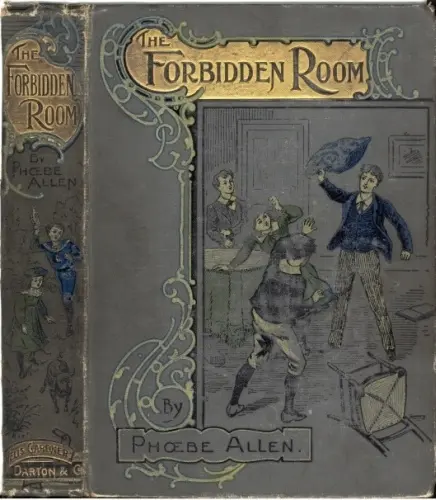
"The Forbidden Room; Or, 'Mine Answer was My Deed'" by Phoebe Allen is a novel written in the early 20th century. The story unfolds in a rural setting centered around Gaybrook Farm, where a group of children, including the timid Gaston Delzant and the lively cousins, come together for a summer visit. Through their adventures and interactions, themes of childhood innocence, friendship, and the quest for acceptance come to the forefront. The opening of the novel introduces the lively preparations at Gaybrook Farm for the arrival of guests, particularly focusing on the excitement and nerves of the children, especially Gaston, who fears being teased. As the guests arrive, a diverse cast of characters is established, each with their distinctive personalities and quirks. The children's initial interactions set the stage for playful dynamics and conflicts, particularly highlighting Andrew's bravado and the gentle, more timid nature of Gaston. This portion of the book effectively sets the tone for a light-hearted yet poignant exploration of childhood experiences in a close-knit farm community.
Introduction adapted from the source catalogue; source summaries may be automatically generated.
Free to read · English · 50,678 words · No account needed
MAKE TIME FOR A GOOD BOOK
On by default. Untick to stop anonymous reading totals. Each page counts after 10 seconds in view. How this works.
Anonymous counting is on unless you have switched it off.
“Who told Hubert so?” asked Phoena, very wide awake now and sitting up in her bed. “Did Fay say so?”
“No, it was Phil and Jack b’lieved it,” said Marygold.
“Oh! that all, I suppose his breathing was bad and they were
frightened,” said Phoena.
“I expect if we listen, we may hear if there is much disturbance,” said
Diana.
“Yes,” said Phoena, “let’s listen.”
And so she did, but the only thing she heard distinctly was presently the sound of her cousins’ snoring; their anxiety was not keeping them awake! Phoena’s fears, however, were not so easily allayed.
Nor did she feel reassured when after much opening and shutting of distant doors, she finally heard the sound of hasty footsteps on the flags of the stable-yard below, then that of horse’s hoofs. Blackberry, the farmers’ stout cob, which did all the errands, was being led out of the stable, Phoena made that out plainly, and then, a minute later, she heard someone trot off at a round pace.
Phoena began to tremble in her little bed. Andrew must be very ill, she felt sure of that now, and they were fetching the doctor.
“Oh dear! oh dear! I do hope Andrew isn’t very, very bad,” she said half-aloud, “it’s dreadful to lie here and wonder all through the long night. How I do wish the hours would strike faster.”
The clock struck some twenty minutes later, but Phoena did not hear it. She had fallen asleep again and only awoke to hear Ruth bidding Di and herself to get up as quietly as they could and go down the stairs softly to breakfast.
“Poor Master Andrew has been very ill in the night,” she explained, adding, that though he was better before the doctor left, it was of great importance that his sleep should not be disturbed.
“Did the doctor say that he was dangerously ill?” asked Di.
“Dear me! no, I should hope not,” cried Ruth, “we should have to be sending for your Mamma, in that case, Miss Di, but he has had a very nasty attack of asthma, and Dr. Forbes says he needs all the sleep he can get to help him over the exhaustion. There, it’s a good thing it’s Sunday and you’ll all be going to church this morning--all, that is, except Miss Faith.”
“What’s she doing?” asked Di.
“Sleeping, I hope, poor little soul,” said Ruth, “she’s fairly worn
out.”
“Oh! Fay likes fussing with steam-kettles and mustard leaves,” said Diana, rather contemptuously.
Your reading position is saved on this browser. Take it to another device with a library code. Reading pages adapt to text, rather than matching a printed edition.
BEHIND THE BOOK
This eBook is for the use of anyone anywhere in the United States and most other parts of the world at no cost and with almost no restrictions whatsoever. You may copy it, give it away or re-use it under the terms of the Project Gutenberg License included with this eBook or online at www.gutenberg.org. If you are not located in the United States, you will have to check the laws of the country where you are located before using this eBook. Read the source licence.
The original source file, including credits and licence, is retained by this library. Request an original-format copy at no charge. Please include the book title and Project Gutenberg identifier #49389.
KEEP YOUR CURIOSITY GOING
Coulson Kernahan

Maurice Baring
Frances Wright
Cécile Tormay

Frederic Jesup Stimson

W. H. P. (William Henry Pope) Jarvis