THE CLASSIC COLLECTION✦Peeps at HeraldryCLASSIC FREE BOOKS
Peeps at Heraldry
Phoebe Allen
THE CLASSIC COLLECTION · 1901
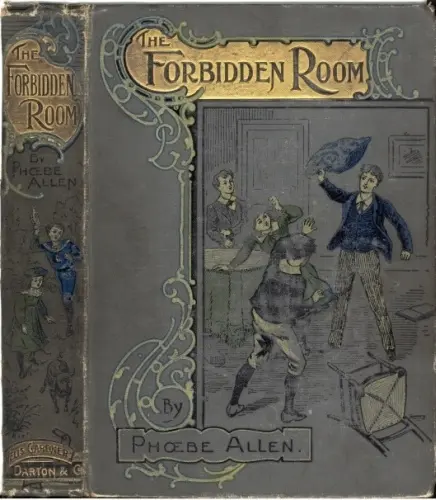
"The Forbidden Room; Or, 'Mine Answer was My Deed'" by Phoebe Allen is a novel written in the early 20th century. The story unfolds in a rural setting centered around Gaybrook Farm, where a group of children, including the timid Gaston Delzant and the lively cousins, come together for a summer visit. Through their adventures and interactions, themes of childhood innocence, friendship, and the quest for acceptance come to the forefront. The opening of the novel introduces the lively preparations at Gaybrook Farm for the arrival of guests, particularly focusing on the excitement and nerves of the children, especially Gaston, who fears being teased. As the guests arrive, a diverse cast of characters is established, each with their distinctive personalities and quirks. The children's initial interactions set the stage for playful dynamics and conflicts, particularly highlighting Andrew's bravado and the gentle, more timid nature of Gaston. This portion of the book effectively sets the tone for a light-hearted yet poignant exploration of childhood experiences in a close-knit farm community.
Introduction adapted from the source catalogue; source summaries may be automatically generated.
Free to read · English · 50,678 words · No account needed
MAKE TIME FOR A GOOD BOOK
On by default. Untick to stop anonymous reading totals. Each page counts after 10 seconds in view. How this works.
Anonymous counting is on unless you have switched it off.
“It was a terrible pity,” said Fay, “that he and Di ever thought of breaking into that room. Is it really true, mother, that yesterday the doctor thought that Di might never get better?”
“It is indeed,” said Mrs. Durand, “and though he hopes now, that by God’s mercy she may recover, Dr. Forbes says that it will be long before Di is quite well again. She has had a sharp lesson for her disobedience, which she will never forget all her life. And now, children, as regards poor, dear little Gaston, we must all think what we can do for him,” added Mrs. Durand.
“He’ll have to have the golden prize,” cried Hubert, coming into the room, so as to catch the last words, “for we all agreed, didn’t we? that the one who did the unselfishest thing, and the thing that hurt themselves the most, should be called the bestest of them all.”
The pride of the summer was gone, as Mrs. Busson termed it. The harvest fields had been cleared, and the apple-gathering was about to begin, when the grand feast, which was to celebrate the achievements of the Knights of the Order of Good Intentions, was at last held.
Matters had turned out very differently from what they had expected, when the children had first planned it all.
Andrew was away in disgrace, and Gaston, though he made a brave show of being well again, was still on crutches, whilst as to Diana, with her white face, and closely-shaven head, she looked like nothing but a thin, pale ghost of the merry “scarlet-runner” of the earlier summer days. If the truth must be told, Di, who had not distinguished herself, especially either by her patience or gentleness during her illness, was never heard again to jeer about “pillow-case saints.”
“Yes, it has all ended very differently from what we thought,” said Faith; “and it seems so odd to think that by this time to-morrow every one of us will be far away from here, even Gaston.”
For to Gaston’s great joy, his favourite uncle was coming the next day to take him back to France, and the others were all leaving for home by the morning train.
To all, the end of their eventful visit to Gaybrook had come.
Of course, Gaston was the hero of the day.
Ever since his accident, the children had vied with each other in making much of him, whilst Jack and Phil had delighted Gaston beyond words, by declaring that there was not a fellow in their school who would have stuck more pluckily to his guns than Gaston had stuck to his bee-hive.
Your reading position is saved on this browser. Take it to another device with a library code. Reading pages adapt to text, rather than matching a printed edition.
BEHIND THE BOOK
This eBook is for the use of anyone anywhere in the United States and most other parts of the world at no cost and with almost no restrictions whatsoever. You may copy it, give it away or re-use it under the terms of the Project Gutenberg License included with this eBook or online at www.gutenberg.org. If you are not located in the United States, you will have to check the laws of the country where you are located before using this eBook. Read the source licence.
The original source file, including credits and licence, is retained by this library. Request an original-format copy at no charge. Please include the book title and Project Gutenberg identifier #49389.
KEEP YOUR CURIOSITY GOING
Coulson Kernahan

Maurice Baring
Frances Wright
Cécile Tormay

Frederic Jesup Stimson

W. H. P. (William Henry Pope) Jarvis