THE CLASSIC COLLECTION✦Peeps at HeraldryCLASSIC FREE BOOKS
Peeps at Heraldry
Phoebe Allen
THE CLASSIC COLLECTION · 1901
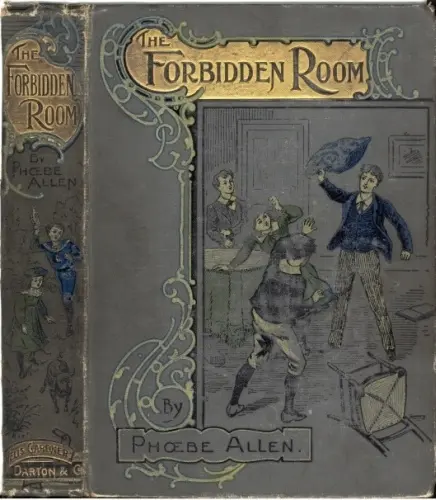
"The Forbidden Room; Or, 'Mine Answer was My Deed'" by Phoebe Allen is a novel written in the early 20th century. The story unfolds in a rural setting centered around Gaybrook Farm, where a group of children, including the timid Gaston Delzant and the lively cousins, come together for a summer visit. Through their adventures and interactions, themes of childhood innocence, friendship, and the quest for acceptance come to the forefront. The opening of the novel introduces the lively preparations at Gaybrook Farm for the arrival of guests, particularly focusing on the excitement and nerves of the children, especially Gaston, who fears being teased. As the guests arrive, a diverse cast of characters is established, each with their distinctive personalities and quirks. The children's initial interactions set the stage for playful dynamics and conflicts, particularly highlighting Andrew's bravado and the gentle, more timid nature of Gaston. This portion of the book effectively sets the tone for a light-hearted yet poignant exploration of childhood experiences in a close-knit farm community.
Introduction adapted from the source catalogue; source summaries may be automatically generated.
Free to read · English · 50,678 words · No account needed
MAKE TIME FOR A GOOD BOOK
On by default. Untick to stop anonymous reading totals. Each page counts after 10 seconds in view. How this works.
Anonymous counting is on unless you have switched it off.
For Dr. Forbes had paid his visit, and his verdict on Diana’s condition had filled everyone with grief and dismay. She was so much worse after her restless, suffering night, and her temperature was so high, that it was impossible to say if she would recover from the effect of the terrible shock that her whole system had sustained.
At any rate, Mrs. Durand must be summoned at once.
“Lose no time in wiring for her,” the doctor had said, as he left, promising to return towards evening.
“Poor lady, poor Miss Agatha,” sighed Mrs. Busson, “to think of all the trouble she has had already, losing the Colonel when Miss Marygold wasn’t out of long clothes, and then for this to happen now, and to think that she’s away in Edinburgh, and that she can’t get here before to-morrow morning at earliest.”
Thus it happened that it was not till after the doctor had paid his evening visit, in the course of which, he chanced to ask if Andrew had been much stung, that Mrs. Busson remembered the latter’s existence.
“That child has never been left all this time in the orchard,” she cried, rushing back into the house. “Surely someone has seen to him.”
“Oh! good me!” exclaimed conscience-stricken Polly, “I clean forgot to tell Libbie to let him go, and now it’s past six.”
“Why the poor lad must be half dead,” cried Mrs. Busson, “fly to him
Polly, do.”
Polly’s flight was a short one. In the backyard she met Ned.
“No need to trouble about he,” said Ned, “the master let him out I believe before he started. He’s down in the strawberry beds, as you can see for yourself,” added Ned, putting aside some thick growing privet bushes, and pointing in the direction of the kitchen garden.
There sure enough was Andrew, cowering under the shelter of a big fir tree, which grew against the wall in a corner of the strawberry beds.
“He’s mighty ashamed of himself, for he’s doing his best to hide,” laughed Polly, as she ran back to relieve Mrs. Busson’s fears.
“Well, that is a comfort to be sure,” sighed the poor old lady, “and now, mind Polly when the other children come home, don’t say one word about poor Miss Di. The doctor says that there won’t be much change to be looked for till to-morrow, and there’ll be no good done by telling the poor dears the worst till one’s obliged. They needn’t know till to-morrow that we’ve sent for Miss Di’s mamma.”
Your reading position is saved on this browser. Take it to another device with a library code. Reading pages adapt to text, rather than matching a printed edition.
BEHIND THE BOOK
This eBook is for the use of anyone anywhere in the United States and most other parts of the world at no cost and with almost no restrictions whatsoever. You may copy it, give it away or re-use it under the terms of the Project Gutenberg License included with this eBook or online at www.gutenberg.org. If you are not located in the United States, you will have to check the laws of the country where you are located before using this eBook. Read the source licence.
The original source file, including credits and licence, is retained by this library. Request an original-format copy at no charge. Please include the book title and Project Gutenberg identifier #49389.
KEEP YOUR CURIOSITY GOING
Coulson Kernahan

Maurice Baring
Frances Wright
Cécile Tormay

Frederic Jesup Stimson

W. H. P. (William Henry Pope) Jarvis