THE CLASSIC COLLECTION✦Peeps at HeraldryCLASSIC FREE BOOKS
Peeps at Heraldry
Phoebe Allen
THE CLASSIC COLLECTION · 1901
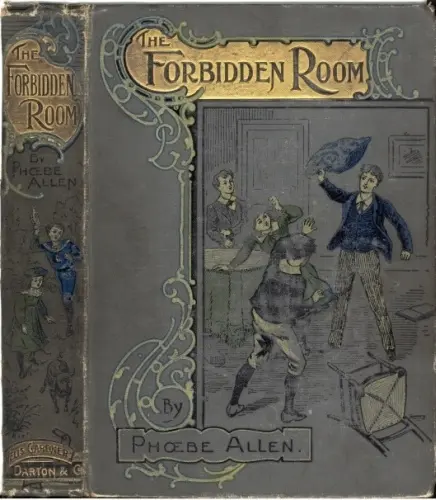
"The Forbidden Room; Or, 'Mine Answer was My Deed'" by Phoebe Allen is a novel written in the early 20th century. The story unfolds in a rural setting centered around Gaybrook Farm, where a group of children, including the timid Gaston Delzant and the lively cousins, come together for a summer visit. Through their adventures and interactions, themes of childhood innocence, friendship, and the quest for acceptance come to the forefront. The opening of the novel introduces the lively preparations at Gaybrook Farm for the arrival of guests, particularly focusing on the excitement and nerves of the children, especially Gaston, who fears being teased. As the guests arrive, a diverse cast of characters is established, each with their distinctive personalities and quirks. The children's initial interactions set the stage for playful dynamics and conflicts, particularly highlighting Andrew's bravado and the gentle, more timid nature of Gaston. This portion of the book effectively sets the tone for a light-hearted yet poignant exploration of childhood experiences in a close-knit farm community.
Introduction adapted from the source catalogue; source summaries may be automatically generated.
Free to read · English · 50,678 words · No account needed
MAKE TIME FOR A GOOD BOOK
On by default. Untick to stop anonymous reading totals. Each page counts after 10 seconds in view. How this works.
Anonymous counting is on unless you have switched it off.
From the lumber-room in the attics, to the parlour, with its high-arched fire-place, filled in to-day with boughs of green and big bowls of June roses, and from the cheese-room, under the roof, to the brew-house in the yard below, every nook and corner in the roomy old farm had been visited, on some pretence or another, by the time that noon and the dinner-hour arrived simultaneously.
“And yet,” declared Polly, the rosy-cheeked “odd-girl,” “though the Missus hasn’t been off her feet for all these hours, she’s as fresh as a sky-lark.”
“Ay, as brisk as a bee amongst clover,” chimed in old Simon, the shepherd. Leaning against the wall of an outhouse, his dim eyes followed Mrs. Busson’s quick movements as she flitted from dairy to larder, finally disappearing into the garden, as nimbly as though she were seventeen instead of seventy.
“And what’s it all about?” asked Simon, slowly; “I forgets again.”
Polly sighed. Already three times that morning she had given the explanation to the old man, and the importance of being his informant was wearing off.
“What’s it all about?” repeated Simon.
“Don’t you mind, Simon; I told you that the Missus’ ladies, them she was nurse two years ago, are coming down with their children to stay some while at the farm. There! if they were all live princes and princesses the mistress couldn’t fuss more about them. My word! Simon; the cakes, and the pies, and the jams, and the junkets are something to see.”
“Is it boys or gals that is coming?” asked Simon, with a note of alarm in his voice. “Be they young, or the middlin’ mischieevious age?”
“Oh! that I can’t tell yer; they be all sorts, I think.”
“Mussey me! boys an’ girls an’ all sorts,” cried the old shepherd; and, as if to make preparation at once against the approaching foe, he whistled to his equally ancient dog, who was making an exhaustive examination of a bare veal knucklebone, and tottered towards the meadows.
But Simon’s heart was not the only one which, amongst all the pleasant stir of preparation at the farm, was filled with alarm at the thought of the impending visitors.
One Gaston Delzant, a small, black-haired, black-eyed French boy, aged seven, was literally trembling within his patent leather shoes at the prospect of the coming guests.
He had not been long in England, and though the healthy life at Gaybrook, and Mrs. Busson’s fostering care had worked wonders in strengthening the feeble little creature, Gaston still looked, as the burly farmer declared, “just a poor little snip of a frog-fed Frenchy.”
Your reading position is saved on this browser. Take it to another device with a library code. Reading pages adapt to text, rather than matching a printed edition.
BEHIND THE BOOK
This eBook is for the use of anyone anywhere in the United States and most other parts of the world at no cost and with almost no restrictions whatsoever. You may copy it, give it away or re-use it under the terms of the Project Gutenberg License included with this eBook or online at www.gutenberg.org. If you are not located in the United States, you will have to check the laws of the country where you are located before using this eBook. Read the source licence.
The original source file, including credits and licence, is retained by this library. Request an original-format copy at no charge. Please include the book title and Project Gutenberg identifier #49389.
KEEP YOUR CURIOSITY GOING
Coulson Kernahan

Maurice Baring
Frances Wright
Cécile Tormay

Frederic Jesup Stimson

W. H. P. (William Henry Pope) Jarvis