
Switch off
Oliver Optic
THE CLASSIC COLLECTION · 1896
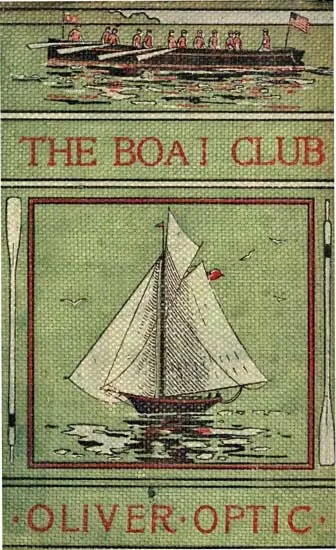
"The Boat Club; or, The Bunkers of Rippleton" by Oliver Optic is a novel written in the late 19th century. Targeted primarily at young readers, the narrative centers around themes of friendship, moral decisions, and the joys of outdoor adventures. The story particularly follows Frank Sedley and his friends as they navigate their relationships while engaging in club activities centered around boating on Wood Lake. The beginning of the book introduces us to Frank Sedley and his friend Charles Hardy during the lead-up to the Fourth of July. As they discuss their plans for the celebration, Frank contemplates using their saved money to help a local widow and her children instead of spending it on fireworks and treats. Their decision to support the widow highlights their growing sense of responsibility and compassion. The initial chapters establish the boys' characters, their strong friendship, and their diverse backgrounds, ultimately paving the way for their involvement with the titular boat club and the adventures that await them on the lake.
Introduction adapted from the source catalogue; source summaries may be automatically generated.
Free to read · English · 46,119 words · No account needed
MAKE TIME FOR A GOOD BOOK
On by default. Untick to stop anonymous reading totals. Each page counts after 10 seconds in view. How this works.
Anonymous counting is on unless you have switched it off.
The oars all went up as one, and Fred waved his hand as he deposited his oar on the thwarts in concert with the other eleven. Ben said it was well done, but might be better done, and it was repeated.
"If you were going into a boat-house, which you will soon have, or alongside another vessel, the coxswain should give the command, 'In bows!' Then the two bowmen will boat their oars, and take the boat-hook. You may give that command next time, Frank," said Uncle Ben.
The boat backed away a considerable distance from the island, and then went through the manoeuvre again. The teacher said it was perfect; and Tony fended off with the boat-hook as the boat came to the rock, and Fred stood ready to haul in the stern.
"Now, boys, you may land and rest yourselves," said the instructor.
The rowers were not tired they protested, but they went on shore. They did not stay a quarter of an hour on the island; and as soon as they had embarked, the old sailor took the American flag from the socket, and waved it above his head as soon as the boys were seated.
"Now, my lads, three cheers for the American flag. One!"
"Hurrah!"
"Two!"
"Hurrah!"
"Three!"
"Hurrah!"
"And long may it wave!" added Uncle Ben heartily, as he put the flag back in its place. "Boys, can't you sing?"
"We sing in school," replied several.
"Sing me a song, then, before we get under way."
"What shall we sing?"
"Anything you please."
"'Canadian Boat Song,'" suggested Frank.
"Ay, ay, give us that."
Fred Harper was a good singer, and started the song. The boys all joined in; and Uncle Ben was so pleased when they had finished it, that he begged them to sing it again. They cheerfully complied, and the old man listened to the repetition with the most intense delight.
"Now, boys, I will sing you a sea song."
"Hurrah! do, Uncle Ben," exclaimed Charles.
Uncle Ben's voice was somewhat cracked; but he rendered with tolerable
effect the song,--
"'Twas in the good ship Rover,
I sailed the world around;
For twenty years and over,
I ne'er touched British ground."
"Bravo, Uncle Ben. Fred Harper, can't you give us Ben Bolt and Sweet Alice? I am sure Uncle Ben will like it."
"I will try," replied Fred.
"We will join the chorus."
The song was sung, and the old sailor shed a tear over "Sweet Alice, so
young and so fair."
"Here comes father in the sailboat," cried Frank, as he discovered Captain Sedley approaching in his pleasure yacht.
"Ay, beating up agin the wind."
Your reading position is saved on this browser. Take it to another device with a library code. Reading pages adapt to text, rather than matching a printed edition.
BEHIND THE BOOK
This eBook is for the use of anyone anywhere in the United States and most other parts of the world at no cost and with almost no restrictions whatsoever. You may copy it, give it away or re-use it under the terms of the Project Gutenberg License included with this eBook or online at www.gutenberg.org. If you are not located in the United States, you will have to check the laws of the country where you are located before using this eBook. Read the source licence.
The original source file, including credits and licence, is retained by this library. Request an original-format copy at no charge. Please include the book title and Project Gutenberg identifier #24557.
KEEP YOUR CURIOSITY GOING
Coulson Kernahan

Maurice Baring
Frances Wright
Cécile Tormay

Frederic Jesup Stimson

W. H. P. (William Henry Pope) Jarvis
