
Switch off
Oliver Optic
THE CLASSIC COLLECTION · 1896
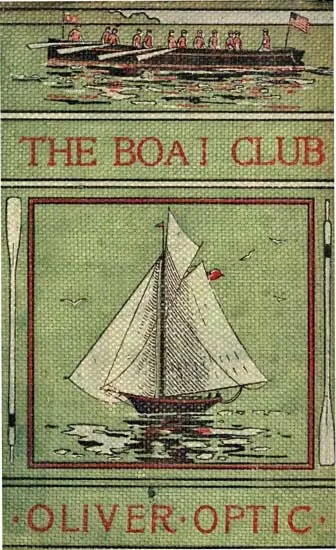
"The Boat Club; or, The Bunkers of Rippleton" by Oliver Optic is a novel written in the late 19th century. Targeted primarily at young readers, the narrative centers around themes of friendship, moral decisions, and the joys of outdoor adventures. The story particularly follows Frank Sedley and his friends as they navigate their relationships while engaging in club activities centered around boating on Wood Lake. The beginning of the book introduces us to Frank Sedley and his friend Charles Hardy during the lead-up to the Fourth of July. As they discuss their plans for the celebration, Frank contemplates using their saved money to help a local widow and her children instead of spending it on fireworks and treats. Their decision to support the widow highlights their growing sense of responsibility and compassion. The initial chapters establish the boys' characters, their strong friendship, and their diverse backgrounds, ultimately paving the way for their involvement with the titular boat club and the adventures that await them on the lake.
Introduction adapted from the source catalogue; source summaries may be automatically generated.
Free to read · English · 46,119 words · No account needed
MAKE TIME FOR A GOOD BOOK
On by default. Untick to stop anonymous reading totals. Each page counts after 10 seconds in view. How this works.
Anonymous counting is on unless you have switched it off.
The first two weeks of the organization of the boat club passed away, and the members were assembled in Zephyr Hall to elect a coxswain. According to the constitution, Frank's term of office had expired.
"Whom do you intend to vote for, Fred?" asked Charles Hardy, who appeared to be very anxious about the election.
"I don't know; I haven't decided yet," replied Fred Harper. "You know what Captain Sedley said the other day about it."
"Yes; but if I have got to vote, I want to get my mind made up. I don't see what harm there can be in talking about it a little."
"He said he did not want any electioneering about the officers--'log-rolling,' my father calls it."
"Of course not," replied Charles demurely.
"The best fellow ought to get the office," said Fred slyly.
"Of course, but who is the best fellow? That's the question. We ought to talk it over among ourselves a little," added Charles.
"What good would that do?"
"Each fellow would know whom the others were going to vote for."
"That would not help him to ascertain who would make the best
coxswain," Fred insisted.
"But it would help towards making a choice."
"There will be a choice fast enough."
"I don't believe it. If there is no nomination, and no understanding about the matter beforehand, every fellow will vote for a different person. You see if there are not a dozen different ones voted for," protested Charles.
"We can try it over again, then," said Fred.
"I shall vote for you, and perhaps you will vote for me."
"Perhaps I shall."
"And that is the way it will be all through the club."
"Charley, what do you say to giving Frank a re-election?" said Fred, with sudden energy, while the mischief seemed to beam from his eyes.
"Well, I don't know," replied Charles, looking intently at the floor.
"Frank has made a good coxswain; there is no rubbing that out."
"Very good," said Charles feebly.
"If it hadn't been for him, Tim Bunker would have been drowned that
time."
"Couldn't another fellow have done the same that he did?"
"Yes, if he had had the presence of mind and the energy of character
which Frank has."
"You could have done it, Fred," said Charles.
"I don't know about that," replied Fred modestly.
"You hauled him in with the boat-hook."
"Yes, but I only did what Frank told me to do. Look at the Bunkers;
they didn't even reach the spot till we had got him on board the
Zephyr."
Your reading position is saved on this browser. Take it to another device with a library code. Reading pages adapt to text, rather than matching a printed edition.
BEHIND THE BOOK
This eBook is for the use of anyone anywhere in the United States and most other parts of the world at no cost and with almost no restrictions whatsoever. You may copy it, give it away or re-use it under the terms of the Project Gutenberg License included with this eBook or online at www.gutenberg.org. If you are not located in the United States, you will have to check the laws of the country where you are located before using this eBook. Read the source licence.
The original source file, including credits and licence, is retained by this library. Request an original-format copy at no charge. Please include the book title and Project Gutenberg identifier #24557.
KEEP YOUR CURIOSITY GOING
Coulson Kernahan

Maurice Baring
Frances Wright
Cécile Tormay

Frederic Jesup Stimson

W. H. P. (William Henry Pope) Jarvis
