
Switch off
Oliver Optic
THE CLASSIC COLLECTION · 1896
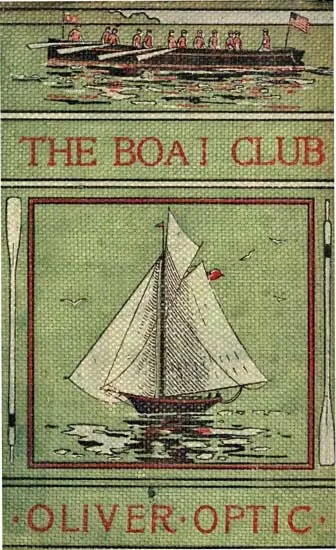
"The Boat Club; or, The Bunkers of Rippleton" by Oliver Optic is a novel written in the late 19th century. Targeted primarily at young readers, the narrative centers around themes of friendship, moral decisions, and the joys of outdoor adventures. The story particularly follows Frank Sedley and his friends as they navigate their relationships while engaging in club activities centered around boating on Wood Lake. The beginning of the book introduces us to Frank Sedley and his friend Charles Hardy during the lead-up to the Fourth of July. As they discuss their plans for the celebration, Frank contemplates using their saved money to help a local widow and her children instead of spending it on fireworks and treats. Their decision to support the widow highlights their growing sense of responsibility and compassion. The initial chapters establish the boys' characters, their strong friendship, and their diverse backgrounds, ultimately paving the way for their involvement with the titular boat club and the adventures that await them on the lake.
Introduction adapted from the source catalogue; source summaries may be automatically generated.
Free to read · English · 46,119 words · No account needed
MAKE TIME FOR A GOOD BOOK
On by default. Untick to stop anonymous reading totals. Each page counts after 10 seconds in view. How this works.
Anonymous counting is on unless you have switched it off.
Squire Benson requested the court to have Joe Braman summoned as a witness in the case; and after a short delay, he was brought in by an officer.
"Was that the person?"
"It was."
"You are sure?"
"I noticed the scar on his cheek," replied the witness, "and I should not be likely to mistake such a person as that for another."
The audience smiled at this sally. Joe Braman was in truth an oddity in his personal appearance, and the remark of the witness seemed to have a peculiar force.
"That is all, Mr. Stevens; the witness is yours, Mr. Prescott," said Squire Benson, turning to the county attorney.
But Mr. Prescott asked him no questions.
"Joseph Braman, take the stand," continued Tony's lawyer.
Joe seemed bewildered by the circumstances that surrounded him, and gazed vacantly at the judge and jury. He was a dull, stupid fellow, and did not readily comprehend his position.
He was sworn; and after the judge had reminded him that he need not criminate himself, Squire Benson proceeded with the examination.
"You bought a gun of the last witness, did you not?" asked he.
"Yes, sir," replied Joe, scarcely knowing whether he was on trial
himself or not.
"You gave him a twenty dollar bill, did you not?"
"You are suggesting his answers," interposed the county attorney.
"What did you give him in payment?"
"I gin him a twenty dollar bill," replied Joe promptly.
"This was the bill, wasn't it?"
"I pray your honor's judgment," said the county attorney with a smile. "My learned brother answers the question, and then puts it."
"Put the question fairly, Mr. Benson," added the judge.
"Was this the bill?" said the lawyer, handing the witness the twenty
dollar note.
"I rather guess it was."
"You guess! Don't you know?" said Mr. Benson, with severity in his tone
and manner.
"Yes, sir, it was," answered Joe, startled by the questioner's sharp
words.
"How do you know?"
"I see'd this 'ere mark on't," replied the witness, pointing to Mr.
Doolittle's shop-card.
"Now, Mr. Braman," continued Squire Benson, suddenly softening his tone, and assuming a pleasant smile, "Where did you get this bill?"
"Tim Bunker gin it to me."
The reply of Joe produced a great sensation in the court-room.
"I told you so!" whispered Charles Hardy to Frank.
There was a smile of triumph on the face of Tony, and all eyes were
turned to him.
"It's a lie!" groaned Tim, his face as white as a sheet.
"Did he tell you where he got it?" continued Mr. Benson, in an
apparently indifferent tone.
"You need not criminate yourself," interposed the judge.
Your reading position is saved on this browser. Take it to another device with a library code. Reading pages adapt to text, rather than matching a printed edition.
BEHIND THE BOOK
This eBook is for the use of anyone anywhere in the United States and most other parts of the world at no cost and with almost no restrictions whatsoever. You may copy it, give it away or re-use it under the terms of the Project Gutenberg License included with this eBook or online at www.gutenberg.org. If you are not located in the United States, you will have to check the laws of the country where you are located before using this eBook. Read the source licence.
The original source file, including credits and licence, is retained by this library. Request an original-format copy at no charge. Please include the book title and Project Gutenberg identifier #24557.
KEEP YOUR CURIOSITY GOING
Coulson Kernahan

Maurice Baring
Frances Wright
Cécile Tormay

Frederic Jesup Stimson

W. H. P. (William Henry Pope) Jarvis
