
Life of Edwin Forrest, the American Tragedian. Volume 2 (of 2)
William Rounseville Alger & Horatio, Jr. Alger
THE CLASSIC COLLECTION · 1876
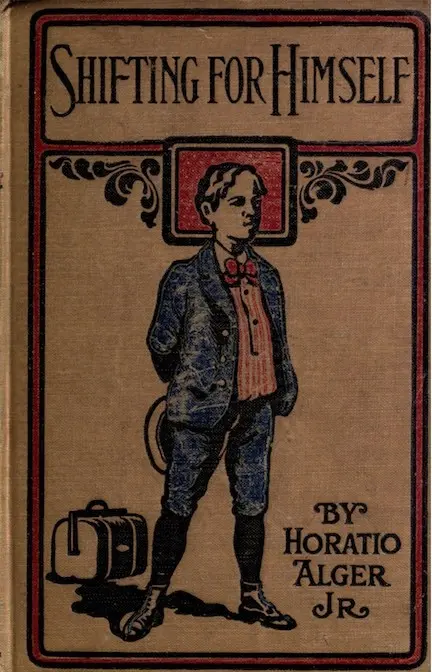
"Shifting For Himself; or, Gilbert Greyson's Fortunes" by Horatio Alger, Jr. is a novel written in the late 19th century. The story follows a young boy named Gilbert Greyson, who faces sudden poverty while preparing for college, forcing him to abandon his aspirations and enter the workforce. His journey illustrates themes of self-reliance, resilience, and personal growth, with particular attention to the challenges faced by youth in navigating the demands of adulthood. The beginning of the novel introduces Gilbert Greyson, a spirited 16-year-old boarding at Dr. Burton’s school, and his close friend John Munford, who must leave school to work. As Gilbert looks forward to a summer trip, he receives a letter from his guardian, Richard Briggs, revealing that he will no longer be able to afford his education due to financial constraints. This letter propels Gilbert into adulthood, emphasizing the necessity for him to make his own way in the world, mirroring the experiences of many boys who find themselves required to "shift for themselves" in times of need. The opening chapters set the stage for Gilbert's transformation from a hopeful student to a young man determined to navigate the complexities of life independently.
Introduction adapted from the source catalogue; source summaries may be automatically generated.
Free to read · English · 51,885 words · No account needed
MAKE TIME FOR A GOOD BOOK
On by default. Untick to stop anonymous reading totals. Each page counts after 10 seconds in view. How this works.
Anonymous counting is on unless you have switched it off.
Gilbert called upon the Vivians the same evening. He was received with as much cordiality as on his first visit.
“Now,” said Mr. Vivian, laying down the evening paper, which he had been reading at Gilbert’s entrance, “tell me how you came to lose your place.”
Gilbert told his story in the fewest possible words.
“It’s a great shame,” said Fred, indignantly; “I’d like to put a head on that book-keeper.”
“I sympathize with you, Fred,” said Laura; “but I think you might have expressed yourself differently.”
“Your sister is right, Fred,” said Mr. Vivian; “you must not be too ready to employ street phrases.”
“That’s what I mean, any way,” said Fred.
“Do you think your employer will do you justice when he returns?” asked
Mr. Vivian.
“Yes, sir. Mr. Sands is an excellent man, and he knows very well that Mr. Moore is prejudiced against me.”
“Then you expect to be taken back?”
“Yes, sir.”
“If anything should occur to prevent, come at once and let me know.”
“Thank you, sir.”
Before the evening was over Gilbert managed to introduce the subject of the little flower-girl whom he had befriended. He gave an account of the father’s sickness, and the little girl’s devotion. Fred and Laura were much interested, and asked many questions, which Gilbert answered as well as he could.
“You think these people really worthy of assistance, Gilbert?” asked Mr.
Vivian.
“Yes, sir, I have no doubt of it.”
“You know there are many impostors, who live by working on the sympathies of the benevolent?”
“Yes, sir; but in this case I have no hesitation at all. I am sure Mr. Talbot and the little girl deserve help.”
“In that case,” said the merchant, “I am willing to do something for
them.”
He drew from his pocket a ten-dollar bill and handed it to Gilbert.
“It may be best,” he suggested, “not to give them this money all at once, but a dollar or two at a time, in order to insure its careful use.”
“Thank you, sir,” said Gilbert, joyfully; “this money will be like a fortune to them. I will see that your wishes are carried out.”
“Papa,” said Fred, “may I give Gilbert my five-dollar gold piece for the little girl and her father?”
“Not at present, Fred; though I am glad you feel like offering it. When this money is expended, Gilbert will let us know, and then we will see what else is to be done.”
Your reading position is saved on this browser. Take it to another device with a library code. Reading pages adapt to text, rather than matching a printed edition.
William Rounseville Alger & Horatio, Jr. Alger

William Rounseville Alger & Horatio, Jr. Alger

Horatio, Jr. Alger

Horatio, Jr. Alger
BEHIND THE BOOK
This eBook is for the use of anyone anywhere in the United States and most other parts of the world at no cost and with almost no restrictions whatsoever. You may copy it, give it away or re-use it under the terms of the Project Gutenberg License included with this eBook or online at www.gutenberg.org. If you are not located in the United States, you will have to check the laws of the country where you are located before using this eBook. Read the source licence.
The original source file, including credits and licence, is retained by this library. Request an original-format copy at no charge. Please include the book title and Project Gutenberg identifier #55598.
KEEP YOUR CURIOSITY GOING
Coulson Kernahan

Maurice Baring
Frances Wright
Cécile Tormay

Frederic Jesup Stimson

W. H. P. (William Henry Pope) Jarvis