
Life of Edwin Forrest, the American Tragedian. Volume 2 (of 2)
William Rounseville Alger & Horatio, Jr. Alger
THE CLASSIC COLLECTION · 1876
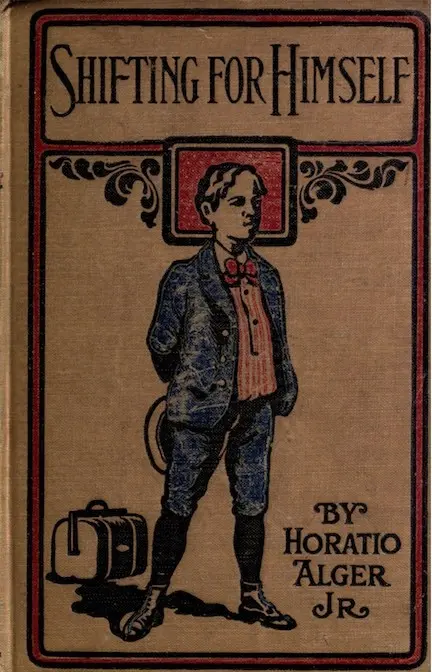
"Shifting For Himself; or, Gilbert Greyson's Fortunes" by Horatio Alger, Jr. is a novel written in the late 19th century. The story follows a young boy named Gilbert Greyson, who faces sudden poverty while preparing for college, forcing him to abandon his aspirations and enter the workforce. His journey illustrates themes of self-reliance, resilience, and personal growth, with particular attention to the challenges faced by youth in navigating the demands of adulthood. The beginning of the novel introduces Gilbert Greyson, a spirited 16-year-old boarding at Dr. Burton’s school, and his close friend John Munford, who must leave school to work. As Gilbert looks forward to a summer trip, he receives a letter from his guardian, Richard Briggs, revealing that he will no longer be able to afford his education due to financial constraints. This letter propels Gilbert into adulthood, emphasizing the necessity for him to make his own way in the world, mirroring the experiences of many boys who find themselves required to "shift for themselves" in times of need. The opening chapters set the stage for Gilbert's transformation from a hopeful student to a young man determined to navigate the complexities of life independently.
Introduction adapted from the source catalogue; source summaries may be automatically generated.
Free to read · English · 51,885 words · No account needed
MAKE TIME FOR A GOOD BOOK
On by default. Untick to stop anonymous reading totals. Each page counts after 10 seconds in view. How this works.
Anonymous counting is on unless you have switched it off.
Randolph had expressed to his father in the morning an intention of calling upon Gilbert. His motive was not interest in our hero’s welfare, but curiosity to find out how he was situated, as indeed he freely acknowledged.
“I wouldn’t call if I were you, Randolph,” said his mother.
“Why not?” asked her husband.
“Gilbert will move in a different sphere,” said Mrs. Briggs, loftily. “I do not wish my son to form intimacies beneath him.”
“I don’t intend to,” said Randolph; “I want to see what sort of a place
he is in.”
“He will be likely to presume upon your condescension, and boast of you as one of his friends.”
Mr. Briggs understood Gilbert better.
“No fear of that!” he said. “Gilbert is a boy of spirit. He is not one to seek or accept patronage. His pride is quite as great as Randolph’s.”
“What has he to be proud of, I should like to know,” said Mrs. Briggs,
with a sneer.
“He is my ward,” said Mr. Briggs, stiffly, “and it is quite proper that my son should pay him some attention.”
“You seem to be infatuated about that boy,” said his wife coldly. “I suppose you will want him invited to Randolph’s birthday party next month.”
“I certainly shall,” said Mr. Briggs.
“This is going rather too far,” said his wife angrily.
“However that may be, he must be invited.”
“I should think I had some voice in that matter, Mr. Briggs.”
“Unless Gilbert Greyson is invited, there shall be no party at all,” said Mr. Briggs, with decision.
Mrs. Briggs felt that the fiat had gone forth. Her husband generally yielded to her, but sometimes he put his foot down, as the saying is, and was not to be moved. She felt very much annoyed, but Randolph offered her a way of yielding gracefully.
“Oh, let the beggar come,” he said. “He will be good fun. I want to see how he will behave.”
“Since you wish it, Randolph,” said Mrs. Briggs, addressing herself pointedly to her son, “I will make no further objection. It is your party, and you ought to have your own way. But I shouldn’t think it was necessary for you to call on the boy. He is at some cheap boarding-house, I suppose.”
“Cheap, but perfectly respectable,” said Mr. Briggs.
“I want to see what a cheap boarding-house is like,” said Randolph; and his mother said no more.
At eight o’clock the servant brought up to Gilbert’s room a card bearing the name of Randolph Briggs.
“It’s a young gentleman that wants to see you,” she explained.
Your reading position is saved on this browser. Take it to another device with a library code. Reading pages adapt to text, rather than matching a printed edition.
William Rounseville Alger & Horatio, Jr. Alger

William Rounseville Alger & Horatio, Jr. Alger

Horatio, Jr. Alger

Horatio, Jr. Alger
BEHIND THE BOOK
This eBook is for the use of anyone anywhere in the United States and most other parts of the world at no cost and with almost no restrictions whatsoever. You may copy it, give it away or re-use it under the terms of the Project Gutenberg License included with this eBook or online at www.gutenberg.org. If you are not located in the United States, you will have to check the laws of the country where you are located before using this eBook. Read the source licence.
The original source file, including credits and licence, is retained by this library. Request an original-format copy at no charge. Please include the book title and Project Gutenberg identifier #55598.
KEEP YOUR CURIOSITY GOING
Coulson Kernahan

Maurice Baring
Frances Wright
Cécile Tormay

Frederic Jesup Stimson

W. H. P. (William Henry Pope) Jarvis