
Life of Edwin Forrest, the American Tragedian. Volume 2 (of 2)
William Rounseville Alger & Horatio, Jr. Alger
THE CLASSIC COLLECTION · 1876
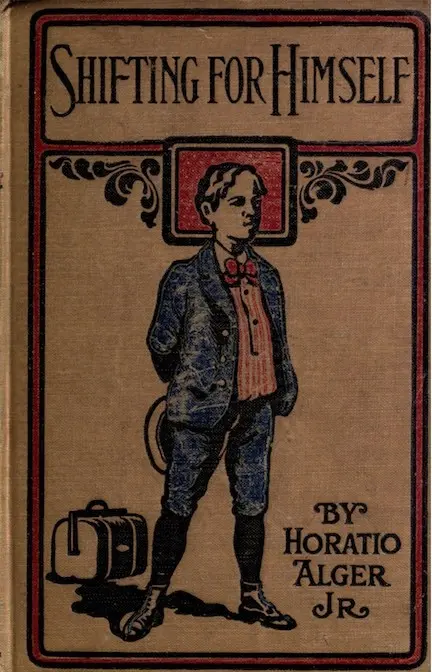
"Shifting For Himself; or, Gilbert Greyson's Fortunes" by Horatio Alger, Jr. is a novel written in the late 19th century. The story follows a young boy named Gilbert Greyson, who faces sudden poverty while preparing for college, forcing him to abandon his aspirations and enter the workforce. His journey illustrates themes of self-reliance, resilience, and personal growth, with particular attention to the challenges faced by youth in navigating the demands of adulthood. The beginning of the novel introduces Gilbert Greyson, a spirited 16-year-old boarding at Dr. Burton’s school, and his close friend John Munford, who must leave school to work. As Gilbert looks forward to a summer trip, he receives a letter from his guardian, Richard Briggs, revealing that he will no longer be able to afford his education due to financial constraints. This letter propels Gilbert into adulthood, emphasizing the necessity for him to make his own way in the world, mirroring the experiences of many boys who find themselves required to "shift for themselves" in times of need. The opening chapters set the stage for Gilbert's transformation from a hopeful student to a young man determined to navigate the complexities of life independently.
Introduction adapted from the source catalogue; source summaries may be automatically generated.
Free to read · English · 51,885 words · No account needed
MAKE TIME FOR A GOOD BOOK
On by default. Untick to stop anonymous reading totals. Each page counts after 10 seconds in view. How this works.
Anonymous counting is on unless you have switched it off.
The next morning, about eight o’clock, the family were gathered about the breakfast-table. Randolph was ten minutes late. He came in looking sleepy and cross.
“Randolph,” said his father, “what made you so late last evening?”
“I wasn’t late.”
“You may not call half-past eleven late; I do.”
“It wasn’t more than half-past ten when I came in.”
“You are quite mistaken. I looked at my watch when I heard you coming
upstairs.”
“It was rather late; but you needn’t make such a fuss about it, Mr. Briggs,” said his wife. “You have been out later than that yourself.”
“Whenever I have been late, I had a good reason for it. Besides, there is some difference in age between Randolph and myself.”
“At any rate, you needn’t scold him before a stranger.”
“I do not consider Gilbert a stranger. Besides, what I say is partly meant for him. It is not wise for any boy of his or Randolph’s age to remain out till nearly twelve.”
“I hope you are almost through; I am getting tired of the subject.”
Thus Mrs. Briggs gave Randolph indirect encouragement, by taking his
part against his father.
Mr. Briggs shrugged his shoulders and was silent. Gilbert felt rather
uncomfortable.
“Will you have some more coffee?” asked Mrs. Briggs, in an icy tone.
“No, thank you,” he said.
“You may go down-town with me, Gilbert,” said Mr. Briggs. “I will introduce you to a gentleman who will possibly give you a place.”
“Thank you, sir.”
“I hope, Mr. Briggs, you will bear in mind what I said last night,” said
his wife.
She referred to his getting a boarding-place for Gilbert.
“I have not forgotten it,” he answered.
Gilbert and his guardian took a University Place car, and they rode
down-town together.
Mr. Briggs obtained a seat, but Gilbert was compelled to stand, on account of the crowded state of the car.
Seated beside Mr. Briggs was a business man of about his own age.
“Good-morning, Mr. Sands,” he said, for it was an acquaintance.
“Good-morning, Mr. Briggs. Is this young man your son?”
“No, he is under my charge, however. I have a son of about his age.”
“Is he at school?”
“He has been till recently. I am looking for a place for him at present. It is time he commenced his business education.”
“Indeed,” said the gentleman, thoughtfully. “Are you thinking of any business in particular?”
“No. I shall accept any good opening for him.”
Your reading position is saved on this browser. Take it to another device with a library code. Reading pages adapt to text, rather than matching a printed edition.
William Rounseville Alger & Horatio, Jr. Alger

William Rounseville Alger & Horatio, Jr. Alger

Horatio, Jr. Alger

Horatio, Jr. Alger
BEHIND THE BOOK
This eBook is for the use of anyone anywhere in the United States and most other parts of the world at no cost and with almost no restrictions whatsoever. You may copy it, give it away or re-use it under the terms of the Project Gutenberg License included with this eBook or online at www.gutenberg.org. If you are not located in the United States, you will have to check the laws of the country where you are located before using this eBook. Read the source licence.
The original source file, including credits and licence, is retained by this library. Request an original-format copy at no charge. Please include the book title and Project Gutenberg identifier #55598.
KEEP YOUR CURIOSITY GOING
Coulson Kernahan

Maurice Baring
Frances Wright
Cécile Tormay

Frederic Jesup Stimson

W. H. P. (William Henry Pope) Jarvis