
Life of Edwin Forrest, the American Tragedian. Volume 2 (of 2)
William Rounseville Alger & Horatio, Jr. Alger
THE CLASSIC COLLECTION · 1876
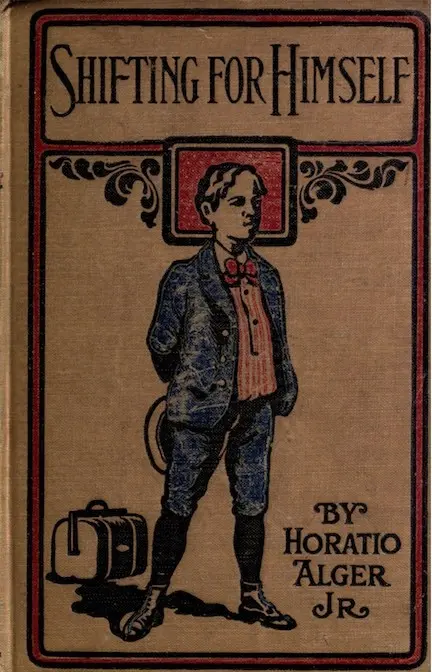
"Shifting For Himself; or, Gilbert Greyson's Fortunes" by Horatio Alger, Jr. is a novel written in the late 19th century. The story follows a young boy named Gilbert Greyson, who faces sudden poverty while preparing for college, forcing him to abandon his aspirations and enter the workforce. His journey illustrates themes of self-reliance, resilience, and personal growth, with particular attention to the challenges faced by youth in navigating the demands of adulthood. The beginning of the novel introduces Gilbert Greyson, a spirited 16-year-old boarding at Dr. Burton’s school, and his close friend John Munford, who must leave school to work. As Gilbert looks forward to a summer trip, he receives a letter from his guardian, Richard Briggs, revealing that he will no longer be able to afford his education due to financial constraints. This letter propels Gilbert into adulthood, emphasizing the necessity for him to make his own way in the world, mirroring the experiences of many boys who find themselves required to "shift for themselves" in times of need. The opening chapters set the stage for Gilbert's transformation from a hopeful student to a young man determined to navigate the complexities of life independently.
Introduction adapted from the source catalogue; source summaries may be automatically generated.
Free to read · English · 51,885 words · No account needed
MAKE TIME FOR A GOOD BOOK
On by default. Untick to stop anonymous reading totals. Each page counts after 10 seconds in view. How this works.
Anonymous counting is on unless you have switched it off.
When dinner was over, Gilbert found that he was not going to have the pleasure of Randolph’s companionship.
“Where are you going, Randolph?” asked his father, as Randolph was
leaving the room.
“I’m going out.”
“Perhaps Gilbert may like to go with you,” suggested Mr. Briggs.
“I’ve got an engagement,” said Randolph, shortly.
“When was it made?”
“This afternoon.”
“Don’t let me interfere with Randolph’s engagements,” said Gilbert,
hastily.
“Won’t you feel lonely?” asked Mr. Briggs.
“Oh, no, sir. I shall take a walk down Broadway. There will be plenty to take up my attention.”
“Randolph can hardly be expected to give up his engagement,” said Mrs. Briggs. “I am surprised, Mr. Briggs, that you should expect it.”
Mr. Briggs muttered something about politeness.
Gilbert protested again that he could get along very well by himself,
and the matter dropped.
Presently he went out, and Mrs. Briggs, who had been waiting her opportunity, commenced an attack upon her husband.
“What are your plans for this boy, Mr. Briggs?” she asked. “Are you going to support him in idleness?”
“Certainly not. I shall find him a place as soon as I can.”
“What claim has he upon you, I should like to know?”
“He has only me to look out for him.”
“What of that?”
“He was the son of my old schoolmate.”
“I have old schoolmates, too, and some, I suppose, are in want; but I am not going to adopt their children.”
“This boy was especially recommended to me, and what property his father left was given in trust to me for him.”
“Well, it’s all used up, isn’t it?”
“Yes.”
“Then your trust is at an end.”
“What are you driving at, wife?”
“I want to know whether you expect this boy to remain in your house.”
“I see no objection.”
“I do. You will be pampering him at the expense of your own son.”
Mr. Briggs shrugged his shoulders.
“I apprehend,” he said, “that our household expenses will not be increased materially by Gilbert’s remaining here.”
“Clothes and board cost something. Besides, he is not a fit companion
for Randolph.”
“Why not?”
“He is a poor boy.”
“He has the education and manners of a young gentleman. It strikes me that he is quite the equal of Randolph in these respects.”
“You are always ready to side against your own boy.”
“I don’t want to spoil him.”
“You seem to prefer this new boy.”
“Not at all. Must I be unjust to every other boy, because I have a son
of my own?”
“You know what I mean well enough.”
Your reading position is saved on this browser. Take it to another device with a library code. Reading pages adapt to text, rather than matching a printed edition.
William Rounseville Alger & Horatio, Jr. Alger

William Rounseville Alger & Horatio, Jr. Alger

Horatio, Jr. Alger

Horatio, Jr. Alger
BEHIND THE BOOK
This eBook is for the use of anyone anywhere in the United States and most other parts of the world at no cost and with almost no restrictions whatsoever. You may copy it, give it away or re-use it under the terms of the Project Gutenberg License included with this eBook or online at www.gutenberg.org. If you are not located in the United States, you will have to check the laws of the country where you are located before using this eBook. Read the source licence.
The original source file, including credits and licence, is retained by this library. Request an original-format copy at no charge. Please include the book title and Project Gutenberg identifier #55598.
KEEP YOUR CURIOSITY GOING
Coulson Kernahan

Maurice Baring
Frances Wright
Cécile Tormay

Frederic Jesup Stimson

W. H. P. (William Henry Pope) Jarvis