
Life of Edwin Forrest, the American Tragedian. Volume 2 (of 2)
William Rounseville Alger & Horatio, Jr. Alger
THE CLASSIC COLLECTION · 1876
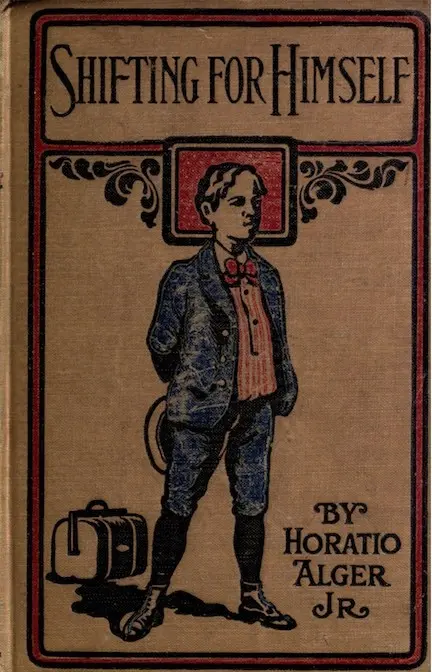
"Shifting For Himself; or, Gilbert Greyson's Fortunes" by Horatio Alger, Jr. is a novel written in the late 19th century. The story follows a young boy named Gilbert Greyson, who faces sudden poverty while preparing for college, forcing him to abandon his aspirations and enter the workforce. His journey illustrates themes of self-reliance, resilience, and personal growth, with particular attention to the challenges faced by youth in navigating the demands of adulthood. The beginning of the novel introduces Gilbert Greyson, a spirited 16-year-old boarding at Dr. Burton’s school, and his close friend John Munford, who must leave school to work. As Gilbert looks forward to a summer trip, he receives a letter from his guardian, Richard Briggs, revealing that he will no longer be able to afford his education due to financial constraints. This letter propels Gilbert into adulthood, emphasizing the necessity for him to make his own way in the world, mirroring the experiences of many boys who find themselves required to "shift for themselves" in times of need. The opening chapters set the stage for Gilbert's transformation from a hopeful student to a young man determined to navigate the complexities of life independently.
Introduction adapted from the source catalogue; source summaries may be automatically generated.
Free to read · English · 51,885 words · No account needed
MAKE TIME FOR A GOOD BOOK
On by default. Untick to stop anonymous reading totals. Each page counts after 10 seconds in view. How this works.
Anonymous counting is on unless you have switched it off.
This was beyond Alphonso’s most sanguine hopes. To be invited to visit a foreign nobleman at his chateau was an unlooked-for honor.
“You overwhelm me with your kindness, my lord count,” said Alphonso, in a flutter of delight. “I hope some day to accept your honorable invitation.”
“I think you will have zer good time. My sister, the Countess Marie de Montmorency, will be charmed to see you. She adores Americans.”
Alphonso was in the seventh heaven of delight. Instantly he pictured the high-born Countess Marie falling in love with him, marrying him, and thus giving him a place in the aristocratic circles of France. Perhaps, in that case, family influence would procure him a title also. It was the happiest moment of his life.
“Nothing would delight me more than to make the acquaintance of your august family, my lord count,” he said, his voice partly tremulous with joy. “When do you propose to return to la belle France?”
“What, you do speak my language, Monsieur Alphonse?”
“Only a little, your lordship,” said Mr. Jones, modestly.
“Oui, monsieur, un peu.”
“Comment vous portez vous, Monsieur Alphonse?”
“Très beaucoup bien,” answered Alphonso, proudly.
“What an accent!” exclaimed the count, raising both hands. “You do speak like one native.”
“I think I should soon learn it if I were in la belle France,” said Alphonso, much pleased.
“Gentlemen,” said Mr. Ingalls, “I don’t like to interrupt you, but permit me to offer you a glass of wine.”
Glasses were handed to the company.
“Mr. Jones, will you propose the count’s health?” asked the host. Alphonso rose, and placed one hand on his heart.
“Gentlemen,” he commenced, “I feel—ahem! deeply honored, and—and happy on this auspicious occasion. We are assembled, sir, to do honor to an illustrious peer of the realm. The noble Count Ernest de Montmorency honors us with his high-toned presence. We all hope that he may enjoy his visit, and return in safety to his aristocratic relations, his honorable mother, and his sister, the noble Countess Marie de Montmorency. I propose the health of the noble count.”
The toast was drunk with enthusiasm.
“Mr. Jones, you are quite an orator,” said Mr. Ingalls.
“You have ze great talent for speaking Monsieur Alphonse. You should go
to Congress.”
“My lord count, you flatter me,” said Mr. Jones, deciding that this was, by all odds, the proudest moment of his life.
“Not at all, Mr. Jones,” said Mr. Ingalls. “I never heard a neater speech, did you, Hayward?”
“Never,” said Hayward.
Your reading position is saved on this browser. Take it to another device with a library code. Reading pages adapt to text, rather than matching a printed edition.
William Rounseville Alger & Horatio, Jr. Alger

William Rounseville Alger & Horatio, Jr. Alger

Horatio, Jr. Alger

Horatio, Jr. Alger
BEHIND THE BOOK
This eBook is for the use of anyone anywhere in the United States and most other parts of the world at no cost and with almost no restrictions whatsoever. You may copy it, give it away or re-use it under the terms of the Project Gutenberg License included with this eBook or online at www.gutenberg.org. If you are not located in the United States, you will have to check the laws of the country where you are located before using this eBook. Read the source licence.
The original source file, including credits and licence, is retained by this library. Request an original-format copy at no charge. Please include the book title and Project Gutenberg identifier #55598.
KEEP YOUR CURIOSITY GOING
Coulson Kernahan

Maurice Baring
Frances Wright
Cécile Tormay

Frederic Jesup Stimson

W. H. P. (William Henry Pope) Jarvis