
Life of Edwin Forrest, the American Tragedian. Volume 2 (of 2)
William Rounseville Alger & Horatio, Jr. Alger
THE CLASSIC COLLECTION · 1876
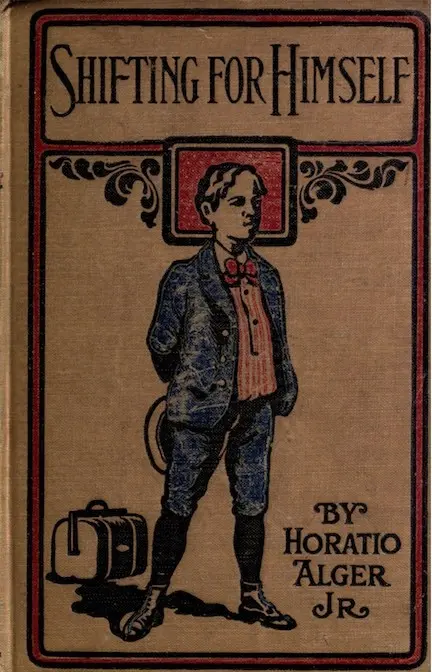
"Shifting For Himself; or, Gilbert Greyson's Fortunes" by Horatio Alger, Jr. is a novel written in the late 19th century. The story follows a young boy named Gilbert Greyson, who faces sudden poverty while preparing for college, forcing him to abandon his aspirations and enter the workforce. His journey illustrates themes of self-reliance, resilience, and personal growth, with particular attention to the challenges faced by youth in navigating the demands of adulthood. The beginning of the novel introduces Gilbert Greyson, a spirited 16-year-old boarding at Dr. Burton’s school, and his close friend John Munford, who must leave school to work. As Gilbert looks forward to a summer trip, he receives a letter from his guardian, Richard Briggs, revealing that he will no longer be able to afford his education due to financial constraints. This letter propels Gilbert into adulthood, emphasizing the necessity for him to make his own way in the world, mirroring the experiences of many boys who find themselves required to "shift for themselves" in times of need. The opening chapters set the stage for Gilbert's transformation from a hopeful student to a young man determined to navigate the complexities of life independently.
Introduction adapted from the source catalogue; source summaries may be automatically generated.
Free to read · English · 51,885 words · No account needed
MAKE TIME FOR A GOOD BOOK
On by default. Untick to stop anonymous reading totals. Each page counts after 10 seconds in view. How this works.
Anonymous counting is on unless you have switched it off.
“That is enough for me,” said Mr. Briggs.
“It is not enough for me,” said his wife.
“I will give you an account of the affair so far as I understand it,” said Gilbert. “Fortunately, I have a witness who is able to confirm my words.”
Gilbert’s statement need not be repeated, as the facts are already known
to us.
“So you expect us to believe the testimony of this boot-black.” said Mrs. Briggs, scornfully,—“a highly respectable witness indeed.”
“I suppose a boot-black may speak the truth, madam,” said Gilbert.
“I dare say he would say whatever he was instructed to say for twenty-five cents, perhaps less.”
“You are determined to believe me guilty, Mrs. Briggs,” said Gilbert, quietly, betraying no anger; “I expected it, for I knew you are prejudiced against me.”
“I certainly don’t believe the very extraordinary story you have told us,” retorted the lady. “You charge a book-keeper, of high standing, with entering into a conspiracy against you. It is absurd upon its face.”
“How do you know the book-keeper is of high standing?” asked Mr. Briggs.
“Because Mr. Sands would not have any other.”
“Gilbert has the same guaranty of high standing,” said her husband, smiling. “He has been employed by Mr. Sands.”
“That is different. He took him upon your recommendation.”
“Would I be likely to recommend any boy not of high standing?”
“Your levity seems to be ill-timed, Mr. Briggs,” said his wife, coldly.
“I thought it my duty to come to you and tell you at once,” said
Gilbert.
“Knowing that you could not conceal it from us, for we knew it already,” said Mrs. Briggs, who could not forbear another sneer.
“You knew it already!” exclaimed Gilbert, with unmistakable astonishment “Has Mr. Moore already sent you word of it?”
“No; Randolph happened to call at the office for you just after your discharge. He brought us the news.”
“I am much obliged to Randolph for his call,” said Gilbert; “I am only sorry that it occurred at such an unfortunate time.”
“It was unfortunate for you, no doubt,” said Mrs. Briggs.
“When I return there, I hope you will call again,” said our hero,
turning to Randolph.
Mrs. Briggs was exasperated by our hero’s coolness.
“Have you the effrontery to fancy you will be taken back after such a
crime?” she demanded.
“I have committed no crime, Mrs. Briggs. The charge is false, as I shall prove to Mr. Sands when he returns from Washington. He is a just man, and understands that the book-keeper is prejudiced against me.”
“When will Mr. Sands return?” asked Mr. Briggs.
Your reading position is saved on this browser. Take it to another device with a library code. Reading pages adapt to text, rather than matching a printed edition.
William Rounseville Alger & Horatio, Jr. Alger

William Rounseville Alger & Horatio, Jr. Alger

Horatio, Jr. Alger

Horatio, Jr. Alger
BEHIND THE BOOK
This eBook is for the use of anyone anywhere in the United States and most other parts of the world at no cost and with almost no restrictions whatsoever. You may copy it, give it away or re-use it under the terms of the Project Gutenberg License included with this eBook or online at www.gutenberg.org. If you are not located in the United States, you will have to check the laws of the country where you are located before using this eBook. Read the source licence.
The original source file, including credits and licence, is retained by this library. Request an original-format copy at no charge. Please include the book title and Project Gutenberg identifier #55598.
KEEP YOUR CURIOSITY GOING
Coulson Kernahan

Maurice Baring
Frances Wright
Cécile Tormay

Frederic Jesup Stimson

W. H. P. (William Henry Pope) Jarvis