
Life of Edwin Forrest, the American Tragedian. Volume 2 (of 2)
William Rounseville Alger & Horatio, Jr. Alger
THE CLASSIC COLLECTION · 1876
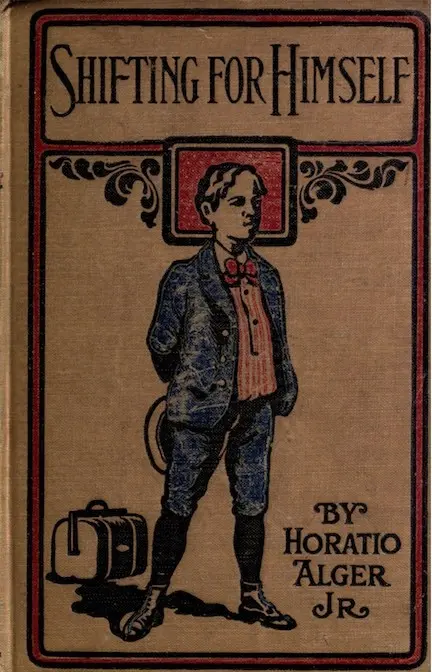
"Shifting For Himself; or, Gilbert Greyson's Fortunes" by Horatio Alger, Jr. is a novel written in the late 19th century. The story follows a young boy named Gilbert Greyson, who faces sudden poverty while preparing for college, forcing him to abandon his aspirations and enter the workforce. His journey illustrates themes of self-reliance, resilience, and personal growth, with particular attention to the challenges faced by youth in navigating the demands of adulthood. The beginning of the novel introduces Gilbert Greyson, a spirited 16-year-old boarding at Dr. Burton’s school, and his close friend John Munford, who must leave school to work. As Gilbert looks forward to a summer trip, he receives a letter from his guardian, Richard Briggs, revealing that he will no longer be able to afford his education due to financial constraints. This letter propels Gilbert into adulthood, emphasizing the necessity for him to make his own way in the world, mirroring the experiences of many boys who find themselves required to "shift for themselves" in times of need. The opening chapters set the stage for Gilbert's transformation from a hopeful student to a young man determined to navigate the complexities of life independently.
Introduction adapted from the source catalogue; source summaries may be automatically generated.
Free to read · English · 51,885 words · No account needed
MAKE TIME FOR A GOOD BOOK
On by default. Untick to stop anonymous reading totals. Each page counts after 10 seconds in view. How this works.
Anonymous counting is on unless you have switched it off.
They sat for half an hour and chatted. Gilbert was favorably impressed by his new friend, who, though ten years older than himself, proved a congenial companion. At ten o’clock he bade him good-night, and went to bed.
His bed was not particularly soft or luxurious, but he slept soundly, and awoke in the morning refreshed. He took an early breakfast, and walked down-town with Mr. Ingalls.
When Mr. Moore, the book-keeper, arrived, Gilbert was already at work.
“A new broom sweeps clean,” sneered Moore, in an unpleasant tone.
“Do you mean me?” asked Gilbert.
“Yes; you are trying to make Mr. Sands think you a model.”
“I hope he won’t think that, for he will find out his mistake.”
“He will find out his mistake,” said Moore; “I predict that.”
“I intend to do my work faithfully,” said Gilbert; “there will be no mistake about that.”
“I’ve heard boys talk that way before. They don’t deceive me.”
Just then Mr. Sands entered. He greeted Gilbert pleasantly.
“So you are on hand in good season. I like to see that.”
“I shall try not to be late, sir.”
“Where do you board?”
“In Waverly Place.”
“That is convenient as regards distance. You may go to the Post Office
for letters.”
As Gilbert started for the Post Office, a boy about his own age came up
and joined him.
“Are you Mr. Sands’ new boy?” he asked.
“Yes,” answered Gilbert.
“You’ve got my place, then. I used to be there.”
“Did you? I am sorry to have interfered with you.”
“You won’t like it. He is very hard to get along with.”
“He doesn’t look like it.”
“He discharged me for just nothing at all. That’s what my cousin, the
book-keeper, says.”
“Is Mr. Moore your cousin?” asked Gilbert, who began now to understand the cause of his own unpopularity with that official.
“Yes; he lives at our house.”
Gilbert said nothing, judging that it would be repeated.
“I hope you will get another place,” he said, politely.
“I don’t want another place. I want to be where my cousin is.”
Gilbert felt rather awkward.
“That is natural,” he said; “I am sorry you are disappointed, but, of course, I am glad to get a place. I have to shift for myself, and it is necessary I should be earning money.”
“You won’t stay long; old Sands will discharge you.”
“I hope not. If I do my duty faithfully, I don’t see why he should.”
“That won’t make any difference. Didn’t I discharge my duty faithfully?”
Your reading position is saved on this browser. Take it to another device with a library code. Reading pages adapt to text, rather than matching a printed edition.
William Rounseville Alger & Horatio, Jr. Alger

William Rounseville Alger & Horatio, Jr. Alger

Horatio, Jr. Alger

Horatio, Jr. Alger
BEHIND THE BOOK
This eBook is for the use of anyone anywhere in the United States and most other parts of the world at no cost and with almost no restrictions whatsoever. You may copy it, give it away or re-use it under the terms of the Project Gutenberg License included with this eBook or online at www.gutenberg.org. If you are not located in the United States, you will have to check the laws of the country where you are located before using this eBook. Read the source licence.
The original source file, including credits and licence, is retained by this library. Request an original-format copy at no charge. Please include the book title and Project Gutenberg identifier #55598.
KEEP YOUR CURIOSITY GOING
Coulson Kernahan

Maurice Baring
Frances Wright
Cécile Tormay

Frederic Jesup Stimson

W. H. P. (William Henry Pope) Jarvis