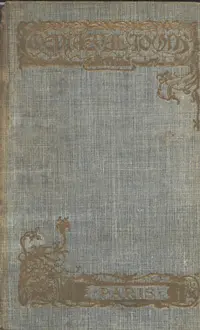
The Story of Paris
Thomas Okey
THE CLASSIC COLLECTION · 1904
"Paris and Its Story" by T. Okey is a historical account written in the early 20th century. This work chronicles the rich and complex history of Paris, focusing on its evolution from a Gallic settlement to the vibrant metropolis it is today. The narrative combines both factual history and the romantic legends that shape the city's identity, making it particularly appealing for readers interested in the cultural and historical significance of Paris. The opening of the book sets the tone by reflecting on the author’s admiration for Paris, establishing the city as a symbol of cultural significance and enduring spirit through centuries of struggle and triumph. Okey introduces the city's early beginnings as Lutetia, highlighting its geographical advantages that made it a center for trade and military importance. The narrative emphasizes the transformation Paris underwent under various rulers, starting from the Roman occupation and continuing through the medieval period, illustrating not only its resilience through invasions and internal conflicts but also its rich cultural tapestry woven through art, literature, and the continuous evolution of its society.
Introduction adapted from the source catalogue; source summaries may be automatically generated.
Free to read · English · 110,517 words · No account needed
MAKE TIME FOR A GOOD BOOK
On by default. Untick to stop anonymous reading totals. Each page counts after 10 seconds in view. How this works.
Anonymous counting is on unless you have switched it off.
After cruelty and debauchery came madness. As Charles one sultry August day was riding in the forest of le Mans he suddenly drew his sword, wounded some of his escort and attacked the Duke of Orleans. The demented king was seized by the Duke of Burgundy and carried senseless and bound into the city. In 1393, when he had somewhat recovered, a grand masked ball was given to celebrate the wedding of one of the ladies of honour who was a widow. The marriage of a widow was always the occasion of riotous mirth, and the king disguised himself and five of his courtiers as satyrs. They were sewed up in tight-fitting vestments of linen, which were coated with resin and pitch and covered with rough tow; on their heads they wore hideous masks. While the ladies of the court were celebrating the marriage the king and his companions rushed in howling like wolves and indulged in the most uncouth gestures and jokes. The Duke of Orleans, drawing too near with a torch to discover their identity, set fire to the tow and in a second they were enveloped in so many shirts of Nessus. Unable to fling off their blazing dresses they madly ran hither and thither, suffering the most excruciating agony and uttering piteous cries. The king happened to be near the young Duchess of Berri who, with admirable presence of mind, flung her robe over him and rescued him from the flames. One knight saved himself by plunging into a large tub of water in the kitchen, one died on the spot, two died on the second day, another lingered for three days in awful torment. The horror of the scene[86] so affected Charles that his madness returned more violently than ever.
The bitterness of the avuncular factions was now intensified. The House of Burgundy by marriage and other means had grown to be one of the most powerful in Europe and was at bitter enmity with the House of Orleans. At the death of Philip the Bold, Duke of Burgundy, his son Jean sans Peur, sought to assume his father's supremacy as well as his title: the Duke of Orleans, strong in the queen's support, determined to foil his purpose. Each fortified his hôtel in Paris and assembled an army. Friends, however, intervened; they were reconciled, and in November 1407 the two dukes attended mass at the Church of the Grands Augustins, took the Holy Sacrament and dined together. As Jean rose from table the Duke of Orleans placed the Order of the Porcupine round his neck; swore bonne amour et fraternité, and they kissed each other with tears of joy. On 23rd November a forged missive was handed to the Duke of Orleans, requiring his attendance on the queen at the Hôtel St. Paul, whither he often went to visit her. He set forth, attended only by two squires and five servants carrying torches. It was a sombre night, and as the unsuspecting prince rode up the Rue Vieille du Temple behind his little escort, humming a tune and playing with his glove, a band of assassins fell upon him from the shadow of the postern La Barbette,[87] crying "à mort, à mort," and he was hacked to death. Then issued from a neighbouring house at the sign of Our Lady, a tall figure concealed in a red cloak, lantern in hand, who gazed at the mutilated corpse. "C'est bien," said he, "let's away." They set fire to the house to divert attention and escaped. Four months before, Jean sans Peur had hired the house on the pretext of storing provisions, and for two weeks a score of assassins had been concealed there, biding their time. On the morrow, Jean with the other princes went to asperse the dead body with holy water in the church of the Blancs Manteaux, and as he drew nigh, exclaiming against the foul murder, blood is said to have issued from the wounds. At the funeral Jean held a corner of the pall, but his guilt was an open secret, and though he braved it out for a time he was forced to flee to his lands in Flanders for safety. In a few months, however, he was back in force at Paris, and a doctor of the Sorbonne pleaded an elaborate justification of the deed before the assembled princes, nobles, clergy and citizens at the Hôtel St. Paul. The poor demented king was made to declare publicly that he bore no ill-will to his dear cousin of Burgundy and later, on the failure of a conspiracy of revenge by the queen and the Orleans party, to grant full pardon for a deed "committed for the welfare of the kingdom." The cutting of the Rue Etienne Marcel has exposed the strong machicolated tower still bearing the arms of Burgundy (two planes and a plumb line), which Jean sans Peur built to fortify the Hôtel de Bourgogne, as a defence and refuge against the Orleans faction and the people of Paris. The Orleans family had for arms a knotted stick, with the device "Je l'ennuis": the Burgundian arms with the motto, "Je le tiens," implied that the knotted stick was to be planed and levelled.
Your reading position is saved on this browser. Take it to another device with a library code. Reading pages adapt to text, rather than matching a printed edition.
Thomas Okey
BEHIND THE BOOK
This eBook is for the use of anyone anywhere in the United States and most other parts of the world at no cost and with almost no restrictions whatsoever. You may copy it, give it away or re-use it under the terms of the Project Gutenberg License included with this eBook or online at www.gutenberg.org. If you are not located in the United States, you will have to check the laws of the country where you are located before using this eBook. Read the source licence.
The original source file, including credits and licence, is retained by this library. Request an original-format copy at no charge. Please include the book title and Project Gutenberg identifier #45336.
KEEP YOUR CURIOSITY GOING
Wilfrid Scawen Blunt
Wilfrid Scawen Blunt

E. W. (Edgar Watson) Howe
Cécile Tormay

Moritz Busch
John L. Ransom