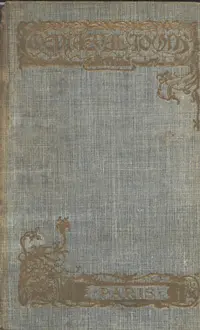
The Story of Paris
Thomas Okey
THE CLASSIC COLLECTION · 1904
"Paris and Its Story" by T. Okey is a historical account written in the early 20th century. This work chronicles the rich and complex history of Paris, focusing on its evolution from a Gallic settlement to the vibrant metropolis it is today. The narrative combines both factual history and the romantic legends that shape the city's identity, making it particularly appealing for readers interested in the cultural and historical significance of Paris. The opening of the book sets the tone by reflecting on the author’s admiration for Paris, establishing the city as a symbol of cultural significance and enduring spirit through centuries of struggle and triumph. Okey introduces the city's early beginnings as Lutetia, highlighting its geographical advantages that made it a center for trade and military importance. The narrative emphasizes the transformation Paris underwent under various rulers, starting from the Roman occupation and continuing through the medieval period, illustrating not only its resilience through invasions and internal conflicts but also its rich cultural tapestry woven through art, literature, and the continuous evolution of its society.
Introduction adapted from the source catalogue; source summaries may be automatically generated.
Free to read · English · 110,517 words · No account needed
MAKE TIME FOR A GOOD BOOK
On by default. Untick to stop anonymous reading totals. Each page counts after 10 seconds in view. How this works.
Anonymous counting is on unless you have switched it off.
If the traveller will place himself on the Pont Royal or on the Pont du Carrousel, and look towards the Cité when the tall buildings, the spire of the Sainte Chapelle and the massive grey towers of Notre Dame are ruddy with the setting sun, he will enjoy a scene of beauty not easily surpassed in Europe. Across the picture, somewhat marred by the unlovely Pont des Arts, marches the procession of the arches of the Pont Neuf with their graceful curves. Below is the little green patch of garden and the cascade of the weir; in the centre the bronze horse with its royal rider, almost hidden by the trees, stands facing the site of the old garden of the Palais, now the Place Dauphine, where St. Louis sat on a carpet judging his people, and whence Philip the Fair watched the flames that were consuming the Grand Master and his companion of the Knights Templars. To the left are the picturesque mediæval towers of the Conciergerie and the tall roof of the belfry of the Palais. Around all are the embracing waters of the Seine breaking the light with their thousand facets. The island, when seen from the east as one sails down the river, is not less imposing, for the great mother church of Notre Dame, with the graceful buttresses of the apse like folded pinions, seems to brood over the whole Cité.
As we turn southwards from the Cité across the Petit Pont we see the old Roman road, now Rue St. Jacques, rising before us, and on the annexe of the Hôtel Dieu, in the Place du Petit Pont, are inscribed their names[167] who nearly twelve centuries ago dared--
"For that sweet motherland which gave them birth,
Nobly to do, nobly to die."
To left and right are two of the most interesting churches in Paris--St. Julien le Pauvre, where the University held its first sittings, and St. Séverin, built on the site of the oratory of Childebert I., where St. Cloud was shorn and took his vows. Both churches were destroyed by the Normans. The former was rebuilt in the twelfth century, the latter from the thirteenth to the fifteenth centuries. The portal of St. Séverin has been, as we have already mentioned, transferred from the thirteenth-century church of St. Pierre aux Boeufs, in the Cité. Two small lions in relief, between which the curés of the church in olden times are said to have exercised justice, have been replaced on either side of the north door of the tower. This beautiful Gothic temple, with its magnificent stained glass, was used during the Revolution as a powder magazine. Hard by, in the picturesque old Rue de la Parchmenerie, two houses, Nos. 6 and 7, were once the property of the canons of Norwich Cathedral, who maintained a number of scholars there. Turning out of this street, the Rue Boutebrie, was in olden times the Rue des Enlumineurs (illuminators), famous for those who practised the art "che alluminare chiamato è in Parisi." A street (Rue Dante), which bears the name of the great poet, from whom this line is taken, leads to the Rue du Fouarre (Straw Street), in one of whose colleges the author of the Divina Commedia probably sat as scholar. The houses are all modernised, and the name alone remains. Southwards again, the Rue des Anglais reminds us that there the English scholars lived; and to the east is the Place Maubert, of dread memories, for there were burnt many a Protestant martyr, and the famous printer-philosopher, Etienne Dolet, whose statue in bronze stands on the Place. Yet further south, near the site of the old Carmelite monastery in the Rue des Carmes, stood, at No. 15, the Italian College (Collége des Lombards). Much of this "hostel of the poor Italian scholars of the charity of Our Lady," as rebuilt in 1681 by the efforts of two Irish priests, Michael Kelly and Patrick Moggin, still remains, including the chapel, and is occupied by a Catholic Workmen's Club. It formerly gave shelter to forty Irish missionary priests and an equal number of poor Irish scholars. Some idea of the vast extent of the ancient foundation will be gained by walking round to the Rue de la Montagne, where the principal portal may be seen. If we turn westwards by the Rue des Ecoles, we shall pass the famous Collége de France, and soon reach the Hôtel de Cluny, and the remains of the Roman palace and baths. The ruins and ground were purchased by the Abbots of Cluny in 1340, and the present beautiful late Gothic mansion was completed for them in 1490. It was often let by the abbots, and was occupied by James V. of Scotland when he came to Paris in 1536 to celebrate his marriage with Magdalen, daughter of Francis I. In the frigidarium of the baths are the remains of the altar to Jupiter found under Notre Dame, a statue of the Emperor Julian, and many a relic of Roman Paris.
Your reading position is saved on this browser. Take it to another device with a library code. Reading pages adapt to text, rather than matching a printed edition.
Thomas Okey
BEHIND THE BOOK
This eBook is for the use of anyone anywhere in the United States and most other parts of the world at no cost and with almost no restrictions whatsoever. You may copy it, give it away or re-use it under the terms of the Project Gutenberg License included with this eBook or online at www.gutenberg.org. If you are not located in the United States, you will have to check the laws of the country where you are located before using this eBook. Read the source licence.
The original source file, including credits and licence, is retained by this library. Request an original-format copy at no charge. Please include the book title and Project Gutenberg identifier #45336.
KEEP YOUR CURIOSITY GOING
Wilfrid Scawen Blunt
Wilfrid Scawen Blunt

E. W. (Edgar Watson) Howe
Cécile Tormay

Moritz Busch
John L. Ransom