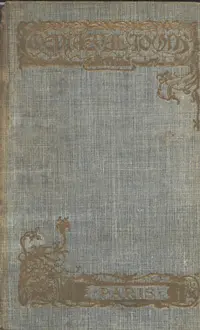
The Story of Paris
Thomas Okey
THE CLASSIC COLLECTION · 1904
"Paris and Its Story" by T. Okey is a historical account written in the early 20th century. This work chronicles the rich and complex history of Paris, focusing on its evolution from a Gallic settlement to the vibrant metropolis it is today. The narrative combines both factual history and the romantic legends that shape the city's identity, making it particularly appealing for readers interested in the cultural and historical significance of Paris. The opening of the book sets the tone by reflecting on the author’s admiration for Paris, establishing the city as a symbol of cultural significance and enduring spirit through centuries of struggle and triumph. Okey introduces the city's early beginnings as Lutetia, highlighting its geographical advantages that made it a center for trade and military importance. The narrative emphasizes the transformation Paris underwent under various rulers, starting from the Roman occupation and continuing through the medieval period, illustrating not only its resilience through invasions and internal conflicts but also its rich cultural tapestry woven through art, literature, and the continuous evolution of its society.
Introduction adapted from the source catalogue; source summaries may be automatically generated.
Free to read · English · 110,517 words · No account needed
MAKE TIME FOR A GOOD BOOK
On by default. Untick to stop anonymous reading totals. Each page counts after 10 seconds in view. How this works.
Anonymous counting is on unless you have switched it off.
In 1616 the nobles were once more in arms, and Condé was again bought off. The helpless court was in pitiful straits and the country drifting to civil war, when Richelieu, who, meanwhile, had been made a royal councillor and minister for foreign affairs, took the Condé business in hand. He had the prince arrested in the Louvre itself and flung into the Bastille; the noble blackmailers were declared guilty of treason, and three armies marched against them. The triumph of the court seemed assured, when Louis XIII., now sixteen years of age, suddenly freed himself from tutelage, and with the help of the favourite companion of his pastimes, Albert de Luynes, son of a soldier of fortune, determined to rid himself of Concini. The all-powerful Florentine, on 24th April 1617, was crossing the bridge that spanned the fosse of the Louvre when the captain of the royal Guards, who was accompanied by a score of gentlemen, touched him on the shoulder and told him he was the king's prisoner. "I, a prisoner!" exclaimed Concini, moving his hand towards his sword. Before he could utter another word he fell dead, riddled with pistol shots; Louis appeared at a window, and all the Louvre resounded with cries of "Vive le roi!" Concini's wife, to whom he owed his ascendency over the queen-mother, was accused of sorcery, beheaded and burnt on the Place de Grève; Marie was packed off to Blois and Richelieu exiled to his bishopric of Luçon. De Luynes, enriched by the confiscated wealth of the Concini, now became supreme, only to demonstrate a pitiful incapacity. The nobles had risen and were rallying round Marie; the Protestants were defying the state; but Luynes was impotent, and soon went to a dishonoured grave, leaving chaos behind him.
Richelieu's star was now in the ascendant. The king drew near to his mother and both turned to the one man who seemed able to knit together the distracted state. A cardinal's hat was obtained for him from Rome, and the illustrious churchman ruled France for eighteen years. Everything went down before his commanding genius, his iron will and his indefatigable industry. "I reflect long," said he, "before making a decision, but once my mind is made up, I go straight to the goal. I mow down all before me, and cover all with my scarlet robe." The Huguenots, backed by the English, aimed at founding an independent republic: Richelieu captured La Rochelle[127] and wiped them out as a political party. The great nobles sought to divide power with the crown: he demolished their fortresses, made them bow their necks to the royal yoke or chopped off their heads. They defied the king's edict against duelling: the Count of Bouteville, the most notorious duellist of his time, and the Count of Les Chapelles were sent to the scaffold for having defiantly fought duels in the Place Royale in open noonday, at which the Marquis of Buffy was killed. The execution made a profound impression, for the count was a Montmorency, and the Condés, the Orleans, the Montmorencys and all the most powerful nobles brought pressure to bear on the king and swore that the sentence should never be carried out. But Richelieu was firm as a tower. "It is an infamous thing," he told the king, "to punish the weak alone; they cast no baleful shade: we must keep discipline by striking down the mighty." Richelieu crushed the Parlement and revolutionised the provincial administrations. He maintained seven armies in the field, and two navies on the seas at one and the same time. He added four provinces to France--Alsace, Lorraine, Artois and Rousillon, humiliated Austria and exalted his country to the proud position of dominant factor in European politics. He foiled plot after plot and crushed rebellion. The queen-mother, Gaston Duke of Orleans her second son and heir to the throne, the Marquis of Cinq-Mars the king's own favourite--each tried a fall with the great minister, but was thrown and punished with pitiless severity. Marie herself was driven to exile--almost poverty--at Brussels, and died a miserable death at Cologne. The despicable Gaston, who twice betrayed his friends to save his own skin, was watched, and when the queen, Anne of Austria, gave birth to a son after twenty years of marriage, he was deprived of his dignities and possessions and interned at Blois. The Marquis of Cinq-Mars, and the last Duke of Montmorency, son and grandson of two High Constables of France, felt the stroke of the headsman's axe.
Your reading position is saved on this browser. Take it to another device with a library code. Reading pages adapt to text, rather than matching a printed edition.
Thomas Okey
BEHIND THE BOOK
This eBook is for the use of anyone anywhere in the United States and most other parts of the world at no cost and with almost no restrictions whatsoever. You may copy it, give it away or re-use it under the terms of the Project Gutenberg License included with this eBook or online at www.gutenberg.org. If you are not located in the United States, you will have to check the laws of the country where you are located before using this eBook. Read the source licence.
The original source file, including credits and licence, is retained by this library. Request an original-format copy at no charge. Please include the book title and Project Gutenberg identifier #45336.
KEEP YOUR CURIOSITY GOING
Wilfrid Scawen Blunt
Wilfrid Scawen Blunt

E. W. (Edgar Watson) Howe
Cécile Tormay

Moritz Busch
John L. Ransom