
Lucinda
Anthony Hope
THE CLASSIC COLLECTION · 1892
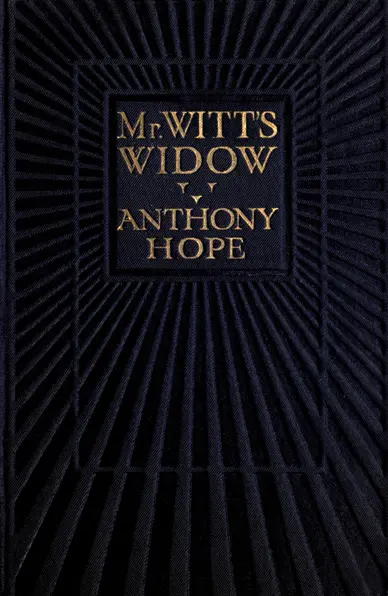
"Mr. Witt's Widow: A Frivolous Tale" by Anthony Hope is a novel written in the early 20th century, specifically in 1912. It depicts the social dynamics and romantic entanglements of the Neston family following the engagement of Gerald Neston to Neaera Witt, a wealthy widow. Central to the plot is George Neston, Gerald’s cousin, whose discovery of a hidden past involving Neaera leads to tension and conflict within the family. At the start of the story, we are introduced to the Neston family and their newly elevated social standing due to the ascension of Lord Tottlebury, bringing the attention on Gerald Neston's courtship of Neaera Witt. As the opening unfolds during a dinner at Lord Tottlebury's house, George becomes increasingly intrigued by Neaera, whom he recognizes as a young woman he defended in a theft case many years ago. This revelation sparks a moral dilemma for George, compelling him to confront Neaera and ultimately decide whether to reveal her past to Gerald, a conflict that sets the stage for escalating tension and drama amongst the characters. The initial chapters establish the balance between romance and societal expectations, while hinting at deeper themes of identity and reputation.
Introduction adapted from the source catalogue; source summaries may be automatically generated.
Free to read · English · 39,724 words · No account needed
MAKE TIME FOR A GOOD BOOK
On by default. Untick to stop anonymous reading totals. Each page counts after 10 seconds in view. How this works.
Anonymous counting is on unless you have switched it off.
"Gerald! Then he has got the letter!"
"What do you propose to do, Mrs. Witt?"
"How can I tell? I don't know what she said. She only told me she had sent back the money, and told him why."
"If she told him why----"
"I'm ruined," said Neaera, wringing her hands.
George stood with his back to the fireplace, and regarded her critically. After a moment's pause, he said, with a smile,
"I knew it all--and you were not ruined."
"Ah, you are so good!"
"Nonsense," said George, with a broader smile.
Neaera looked up at him, and smiled too.
"Mightn't you risk it? Of course, truth is dangerous, but he's very fond
of you."
"Won't you help me?"
A heavy step and the sound of impatient pushing of furniture were heard
from the next room.
"Gerald is getting tired of waiting," said George.
"Won't you do anything?" asked Neaera again, barely repressing a sob.
"Supposing I were willing to lie, where is a possible lie? How can I
explain it?"
Timms knocked and entered. Gerald begged for a minute's interview, on
pressing business.
"In a moment," said George. Then, turning to Neaera, he added brusquely, "Come, you must decide, Mrs. Witt."
Neaera was no longer in a condition to decide anything. Tears were her ready refuge in time of trouble, and she was picturesquely weeping--for she possessed that rare gift--in the old leathern arm-chair.
"Will you leave it to me?" asked George. "I'll do the best I can."
Neaera sobbed forth the opinion that George was her only friend.
"I shall tell him everything," said George. "Do you authorise me to do
that?"
"Oh, how miserable I am!--oh, yes, yes."
"Then stop crying, and try to look nice."
"Why?"
"Because I shall bring him in."
"Oh!" cried Neaera in dismay. But when George went out, she made her hair a little rougher--for so paradoxically do ladies set about the task of ordering their appearance--and anointed her eyes with the contents of a mysterious phial, produced from a recondite pocket. Then she sat up straight, and strained her ears to catch any sound from the next room, where her fate was being decided. She could distinguish which of the two men was speaking, but not the words. First Gerald, then George, then Gerald again. Next, for full five minutes, George talked in low but seemingly emphatic tones. Then came a sudden shout from Gerald.
"Here!" he cried. "In your room!"
Your reading position is saved on this browser. Take it to another device with a library code. Reading pages adapt to text, rather than matching a printed edition.
Anthony Hope

Anthony Hope

Anthony Hope

Anthony Hope
BEHIND THE BOOK
This eBook is for the use of anyone anywhere in the United States and most other parts of the world at no cost and with almost no restrictions whatsoever. You may copy it, give it away or re-use it under the terms of the Project Gutenberg License included with this eBook or online at www.gutenberg.org. If you are not located in the United States, you will have to check the laws of the country where you are located before using this eBook. Read the source licence.
The original source file, including credits and licence, is retained by this library. Request an original-format copy at no charge. Please include the book title and Project Gutenberg identifier #41599.
KEEP YOUR CURIOSITY GOING
Coulson Kernahan

Maurice Baring
Frances Wright
Cécile Tormay

Frederic Jesup Stimson

W. H. P. (William Henry Pope) Jarvis