
Lucinda
Anthony Hope
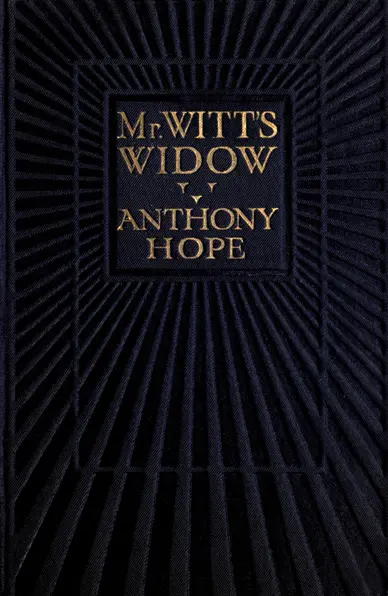
THE CLASSIC COLLECTION · 1892
"Mr. Witt's Widow: A Frivolous Tale" by Anthony Hope is a novel written in the early 20th century, specifically in 1912. It depicts the social dynamics and romantic entanglements of the Neston family following the engagement of Gerald Neston to Neaera Witt, a wealthy widow. Central to the plot is George Neston, Gerald’s cousin, whose discovery of a hidden past involving Neaera leads to tension and conflict within the family. At the start of the story, we are introduced to the Neston family and their newly elevated social standing due to the ascension of Lord Tottlebury, bringing the attention on Gerald Neston's courtship of Neaera Witt. As the opening unfolds during a dinner at Lord Tottlebury's house, George becomes increasingly intrigued by Neaera, whom he recognizes as a young woman he defended in a theft case many years ago. This revelation sparks a moral dilemma for George, compelling him to confront Neaera and ultimately decide whether to reveal her past to Gerald, a conflict that sets the stage for escalating tension and drama amongst the characters. The initial chapters establish the balance between romance and societal expectations, while hinting at deeper themes of identity and reputation.
Introduction adapted from the source catalogue; source summaries may be automatically generated.
Free to read · English · 39,724 words · No account needed
MAKE TIME FOR A GOOD BOOK
On by default. Untick to stop anonymous reading totals. Each page counts after 10 seconds in view. How this works.
Anonymous counting is on unless you have switched it off.
Isabel looked at her suspiciously. "He never did actually ask me," she
said, with dignity.
"Oh! I thought you implied----"
"But, of course, she knew he wanted to," Maud put in. "Didn't you,
dear?"
"Well, I thought so," said Isabel, modestly.
"Yes, I know you thought so," said Laura. "Indeed, everybody saw that. Was it very hard to prevent him?"
Isabel's colour rose. "I don't know what you mean, Laura," she said.
Laura smiled with an unpleasantness that was quite a victory over nature. "Men sometimes fancy," she remarked, "that girls are rather in a hurry to think they want to propose."
"Laura!" exclaimed Maud.
"They even say that the wish is father to the thought," continued Laura, still smiling, but now a little tremulously.
Isabel grew more flushed. "I don't understand you. One would think you meant that I had run after him."
Laura remained silent.
"Everybody knows he was in love with Isabel for years," said Maud,
indignantly.
"He was very patient," said Laura.
Isabel rose. "I shall not stay here to be insulted. It's quite obvious, Laura, why you say such things."
"I don't say anything. Only----"
"Well?"
"The next time, you might mention that among the reasons why you refused Mr. Neston was, that he never asked you."
"I see what it is," said Isabel. "Don't you, Maud?"
"Yes," said Maud.
"What is it?" demanded Laura.
"Oh, nothing. Only, I hope--I wish you joy of him."
"If you don't mind a slanderer," added Maud.
"It's not true!" said Laura. "How dare you say it?"
"Take care, dear, that he doesn't fancy you're in a hurry---- What was your phrase?" said Isabel.
"It's perfectly shameful," said Maud.
"I don't choose to hear a friend run down for nothing," declared Laura.
"A friend? How very chivalrous you are! Come, Maud dear."
"Good-bye, Laura," said Maud. "I'm sure you'll be sorry when you come to
think."
"No, I shan't. I----"
"There!" said Isabel. "I do not care to be insulted any more."
The two visitors swept out, and Laura was left alone. Whereupon she began to cry. "I do hate that sort of vulgarity," said she, mopping her eyes. "I don't believe he ever thought----"
Mrs. Pocklington entered in urbane majesty. "Well, is Isabel pleased with her little man?" she asked. "Why, child, what's the matter?"
"Nothing," said Laura.
"You're crying."
"No, I'm not. Those girls have been horrid."
"What about?"
"Oh, the engagement, and----"
"And what?"
"And poor Mr. Neston--George Neston."
"Oh, poor George Neston. What did they say?"
"Isabel pretended he had been in love with her, and--and was in love with her, and that she had refused him."
"Oh, and that made you cry?"
"No--not that----"
Your reading position is saved on this browser. Take it to another device with a library code. Reading pages adapt to text, rather than matching a printed edition.
Anthony Hope

Anthony Hope

Anthony Hope

Anthony Hope
BEHIND THE BOOK
This eBook is for the use of anyone anywhere in the United States and most other parts of the world at no cost and with almost no restrictions whatsoever. You may copy it, give it away or re-use it under the terms of the Project Gutenberg License included with this eBook or online at www.gutenberg.org. If you are not located in the United States, you will have to check the laws of the country where you are located before using this eBook. Read the source licence.
The original source file, including credits and licence, is retained by this library. Request an original-format copy at no charge. Please include the book title and Project Gutenberg identifier #41599.
KEEP YOUR CURIOSITY GOING
Coulson Kernahan

Maurice Baring
Frances Wright
Cécile Tormay

Frederic Jesup Stimson

W. H. P. (William Henry Pope) Jarvis